.jpg)


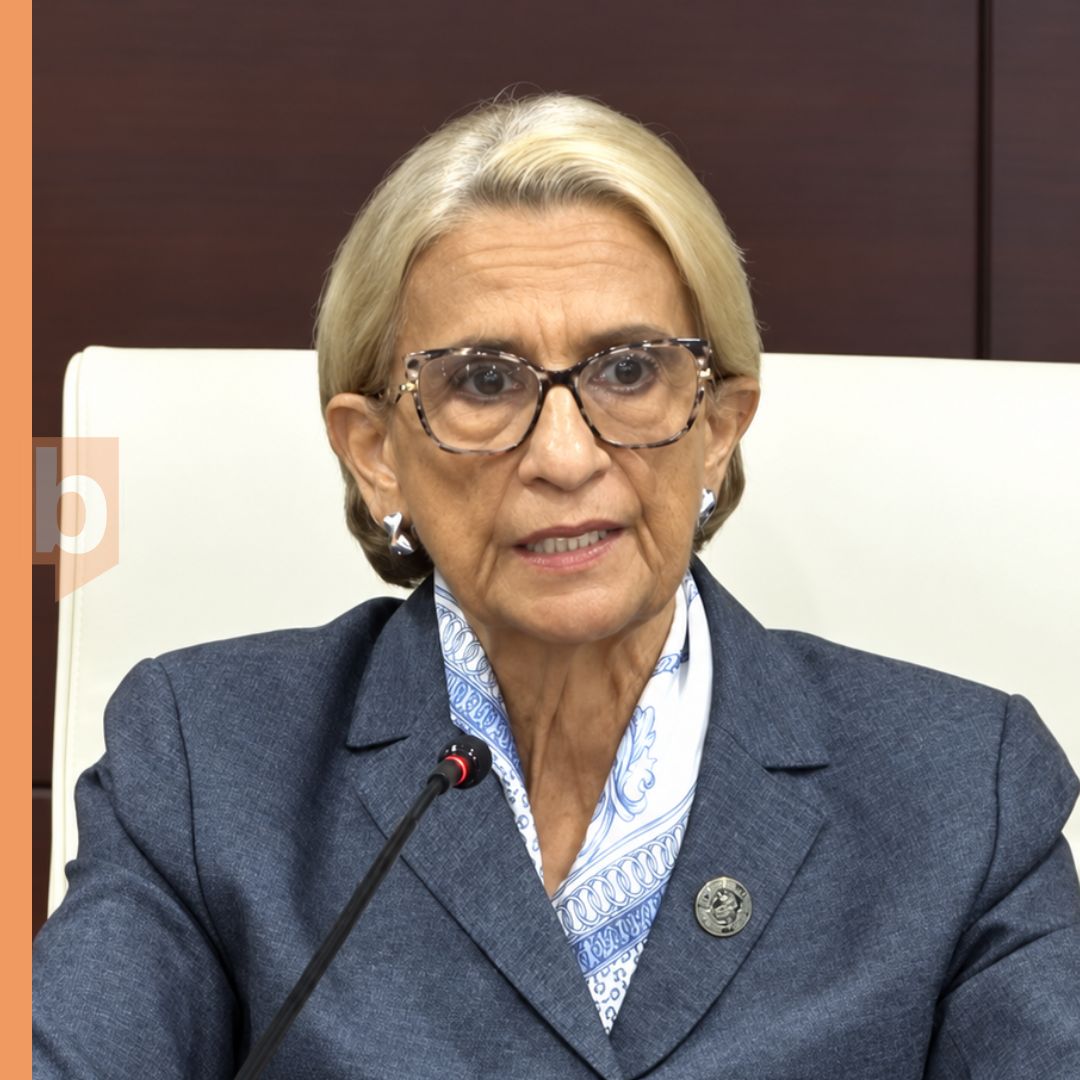
GREAT BAY--Parliament will not repeat the written-question procedure used during the handling of Budget 2026 when it begins deliberations on the 2027 national budget, Chairlady of Parliament Sarah Wescot-Williams confirmed Tuesday, saying MPs will return to the regular Central Committee process while also opening a discussion on how artificial intelligence should be used in future budget scrutiny.
The process had resulted in MPs submitting approximately 2500 questions, combined, for the 2026 budget debate, putting strain on the civil core, among other things. The responses received from government was appoximately 1300 answers. It became clear rather quickly that both the questions and the answers were generated by A.I. use, or at least a majority of such.
Wescot-Williams acknowledged that the procedure used for Budget 2026 became overwhelming, particularly as artificial intelligence contributed to the large volume of questions submitted by Members of Parliament. She said the experience has given Parliament an opportunity to evaluate what worked, what did not and how technology can be used more effectively going forward.
The Chairlady explained that the written-question approach was not an entirely new parliamentary procedure. Parliament has previously used similar methods when handling legislation where responses were expected to be relatively brief, allowing MPs to submit questions and comments in writing for inclusion in a report.
However, she acknowledged that applying the procedure to the national budget produced a much larger process than anticipated.
“Indeed, it was a little overwhelming,” Wescot-Williams said, adding that artificial intelligence “played a great role in the process.”
She made clear that the same approach will not be used for Budget 2027.
“No, I don’t think we would do it again before we have gotten accustomed to that kind of procedure, do it again for the budget. And we definitely will not do it for the 2027,” she said.
Instead, Parliament will return to its regular Central Committee procedure. Members will first be given time to review the budget, after which the ministers will appear before Parliament for the formal presentation and questioning.
Wescot-Williams said MPs are generally given between 10 and 14 days to study the budget before deliberations begin. As a result, she does not expect the Central Committee meetings on Budget 2027 to begin within the next two weeks.
“We need to give all members of Parliament also the time to peruse it,” she said.
Once the Central Committee process begins, ministers will appear before Parliament, MPs will raise their questions and concerns directly, and the exchanges will eventually be incorporated into a report before the budget moves to a public meeting.
While the written-question method will not be repeated this year, Wescot-Williams said she does not want Parliament to simply disregard the role artificial intelligence can play in examining large and complex financial documents.
Instead, she wants a broader discussion among Members of Parliament about how AI can be used more effectively and responsibly during the budget process.
“I want to have a dialogue with the members of Parliament with respect to the usage of AI, especially when it comes to questioning the budget,” Wescot-Williams said.
She suggested that AI could help MPs organize and consolidate similar questions rather than simply generating a greater volume of them.
The objective, she said, should be to help Parliament focus its scrutiny on recurring national priorities and allow MPs to question ministries more deeply about those areas.
Among the issues she identified were energy, healthcare, government capacity and legislation.
Wescot-Williams said those matters should be brought more clearly to the forefront during budget deliberations instead of becoming lost among large numbers of individual questions.
She also stressed that scrutiny should not end with what government proposes to spend.
“How is the budget being executed?” Wescot-Williams asked, identifying budget implementation as an important part of Parliament’s oversight responsibility.
The Chairlady had earlier called attention to reporting required under Article 44 of the National Accountability Ordinance, saying Parliament needs information that clearly shows how an approved budget is actually being implemented.
Despite her concerns about the volume produced during the Budget 2026 procedure, Wescot-Williams said she saw benefits in parts of the process, particularly when the written questions and government’s answers became publicly available.
She said this allowed residents and media organizations to examine the questions and responses themselves and contribute to broader public discussion.
“In retrospect, when I look at the fact that the questions and the answers went public before we had a continuation of it, to me, that helped,” she said.
She added that she appreciated the community involvement that followed, as people reviewed the exchanges and formed their own opinions about both the questions being asked and government’s responses.
Wescot-Williams said Parliament will continue exploring different procedures for handling legislation, but stressed that Budget 2027 will follow the more traditional route.
The 2027 national budget was officially submitted to Parliament Tuesday by Minister of Finance Marinka Gumbs. Members will now receive time to study the document before Parliament establishes the schedule for the Central Committee deliberations.
Join Our Community Today
Subscribe to our mailing list to be the first to receive
breaking news, updates, and more.