.jpg)


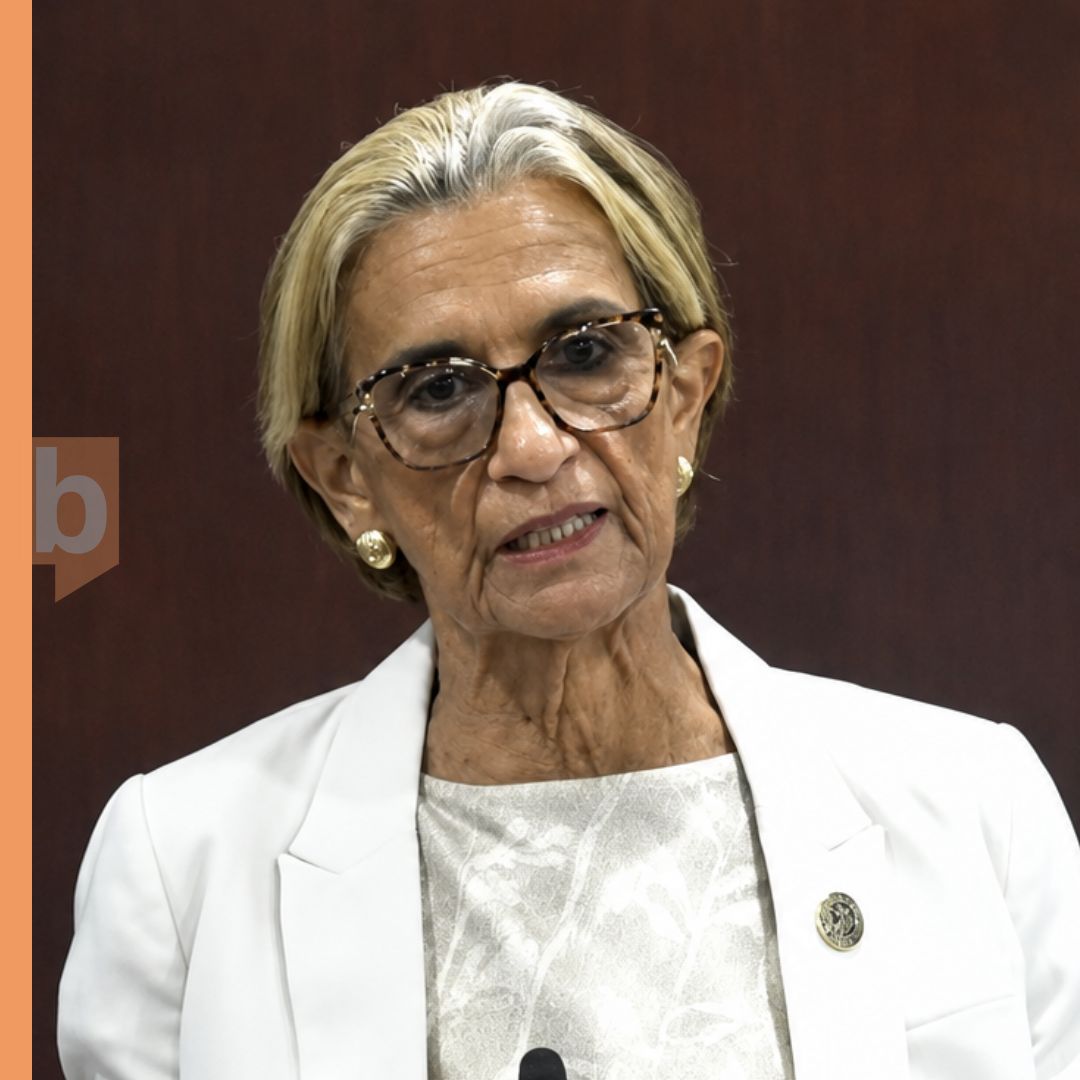
GREAT BAY--President of Parliament Sarah Wescot-Williams has called on government to make a fundamental “course correction” in how it sets priorities and executes policy, warning during the 2026 budget debate that St. Maarten cannot continue operating in the same manner and expect different results.
Her criticism was particularly sharp when addressing the cleanliness of the island. Describing the current situation as “nul komma nul,” Dutch for “zero point zero,” Wescot-Williams said government must move beyond repeatedly asking residents to behave responsibly and begin using the enforcement powers already available to it.
“We cannot continue in the same fashion and expect to make better results,” Wescot-Williams told Parliament, arguing that government must be willing to take difficult and sometimes unpopular decisions if it wants residents to see tangible improvements.
She said the debate itself illustrated the need for change, describing the handling of a national budget in the third week of August, nearly September, as an “anomaly.” Rather than discussing the 2026 budget as though the year were just beginning, she said Parliament should already be examining what government actually accomplished financially and operationally between January and August.
Cleanliness Requires Enforcement
Wescot-Williams said government can no longer rely primarily on appeals for residents to properly dispose of garbage or maintain their surroundings.
She called for stronger use of administrative enforcement, saying ministries have mechanisms available to impose consequences when laws and regulations are ignored.
The Parliament President said littering and illegal dumping have reached a point where simply reminding people of their responsibility is insufficient.
“The cleanliness of this island is less than zero, zero,” she said, describing the situation moments later as “nul komma nul.”
She said government should determine what resources are necessary to strengthen enforcement and, if required, make the appropriate budget changes to finance it.
Wescot-Williams also called for firmer action against abandoned and derelict vehicles, saying government cannot allow people to leave vehicles along public roads where they are gradually stripped for parts and eventually become dumping sites.
She suggested government should be prepared to remove such vehicles and defend its actions where necessary rather than allow the problem to continue unchecked.
“We honestly can’t continue like this,” she said.
‘We Need to Do Things Differently’
Wescot-Williams said a common thread running through the answers submitted by government is a lack of capacity across ministries, including insufficient legislative capacity, staffing shortages and difficulty moving projects from reports and studies into actual execution.
She questioned whether government should continue adding projects and policy ambitions when existing initiatives remain unfinished.
According to Wescot-Williams, ministers must identify what can realistically be accomplished with the resources available and begin making clearer choices about what will receive priority.
“We need to make a course correction,” she said. “We need to change things. We need to bite some bullets.”
She said reports, policies and studies have limited value if government cannot translate their recommendations into legislation and implementation.
Budget Execution Must Be Clearer
Wescot-Williams also criticized the information Parliament receives on budget execution.
She said the second-quarter execution report for 2026 was due around August 15, but Parliament had not yet received it at the time of her presentation.
Even when quarterly reports are submitted, she said their current format does not provide Parliament with a sufficiently clear picture of how actual government performance compares with the approved budget.
With the country already deep into the financial year, she argued that knowing how much government has actually spent, which projects are being executed and which allocations remain unused is critical to determining where adjustments can still be made.
She called for future policy-based budgets to be accompanied by stronger execution reporting so Parliament can measure whether government is delivering what it budgeted for.
Tax Reform Needs a Different Approach
The Parliament President also urged Finance Minister Marinka Gumbs to reconsider the approach to tax reform, saying progress has been too slow.
She suggested that government and Parliament sit together to determine which elements of tax reform can realistically be advanced instead of continuing along a process that has produced limited visible results.
Wescot-Williams also questioned delays reflected in the Temporary Work Organization, TWO, reform program, pointing to areas including tax reform, corporate governance, gambling reform, labor market measures and social security.
She said the available TWO information paints an “alarming” picture when considering how many reforms still require policies, regulations or legislation before implementation can begin.
The Parliament President questioned whether the new tax-system implementation has now been pushed to the first quarter of 2028 and asked what intermediate measures government intends to take if that timeline is accurate.
Poverty, Social Support and GHI
Wescot-Williams repeatedly returned to poverty and the need for government programs to produce results residents can actually feel.
She questioned the status of work on the poverty line, social minimum income, the social registry and other initiatives intended to better identify and assist vulnerable households.
With General Health Insurance, GHI, no longer expected to be implemented by January 1, 2027, Wescot-Williams asked government to pursue an interim solution for people who continue to fall outside existing medical coverage.
She specifically mentioned sole proprietors, taxi and bus drivers, vendors and similar self-employed workers, asking whether existing legislation can be amended to allow these groups access to medical insurance rather than requiring them to wait for the eventual introduction of GHI.
She asked government for a direct answer on whether such a change can be made, whether it will be made and, if not, why not.
‘We Have No Data’
Another major concern raised by Wescot-Williams was government’s lack of reliable and readily accessible statistics.
“We have no data,” she said, pointing to gaps involving government payables, vehicle registration and information from the Tax Inspectorate.
She questioned how government can properly formulate policy, manage revenue or measure progress when critical information is unavailable.
Wescot-Williams said improving national statistics and government data systems must become part of the broader course correction she is calling for.
GEBE and Generator Financing
The Parliament President also sought clarity on GEBE and the financing of new generating capacity.
She questioned why recommendations contained in the RAft-BTP report cannot already be considered while government awaits further work from the Bureau Telecommunications and Post, BTP.
Wescot-Williams also asked government to explain how financing for new generators will work now that the original government-backed financing is reportedly insufficient and GEBE may have to obtain additional borrowing itself.
She wants clarity on who will own the equipment, how the additional loan will interact with government’s financing and how those arrangements will ultimately affect GEBE.
Mobility and Government Priorities
On traffic and mobility, Wescot-Williams questioned government’s use of requests for proposals without first making sufficiently clear what government itself wants to achieve.
She said government should establish its own policy direction and objectives before inviting private parties to determine what solutions should be pursued.
She drew a parallel with the cannabis initiative, questioning whether government should first determine its own position and desired structure before requesting proposals from outside entities.
Wescot-Williams also requested updates on ongoing mobility initiatives, the proposed changes around the Clem Labega Square area and the location of a future Parliament building.
‘We Can’t Go On Like This’
Wescot-Williams said her comments were not intended to dismiss the work presented by ministers, acknowledging both the ambitions outlined by government and the limitations ministries face.
However, she said the current approach is not producing sufficient results and government must recognize that reality.
She urged ministers to identify the issues that can be acted on immediately, strengthen enforcement where laws are routinely ignored, focus limited legislative capacity on priority reforms and make difficult choices rather than allow another year to pass with projects remaining in the planning stage.
“We can’t go on like this,” Wescot-Williams said, making clear that her central message to government is that continuing along the same course is no longer an acceptable option.
Join Our Community Today
Subscribe to our mailing list to be the first to receive
breaking news, updates, and more.