


GREAT BAY--President of the St. Maarten Chamber of Commerce and Industry (COCI) Tamara Leonard is calling for a shift in how local entrepreneurs approach business, arguing that St. Maarten must move beyond being primarily a consumer of imported goods and begin positioning its own products, services and creative industries in international markets.
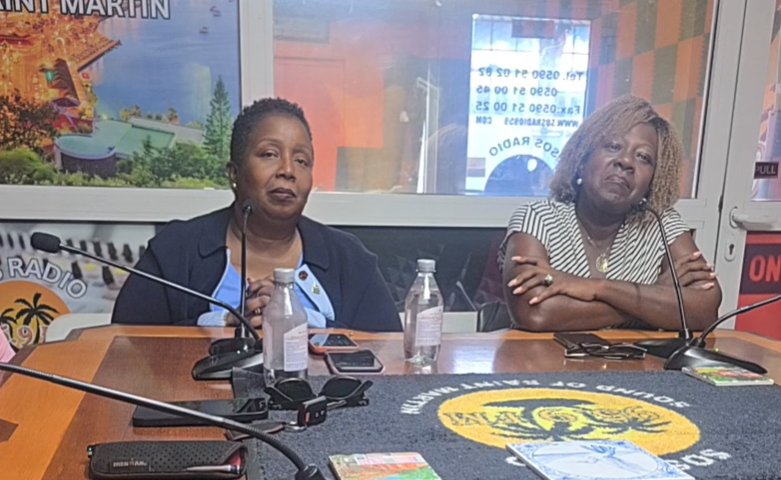
Speaking Wednesday morning on SOS Radio's Talking Point program, Leonard outlined an ambitious effort by the Chambers of Commerce on both sides of the island to help businesses expand internationally, beginning with a regional trade mission to Miami scheduled for November 16 to 19, 2026.
Leonard was joined by COCI Vice President Stacio Baker, First Vice President of the French-side Chamber of Commerce (CCISM) Jeanne Rogers-Vanterpool, and CCISM representative Laurina Gumbs. Together, they outlined a coordinated initiative intended to expose local entrepreneurs to international buyers, distribution networks, business partnerships and opportunities that have traditionally been beyond the reach of many small businesses.
The Miami mission will include entrepreneurs from both sides of St. Maarten, alongside participants from Aruba, Bonaire and Curaçao. Saba was initially expected to participate but will instead explore joining a future initiative because of conflicting anniversary celebrations.
Leonard explained that the mission is built around a simple economic reality: St. Maarten imports products from across the world, yet local producers and entrepreneurs have relatively limited access to those same international markets.
She argued that this imbalance must change, particularly if locally owned businesses are to grow beyond their dependence on the island's small consumer market.
"My mission, our mission is not to cripple the big, but it is to level the playing field," Leonard stated.
She described how larger businesses benefit from established international supply chains, warehousing arrangements and purchasing power that allow them to acquire products in quantities and at prices smaller entrepreneurs often cannot match.
During preparatory visits to Miami, Leonard said she discovered that some businesses operating in St. Maarten and Curaçao were already using overseas warehouses to store bulk merchandise and ship smaller quantities to their respective islands as needed. Such arrangements reduce storage limitations and can improve purchasing efficiency.
For Leonard, exposing smaller businesses to these possibilities is an important part of making international commerce more accessible.
The mission will therefore go beyond introducing participants to potential buyers. Its program includes workshops on product presentation, business pitching, American corporate practices, international marketing, distribution, regulatory compliance and the requirements for entering the United States market.
Participants will also learn about establishing businesses in Miami, accessing online marketplaces and building commercial relationships that can continue after the four-day event.
Leonard emphasized that securing a place on an international sales platform does not automatically translate into commercial success. Entrepreneurs must also understand marketing, distribution, consumer demand and how to position their products competitively.
She said the initiative is designed to provide businesses with direct access to individuals and organizations that can assist them with these processes rather than leaving them dependent on the chambers for future introductions.
Among the planned opportunities is access to the Greater Miami Chamber of Commerce and its extensive business network. Leonard also disclosed that relationships have been developed with the French-American Chamber to facilitate opportunities for entrepreneurs from the French side.
Baker reinforced the importance of these connections, explaining that the purpose is not simply to travel overseas but to place entrepreneurs in an environment where they can meet established businesses, develop partnerships, improve their products and identify opportunities for expansion.
He said even entrepreneurs with registered businesses that are not yet fully operational could benefit from the networking and exposure offered by the mission.
Gumbs, who has been assisting French-side participants with preparations, explained that entrepreneurs are receiving training in presenting their businesses, developing an online presence, pitching their products and following up with potential contacts.
She noted that the mission is not restricted to companies producing physical goods. Businesses involved in fashion, tourism, food, beauty, photography and digital services are also participating.
Rogers-Vanterpool welcomed the collaboration between the chambers, emphasizing that small businesses must adapt to changing commercial practices and embrace new technologies and international opportunities if they are to remain competitive.
She also highlighted the support available through the French-side chamber, including business development training and assistance with administrative and financial obligations.
A major development emerging from the interview was the growing institutional cooperation between the two chambers.
Leonard confirmed that the organizations are working toward a memorandum of understanding intended to strengthen their partnership.
She described their cooperation as an important step in demonstrating that the island's two jurisdictions can work together in pursuit of shared economic interests.
"It's one people, two nationalities. At the end of the day, it is one people we are," Leonard said.
She expressed hope that the partnership would extend beyond the Miami mission and create additional opportunities for businesses on both sides of the island.
Leonard also stressed that international expansion does not mean abandoning the local economy. Increased demand for locally manufactured products could create additional business for farmers, suppliers, manufacturers and service providers at home.
Using the example of locally produced bush tea lemonade, she explained that expanding overseas sales would increase demand for the agricultural products used in its production, potentially creating additional income for local farmers.
She further indicated that Miami is only the starting point. Her broader vision includes stronger trade relationships among Caribbean islands, improving their ability to support one another economically and reducing their vulnerability to disruptions in larger international markets.
Participation costs and financial support were also addressed during the interview.
Leonard said the four-day mission costs US $1,850 per participant, excluding airfare and accommodation. She announced that limited additional financial support remains available for approximately four or five qualifying businesses on the Dutch side, with COCI able to match US $925 contributed by an eligible participant.
Applicants seeking this support must demonstrate that their airline tickets and hotel accommodations have been paid for.
French-side representatives also outlined financial assistance through the Collectivité toward a portion of airfare and accommodation expenses for eligible participants.
The deadline for registration and payment is Friday, October 30, with the trade mission beginning November 16. Participants were advised to arrive in Miami by November 15.
Interested business owners are encouraged to contact either chamber directly for information on registration and participation.
Beyond the immediate mission, Leonard used the interview to reinforce her view that the Chamber of Commerce should play a more active role in helping registered businesses achieve growth.
She explained that while COCI's legal responsibilities include business registration and advising government, its elected board can also develop initiatives that directly support entrepreneurs through training, networking and market access.
The current board, she said, has placed particular emphasis on connecting with the business community and creating opportunities that deliver practical benefits.
Leonard urged entrepreneurs to recognize that building a successful business requires investment, preparation and a willingness to explore unfamiliar markets.
The message from the four chamber representatives was that St. Maarten's economic future should not be limited by the size of its population or geographic boundaries.
Through cooperation, international exposure and greater access to commercial networks, they believe locally established businesses can begin competing for customers far beyond the island's shores.
Join Our Community Today
Subscribe to our mailing list to be the first to receive
breaking news, updates, and more.