.jpg)


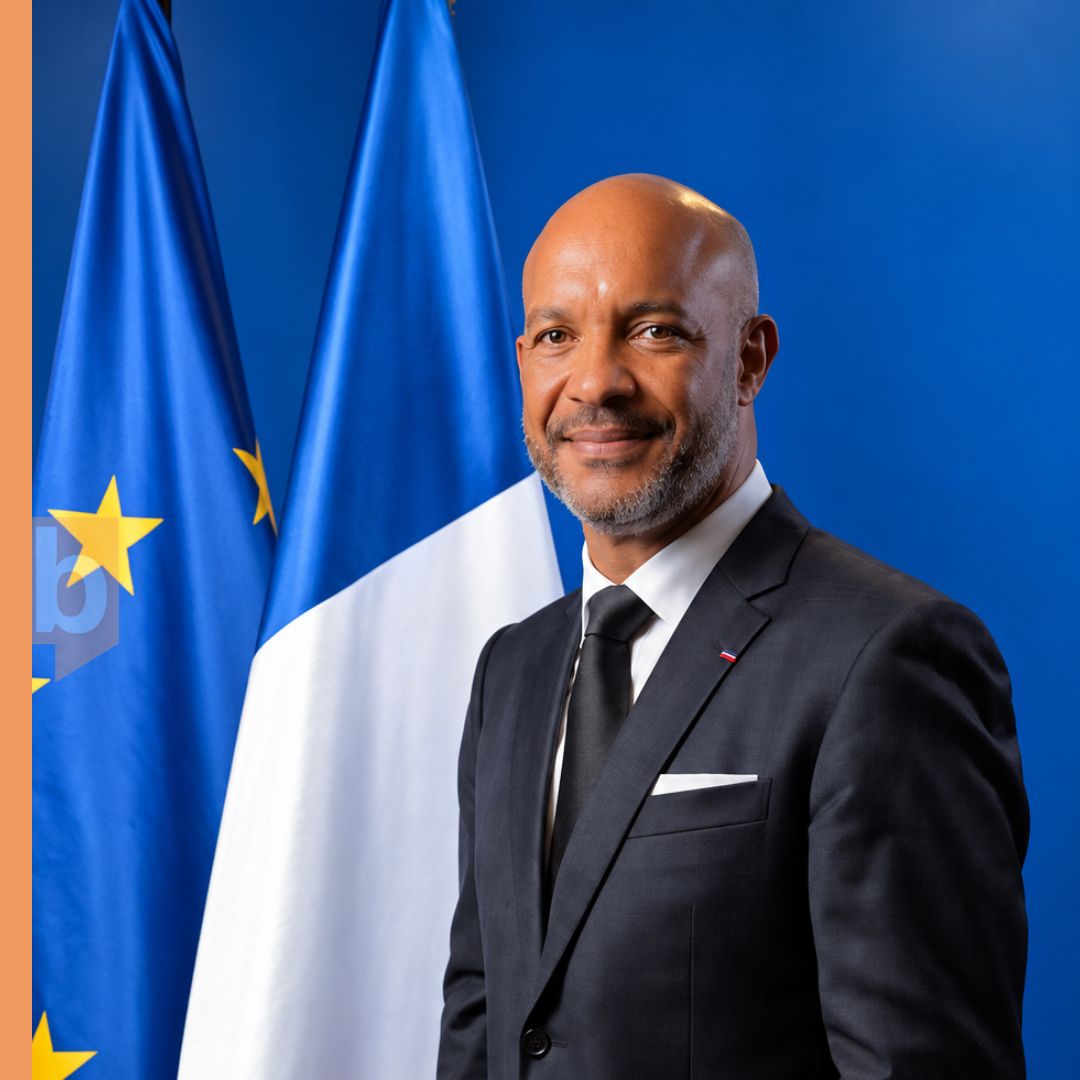
MARIGOT--Former President of the Collectivity of Saint-Martin Daniel Gibbs was elected to the French Senate on Sunday, September 27, after overturning a first-round deficit to defeat Valérie Damaseau in the second and final round of voting.
Gibbs secured 13 votes to Damaseau’s 11, with one of Saint-Martin’s 25 senatorial electors abstaining. The result gives Gibbs Saint-Martin’s single seat in the French Senate and marks his return to national political office after previously serving as deputy for Saint-Barthélemy and Saint-Martin.
The result came after a very different first round earlier Sunday. Damaseau led with 11 votes, while Gibbs received six. Raphaël Sanchez received four votes, outgoing Senator Annick Pétrus received three, Bernadette Venthou-Dumaine received one, and Tristan Choppin Haudry de Janvry received none.
With no candidate reaching the 13 votes required for an absolute majority, the election proceeded to a second round later in the day.
Only Gibbs and Damaseau contested that second ballot. Gibbs increased his support from six to 13 votes, while Damaseau remained at 11.
The result means Gibbs succeeds Pétrus, whose attempt to secure another term ended after she received three votes in the first round and did not contest the second.
Why only 25 people voted
Unlike elections for Saint-Martin’s Territorial Council, members of the public do not directly vote for their senator.
France elects senators through what is known as indirect universal suffrage. Instead of every eligible voter casting a ballot, senators are chosen by an electoral college consisting of designated elected representatives, commonly referred to as grands électeurs, or grand electors.
For Saint-Martin, that electoral college consisted of just 25 people.
This explains how someone can be elected to represent the entire territory in the French Senate with only 13 votes. Those 13 votes were cast by members of the legally established electoral college rather than by 13 members of the general public.
The system reflects the particular role of the Senate within France’s constitutional structure. While the National Assembly is directly elected by voters, the Senate is intended specifically to represent France’s territorial communities.
Why were there two rounds?
Because Saint-Martin elects only one senator, the election is held using a majority voting system.
To win in the first round, a candidate must secure an absolute majority. With all 25 electors participating on Sunday morning, the winning threshold was 13 votes.
Damaseau came closest with 11, while Gibbs had six. Since nobody reached the required majority, a second round became necessary.
The second round works differently. The candidate receiving the largest number of votes wins, without having to meet the same absolute-majority requirement that applies during the first ballot.
Candidates also have an opportunity between the two rounds to determine whether they will continue. By the second ballot, the original six-candidate contest had become a direct race between Gibbs and Damaseau.
Gibbs ultimately secured 13 votes, Damaseau received 11 and one elector abstained.
What does a senator do?
France has a two-chamber Parliament consisting of the National Assembly and the Senate.
Senators participate in making national law, examine legislation, propose amendments, question government ministers, participate in parliamentary committees and scrutinize the work of the French Government.
The Senate also has a specific constitutional responsibility to represent France’s territorial communities, making the position particularly important for smaller overseas territories such as Saint-Martin.
Gibbs will therefore represent Saint-Martin in Paris on legislation and national policy that can affect the territory, including matters related to public finances, taxation, social policy, economic development, infrastructure, institutions and France’s overseas territories.
His election does not make him the head of Saint-Martin’s local government.
The President and Territorial Council of the Collectivity remain responsible for the territory’s local government functions. The senator operates at the national parliamentary level.
What happens next?
Gibbs will now take Saint-Martin’s seat in the French Senate for a six-year mandate.
Once seated, he will participate in the work of the Senate, including joining parliamentary committees and taking part in debates and votes on national legislation. Senators also normally associate with one of the political groups within the Senate, although their territorial representation remains an important part of their mandate.
His election also creates an important distinction ahead of Saint-Martin’s next Territorial Council election.
French rules governing incompatible offices prevent a senator from simultaneously serving as President or Vice-President of Saint-Martin’s Territorial Council, or as a member of its executive. Gibbs can remain an ordinary territorial councillor while serving as senator, but holding the Senate seat affects which executive territorial positions he could simultaneously occupy.
That issue could become relevant as Saint-Martin approaches the renewal of its Territorial Council in 2027, particularly given Gibbs’ previous service as President of the Collectivity from 2017 to 2022.
For now, however, Sunday’s result settles who will represent Saint-Martin in the upper chamber of the French Parliament.
Daniel Gibbs began the day six votes behind the first-round leader. By the end of the second ballot, he had more than doubled his support and secured Saint-Martin’s seat in the French Senate.
Join Our Community Today
Subscribe to our mailing list to be the first to receive
breaking news, updates, and more.