.jpg)


FORT-DE-FRANCE, MARTINIQUE--French members of the Organisation of Eastern Caribbean States strengthened their calls for deeper regional integration, greater local decision-making authority and closer security cooperation during two high-level conferences held at the University of the Antilles in Martinique from July 1 to 3.
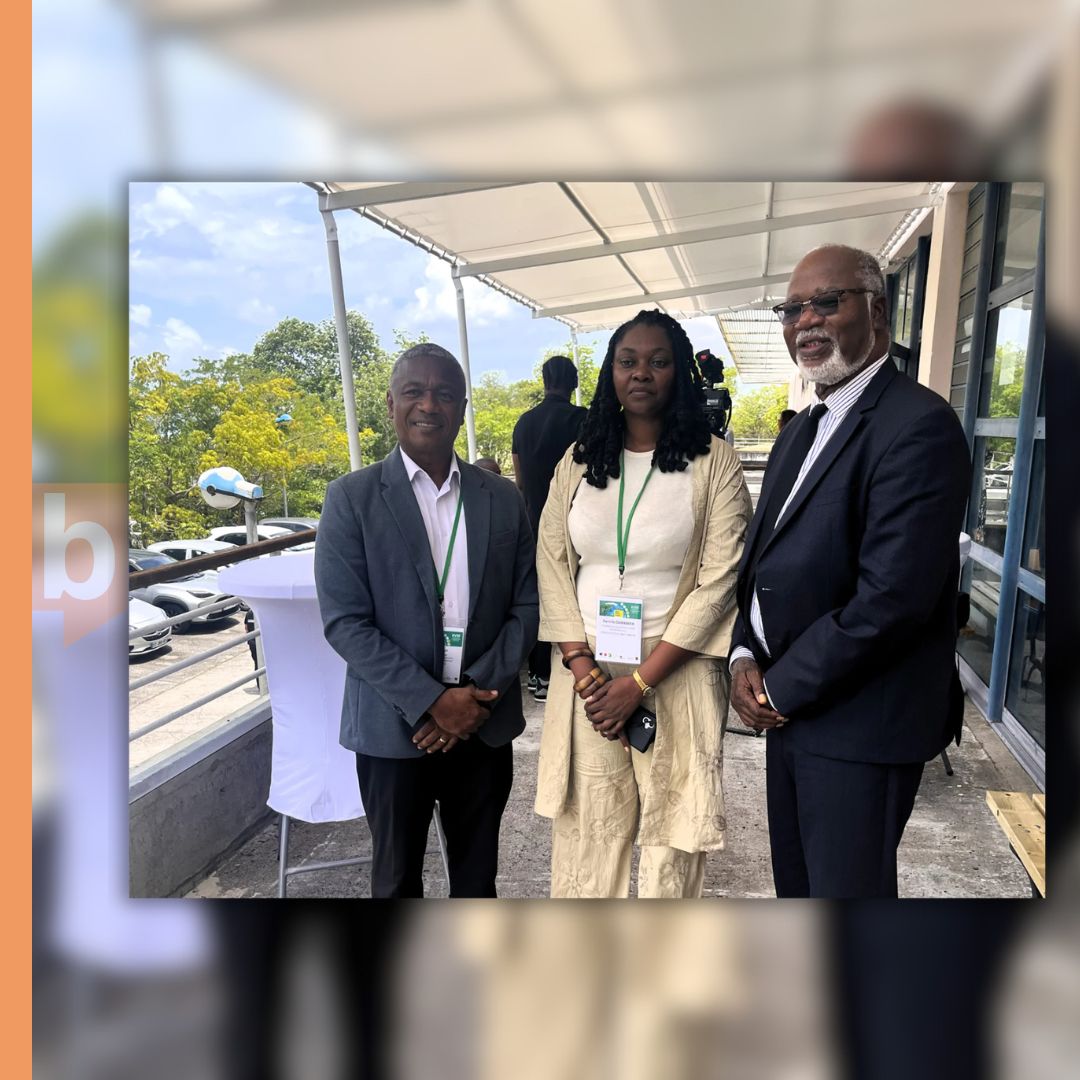
The Territorial Collectivity of Martinique hosted the 19th Antilles-Guyane Regional Cooperation Conference alongside the Antilles Regional Security Conference. The joint meetings brought together officials from the French Caribbean, OECS representatives, Caribbean governments, Latin American partners and international organizations.
The regional cooperation conference was led by France’s Ambassador-at-Large for Regional Cooperation in the Atlantic Region, Arnaud Mentré. The OECS Commission was represented by Legal Officer Dwight Lay and Cooperation Officer Mendy Kilo.
Martinique Executive Council President Serge Letchimy described regional integration as essential to Martinique’s economic development and called for renewed discussions with France and the European Union under the EU-ACP framework.
Letchimy said Martinique’s position as both part of the European Union and a recent member of CARICOM creates a need for deeper involvement in discussions governing trade between the Caribbean and the EU.
On July 1, Martinique also signed an agreement with the French State to begin discussions on expanding local regulatory powers. The arrangement is intended to support greater autonomous decision-making while maintaining Martinique’s constitutional relationship with the French Republic.
“We have no choice but to seek different supply routes. We have no choice but to work with all Caribbean countries in research and development, innovation and biodiversity,” Letchimy said.
President of the Collectivity of Saint Martin Louis Mussington supported the call for greater flexibility and decision-making authority within the shared European framework.
“It is time to move beyond the paradoxes. It is time to modernize our working methods so that our interests within the region can converge, supported by a stronger capacity to act,” Mussington said.
Referring to Saint Martin’s accession to the OECS in 2025, Mussington said regional cooperation has become increasingly important amid growing international economic uncertainty.
“Caribbean regional cooperation has never made more sense than it does today, given the growing sense of economic insecurity in the global environment,” he said. “We must be creative in developing multisectoral cooperation that takes our status into account.”
Creative Industries Identified as Regional Growth Area
Saint Martin also highlighted the role of cultural industries in economic development and regional integration.
Mussington proposed the creation of a Caribbean Audiovisual and Film Network within the OECS. The initiative was first announced during the 49th meeting of OECS Commissioners in April 2026 and was formally presented to the OECS Authority in June.
Through several conference workshops, the OECS Commission also presented findings from its 2025 Creative Sector Survey.
The findings will support the development of the OECS Orange Economy Strategy, which seeks to strengthen regional cooperation in production, co-production, skills development, financing and distribution.
Patrick Sellin, representing the Regional Council of Guadeloupe, said regional integration must be supported by practical projects and strong institutions.
“Experience teaches us that regional integration cannot simply be declared,” Sellin said. “It is built through consistency, trust and method. It depends on clear political will, strong institutions and projects that are useful to our people.”
Regional Security and Drug Trafficking
The 2026 regional cooperation conference was held alongside the Antilles Regional Security Conference, creating an opportunity for Caribbean and Latin American partners to strengthen collaboration against drug trafficking and related criminal activity.
Participants included French Minister for Europe and Foreign Affairs Jean-Noël Barrot, Minister for Overseas Territories Naïma Moutchou and Minister Delegate to the Minister of the Interior Jean-Didier Berger.
French authorities announced plans to strengthen strategies and resources to combat drug trafficking in the country’s outermost territories while expanding cooperation with neighboring Caribbean states.
French officials reported that 42 of the 81 tonnes of illegal drugs seized nationally in 2025 were intercepted in the Caribbean region.
Dominica Prime Minister Roosevelt Skerrit said modern security challenges extend beyond traditional law enforcement and require coordinated regional action.
“Security today must be viewed differently. It extends far beyond policing and defence,” Skerrit said.
“It includes protecting our maritime borders, strengthening cybersecurity, securing energy and food systems, and improving resilience against natural disasters. These challenges are collectively felt, and our response must be fully integrated.”
Skerrit said security cannot be considered separately from climate resilience and economic stability, particularly for small Caribbean states.
Martinique Declaration Adopted
The three-day meeting resulted in the creation of working groups focused on common investigative methods, joint judicial procedures and improved information-sharing on criminal activities.
The Martinique Declaration, adopted on July 3, issued a broad regional call for coordinated action against criminal activity.
Other participants included representatives of French national authorities and outermost regions, members of the French Parliament, Caribbean police services, military and judicial administrations, and regional ministers responsible for justice, crime prevention and external affairs.
Among those attending were Saint Lucia Minister for Home Affairs, Crime Prevention, Conflict Resolution and Persons with Disabilities Jeremiah Norbert, and Attorney General and Minister of Justice and Legal Affairs Gareth Wilkin.
Regional and international organizations were also represented, including the Regional Security System, the Association of Caribbean States, the Organization of American States and the United Nations Office on Drugs and Crime.
The OECS said the conferences reinforced the importance of practical cooperation, stronger institutions and shared regional responses to economic, cultural and security challenges across the Caribbean.
Join Our Community Today
Subscribe to our mailing list to be the first to receive
breaking news, updates, and more.