.jpg)


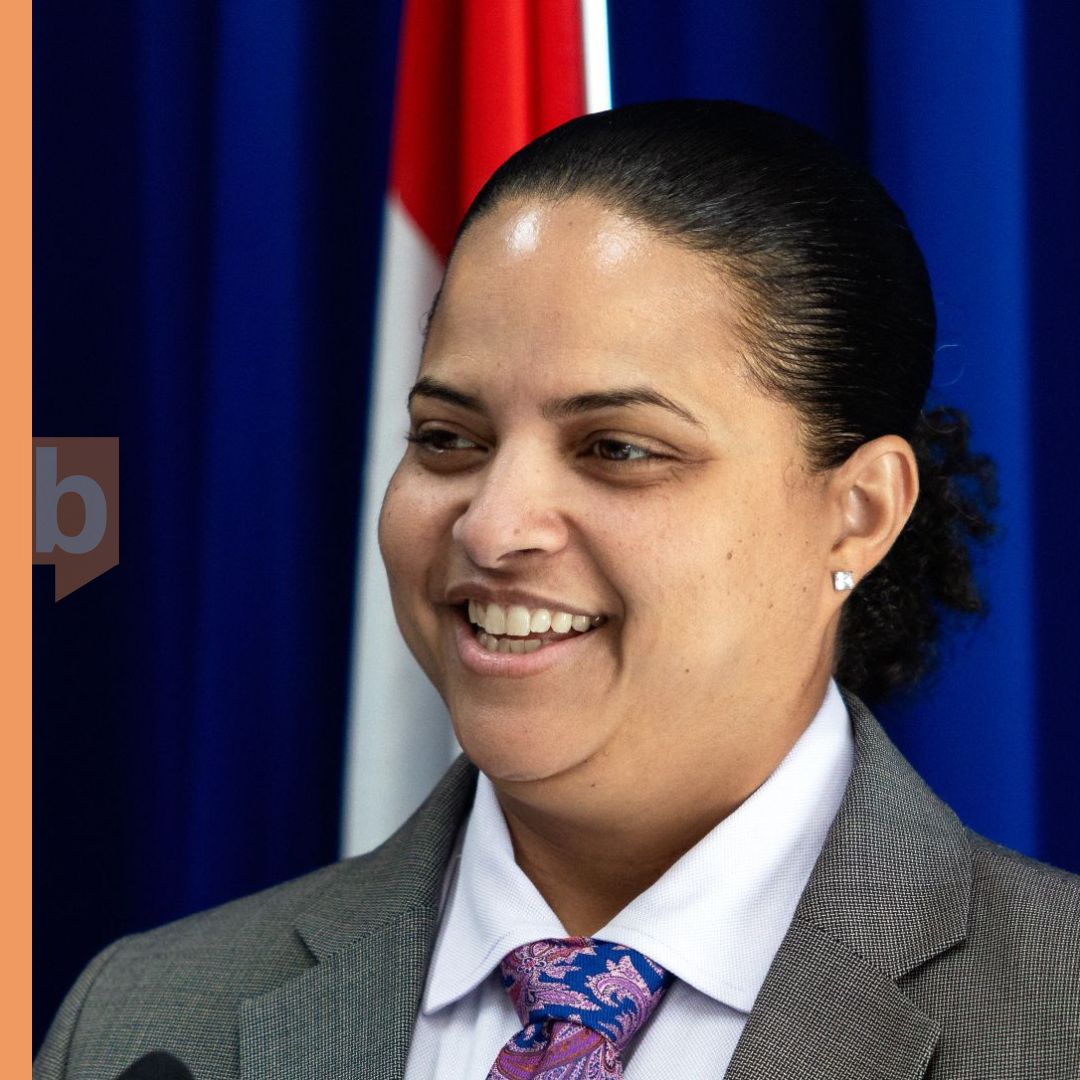
GREAT BAY--Youth and Sport (ECYS), with approximately Cg. 77.5 million allocated in the 2026 Budget, as Minister Melissa Gumbs outlined a wide-ranging agenda covering education reform, cultural preservation, youth development, sports, digital transformation and major externally funded projects.
Presenting the Ministry’s 2026 Budget priorities to Parliament, Gumbs said ECYS is working within significant fiscal limitations while attempting to modernize systems that are critical to St. Maarten’s long-term development. The Ministry’s budget increases by approximately 2.87 percent over 2025, with much of the increase driven by mandatory costs such as indexation and vacation-pay adjustments, together with externally financed projects.
Gumbs said the Ministry’s broader objective remains building a more robust, streamlined and innovative St. Maarten in which residents are equipped to become confident, literate, critically thinking and creative lifelong learners.
She warned that St. Maarten, like much of the Caribbean, remains behind in developing the human capital and digital literacy required for a rapidly changing world.
The Minister said education systems can no longer rely solely on methods that served previous generations, stressing the need for greater attention to innovation, artificial intelligence, STEAM education and lifelong learning.
Education Accounts for Bulk of Spending
Of the approximately Cg. 77.5 million identified for education, Gumbs said the overwhelming majority is already committed to subsidized and public education.
Subsidized education alone accounts for more than Cg. 71 million, leaving approximately Cg. 6.45 million for other education-related responsibilities, including reform, access to quality education and other initiatives. That remaining figure does not include Department of Education personnel costs, meaning the actual discretionary amount available for new initiatives is even smaller.
School transportation remains fully funded at approximately Cg. 3.5 million.
Gumbs also explained that education subsidies cover considerably more than teacher salaries. The funding methodology includes principals and other staff, allowances and benefits, pension contributions, social premiums, professional development, recruitment, school social workers, student support, buildings and grounds, furniture, educational materials, utilities, internet, administration, school activities and transportation.
Public education receives approximately Cg. 22 million in 2026. The Foundation for Catholic Education is allocated approximately Cg. 15.2 million, the Foundation for Protestant Christian Education approximately Cg. 11.2 million, Hillside Christian Schools approximately Cg. 5.7 million and the Methodist Agogic Centre approximately Cg. 9.6 million.
Gumbs said presenting the individual allocations was important to demonstrate how much of the Ministry’s budget is already legally or structurally committed before new initiatives are considered.
Culture Budget More Than Doubles
The most significant percentage increase within ECYS occurs in the Culture Department, whose budget grows by approximately 111 percent.
Gumbs stressed, however, that the increase should not be interpreted as a doubling of the Department’s normal operating resources. It is driven primarily by approximately Cg. 5.3 million in Dutch Government funding connected to the slavery remembrance and heritage agenda.
The St. Maarten Development Fund has been designated to manage and execute the projects under the Future Roots program in collaboration with the Department of Culture.
The nine initiatives include development of a national St. Maarten history curriculum, monument remapping, beautification and digital infrastructure, upgrades to the Philipsburg Cultural Center, a heritage scholarship program, genealogical research for descendants of slavery, upgrades to the John Larmonie Center, improvements involving SIMARC and museum staff, and the development of books and audiovisual material on St. Maarten’s history.
Gumbs said the first two funding tranches, totaling approximately US$1.9 million, have already been transferred to SMDF and project mapping is expected to begin shortly.
She described the initiative as the most significant investment yet in the development and preservation of St. Maarten’s culture and heritage sector.
Youth, Sports and Student Support
The Department of Youth’s budget increases to approximately Cg. 3.31 million, with emphasis on youth engagement, rights-based programs, community initiatives, leadership and resilience.
The Positive Parenting Support Program, launched in 2024 through collaboration between Government and UNICEF Netherlands, will continue as part of the effort to strengthen the environment surrounding young people.
Gumbs stressed that meaningful youth participation requires Government to go beyond consulting young people and actively incorporate their perspectives into policymaking.
Sports funding remains relatively stable at approximately Cg. 2.9 million, supporting sports infrastructure, school sports, national teams, international participation and healthy-living initiatives.
The National Sports Institute continues to support the management of several facilities, including the L.B. Scott Sports Auditorium, John Cooper/Jose Lake Ball Park, Belvedere Sports Complex, Raoul Illidge Sports Complex and community basketball courts.
Study financing increases by approximately 11 percent, while Student Support Services will continue providing academic, psychosocial and career guidance.
AI, STEAM and Digital Education Receive Increased Focus
Education Innovation receives a 29 percent increase to approximately Cg. 1.84 million.
Priorities include digital learning, Education on the Move, monitoring and evaluation systems, artificial intelligence policy and STEAM education.
Gumbs said AI and STEAM policies are being developed in cooperation with UNESCO, with stakeholder consultations underway.
The Ministry is also examining the issue of screen time, particularly for very young children. Gumbs emphasized that technology itself is not inherently negative, but that constant and unsupervised screen exposure without sufficient physical activity and play can be harmful.
She said STEAM education should not be viewed simply as putting devices in classrooms, but as developing problem-solving, creativity and practical skills through new approaches to learning.
Major School and Sports Projects Moving Ahead
ECYS is also advancing several projects financed through the St. Maarten Trust Fund.
These include the demolition and replacement of the old Milton Peters College gym, reconstruction work involving Sister Marie Laurence Primary School, Sister Regina Primary School and the MAC Browlia Maillard Campus, as well as improvements to sports and community facilities.
Community projects include the Dutch Quarter Sports Court, Cole Bay Community Center Park and other neighborhood sports facilities.
Gumbs said the first major group of works is expected to be completed around September or October 2027, although some community basketball courts are expected to begin being delivered from October onward.
Work involving the St. Maarten Library is also moving forward, with mobilization expected to begin in the coming weeks.
Other projects include a Ministry Management Information System, a teacher web-training platform and reforms to vocational and early-childhood education.
A plan of approach for vocational education reform has been approved, with implementation expected to begin during the final quarter of 2026. The first draft of a new early-childhood curriculum for children ages zero to four is also under development and consultation.
Staffing Remains a Constraint
The Ministry reported 281 positions filled, representing an overall staffing occupancy rate of approximately 81 percent.
Gumbs said strengthening staffing capacity remains critical to implementing reforms and improving service delivery. ECYS has engaged an HR consultant to assist with critical vacancies and outstanding personnel matters.
She said approximately 25 percent of the Ministry’s budget goes toward personnel costs and 75 percent toward material costs, although much of the latter is already committed to education subsidies, transportation, scholarships and other established obligations.
The Minister said the Ministry will continue strengthening monitoring and evaluation, performance management, financial planning and oversight while relying heavily on external funding opportunities to advance reforms that could not otherwise be financed from the national budget alone.
Gumbs framed the 2026 agenda as one focused not simply on maintaining existing services, but on laying the groundwork for a more modern education system, stronger cultural institutions, greater youth participation and improved opportunities for St. Maarten’s future workforce.
Join Our Community Today
Subscribe to our mailing list to be the first to receive
breaking news, updates, and more.