.jpg)


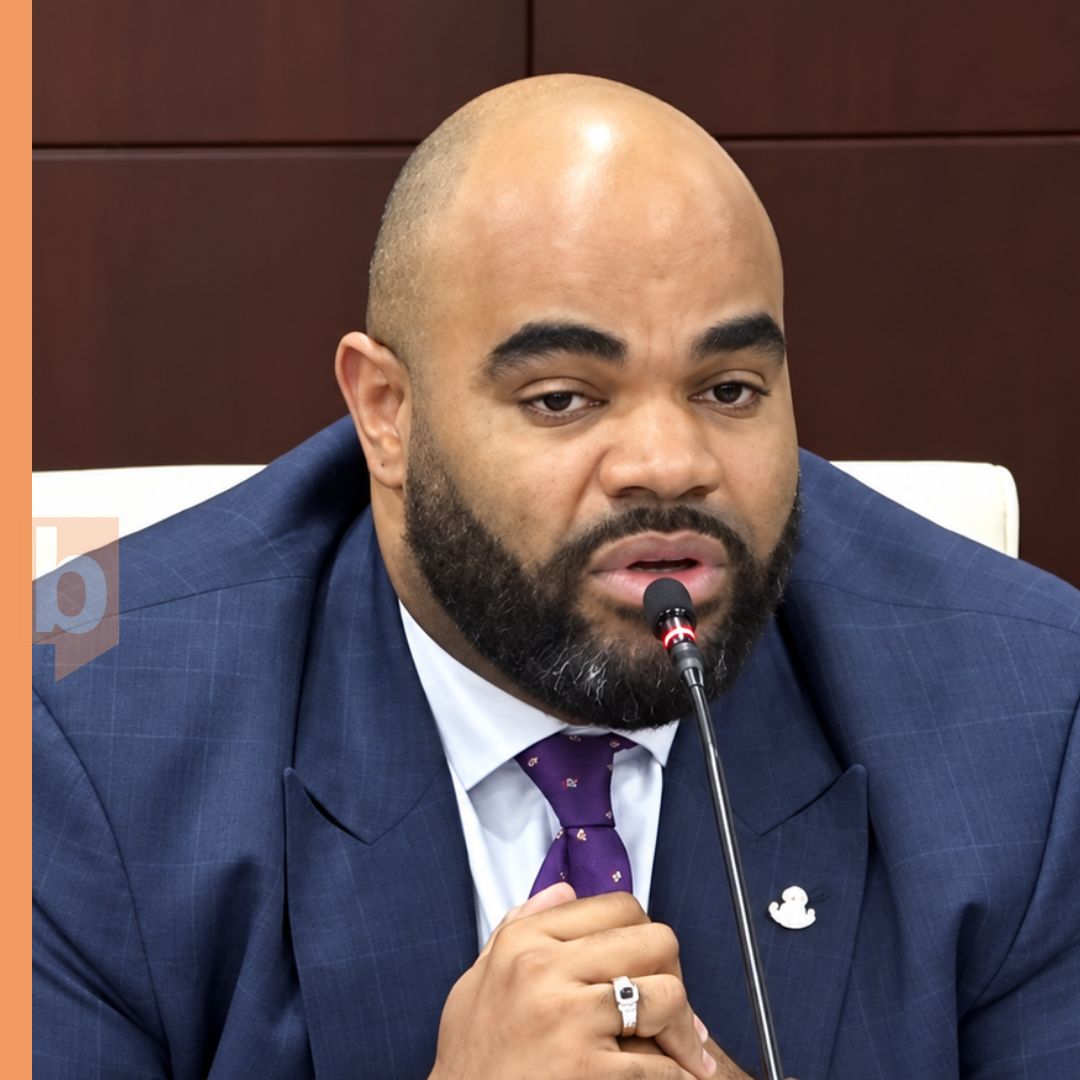
GREAT BAY--Minister of Public Housing, Spatial Planning, Environment and Infrastructure (VROMI) Patrice Gumbs Jr. says Government’s housing policy is designed to expand the country’s housing supply through several approaches, with a strong focus on making better use of existing housing stock, increasing density and working with public and private sector partners.
Responding to Members of Parliament during the continuation of the 2027 budget debate in the Central Committee, Gumbs said the policy is not based solely on identifying undeveloped Government land and constructing new housing developments. Instead, Government intends to combine reuse of existing housing, apartment development, increased density, new construction and targeted action plans.
Gumbs said at least 70 per cent of the housing program is intended to be achieved through reuse of existing housing stock and densification. This means a significant portion of future housing growth is expected to come from making more efficient use of already developed areas rather than relying mainly on large new developments on vacant land.
The policy also sets an affordability benchmark tied to household income. Gumbs said affordable housing is defined around housing costs not exceeding approximately 30 per cent of median net income. The intention is to ensure that housing policy is not focused only on increasing supply, but also on whether households can reasonably carry the cost of housing.
Financing is expected to involve several mechanisms and partners. Gumbs specifically referenced the Mortgage Guarantee Fund as one of the tools being considered to support housing delivery, alongside public-private partnerships, the St. Maarten Housing Development Foundation and private developers.
The Minister also stressed that the housing policy itself should not be viewed as a single project plan identifying exactly where homes will be built. He described it as a strategic framework that establishes Government’s role and the roles expected from other parties in the housing sector.
Government’s role under the policy is primarily to steer, facilitate and regulate, including through planning, land-related decisions, permits, subsidies and coordination. The St. Maarten Housing Development Foundation is expected to remain an important partner in the social housing sector, while private developers and other investors are also expected to contribute to expanding supply.
A more detailed multi-year housing strategy has not yet been completed. Gumbs said additional capacity is required within VROMI and that the Ministry is in the process of hiring a policy advisor who will be dedicated to implementation of the housing policy from 2027 onward.
No completion date was given for the multi-year housing strategy. Gumbs indicated that the Ministry first needs to strengthen its internal capacity so that the broader housing policy can be translated into specific actions, projects and financing arrangements.
Vineyard Heights was among the locations addressed during the Minister’s presentation. Gumbs said Government could choose to develop land itself, but any such move would require a concrete housing action plan and would depend on available budget, implementation capacity and the resolution of outstanding legal or land-related matters.
He said Vineyard Heights and other potential housing opportunities would have to be assessed within the wider housing policy. Discussions are already taking place, but proposals would have to be further developed, documented and approved before more detailed information could be presented.
Gumbs also referred to another parcel owned by the St. Maarten Housing Development Foundation that is being considered for housing development. Discussions are taking place on the possibility of developing that property through a public-private partnership, with Government working to bring potential partners together.
The Minister also referenced Government’s longer-term objective of facilitating approximately 1,200 homes, but made clear that this would not come from one development or one parcel of land. The broader strategy is intended to combine reuse, densification, new construction, financing support, partnerships and annual action plans to increase the country’s housing supply over time.
Join Our Community Today
Subscribe to our mailing list to be the first to receive
breaking news, updates, and more.