.jpg)


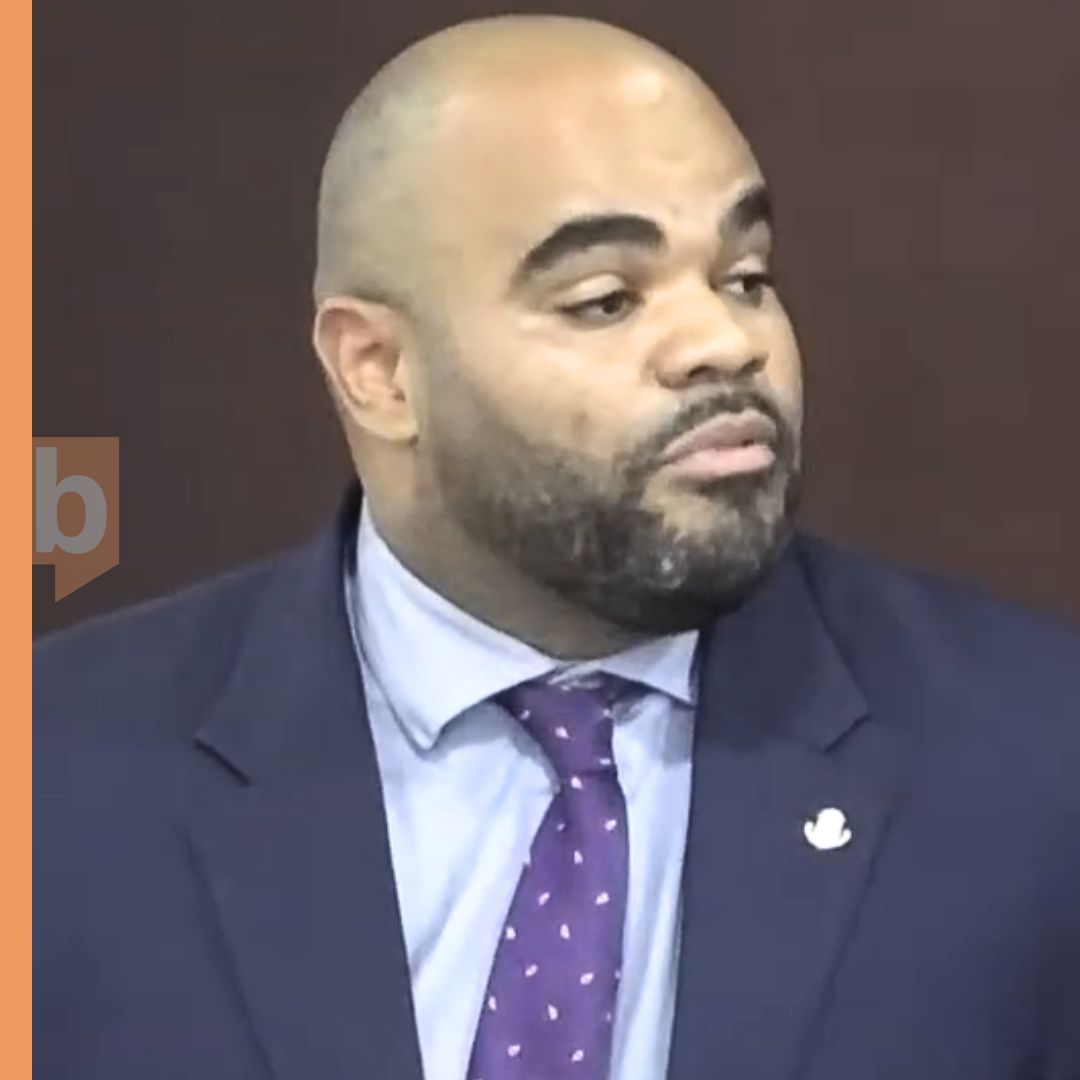
GREAT BAY--Minister of Public Housing, Spatial Planning, Environment and Infrastructure Patrice Gumbs told Parliament that VROMI is operating with approximately 50 vacancies and only 65 percent of its approved staffing complement, even as the Ministry continues to carry responsibility for housing, roads, drainage, waste management, spatial planning, environmental protection and other critical infrastructure.
Presenting VROMI’s priorities during the 2026 Budget debate, Gumbs said the Ministry has an approved formation of 145 positions, of which approximately 95 are currently filled. Funding has been included to fill an additional 15 vacancies during 2026, but he stressed that personnel capacity remains one of VROMI’s most significant challenges.
The Minister presented the 2026 Budget under the theme “Delivering More with Limited Resources,” saying it reflects the reality of a Ministry expected to respond to increasing demands for housing, better roads, drainage, environmental management, waste services, permits, land administration and enforcement.
“The central question before us is not whether more needs to be done. The question is how we can maximize results with the resources available,” Gumbs told Parliament.
VROMI’s proposed operational budget for 2026 amounts to approximately Cg. 36.8 million, while revenue is projected at approximately Cg. 17.6 million. Primary revenue sources include the GEBE concession, construction permit fees, leasehold canon and inspection-related revenues.
While the 2026 revenue projection may appear to represent a significant decline when compared directly with the amount budgeted for 2025, the comparison with actual revenue performance presents a different picture. The proposed 2026 figure is much more closely aligned with what VROMI has actually been realizing, meaning the lower projection should not be interpreted as a comparable collapse in revenue. Rather, the 2026 estimate reflects a more realistic projection based on actual collections instead of the higher amount previously budgeted.
Road Funding Remains a Major Constraint
A substantial portion of VROMI’s operational spending is already committed to essential services. Solid waste collection, district cleaning, landfill operations, security, road repairs, trench maintenance, wastewater treatment and street lighting collectively account for approximately 77 percent of total goods and services expenditure.
Gumbs acknowledged continued public concern about the condition of roads, but said the primary challenge is not a lack of plans, technical knowledge or willingness to execute. He identified the limited availability of dedicated funding as the principal obstacle to comprehensively rehabilitating and maintaining the national road network.
The amount currently available for road repairs allows VROMI to address the most pressing needs and carry out essential interventions, but Gumbs said it is insufficient to maintain the entire network at the standard residents and visitors expect.
The Ministry has therefore been laying the groundwork for a Road Fund, intended to create a dedicated and sustainable financing mechanism for road maintenance and rehabilitation using road tax revenues.
According to Gumbs, such a fund could provide predictable financing, support preventative maintenance and allow for longer-term planning. He cautioned, however, that implementation of a Road Fund is a matter for a future national budget rather than Budget 2026.
More Than Cg. 80 Million in Capital Requests
VROMI’s proposed capital expenditure requests exceed Cg. 80 million.
Among the significant requests are GEBE power generation investments, the Dutch Quarter Road Development Program, road paving initiatives, main road improvements, upgrades to the Prince Bernard Bridge and the acquisition of operational equipment and vehicles.
Gumbs also clarified that VROMI does not intend to pursue the purchase of a vessel that remains listed in the draft 2026 Budget.
He explained that the item had already been rolled over during preparation of the budget before the decision against the acquisition was finalized. VROMI is now discussing the possible reallocation of that funding with the Netherlands.
Housing Remains a Priority
Housing continues to be one of VROMI’s major policy priorities.
The Ministry will continue implementing the National Housing Strategy, strengthening cooperation with the St. Maarten Housing Development Foundation, advancing the Mortgage Guarantee Fund and supporting implementation of the updated Building Code.
Government has also acquired the Belvedere Remainder property, and a plan for resilient development of the site has been prepared. The proposal is now being reviewed and costed ahead of future discussions on financing.
Gumbs said the National Housing Policy has already been completed and presented, while efforts toward operationalizing the Mortgage Guarantee Fund are progressing.
Waste Ordinance Expected This Year
Major reforms are also continuing within the waste management sector.
A comprehensive Waste Ordinance remains on track for submission to Parliament in 2026, while the landfill weighbridge has been operationalized to improve accountability, data collection and management of the landfill.
VROMI has also submitted a policy framework to the Council of Ministers identifying financial mechanisms to adequately fund the waste sector over the longer term. The matter is expected to be discussed further with the World Bank.
Climate Resilience and Spatial Planning
Gumbs highlighted several climate adaptation initiatives undertaken during 2026, including a National Climate Adaptation Workshop, launch of the St. Maarten Climate Impact Atlas, development of localized climate scenarios for 2050 to 2100 and launch of the National Climate Adaptation Framework.
New stormwater pumps have also been delivered as part of efforts to improve rainfall management and reduce flooding risks in the Great Bay area.
On spatial planning, VROMI is continuing work on the Land Issuance Policy, Land Pricing Policy, Spatial Economic Strategy and National Zoning Framework, measures intended to bring greater structure and predictability to future development.
The Ministry is also modernizing its internal operations. An agreement with Kadaster is intended to improve digitalization, land administration, data sharing and customer service, while a Ministry-wide Standard Operating Procedure framework is being introduced to improve consistency, accountability and efficiency.
Gumbs described the 2026 Budget as fundamentally a “budget of execution”, recognizing the realities of limited staffing, aging infrastructure, environmental challenges and increasing public expectations while maintaining focus on housing, infrastructure, spatial planning, environmental sustainability and improved public services.
“The people of St. Maarten expect value,” Gumbs said. “This budget provides the Ministry with the resources necessary to continue delivering those values responsibly, transparently, and efficiently.”
Join Our Community Today
Subscribe to our mailing list to be the first to receive
breaking news, updates, and more.