

.jpg)


KINGSTON--Jamaica has formally taken its slavery reparations case to Buckingham Palace, asking King Charles III to refer three legal questions concerning the enslavement of Africans in Jamaica and Britain’s potential obligation to provide reparatory remedies to the Judicial Committee of the Privy Council.
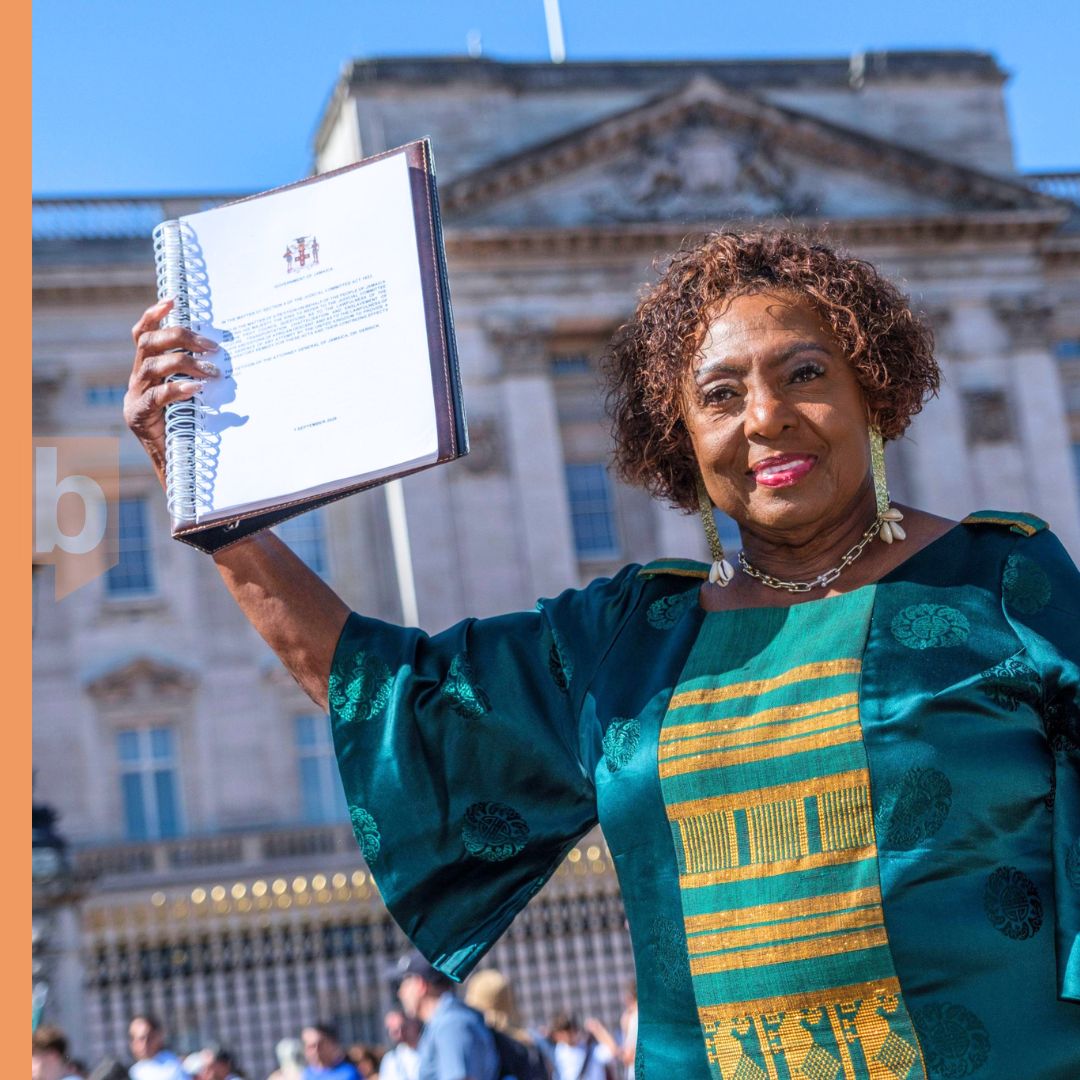
A Jamaican government delegation led by Culture Minister Olivia Grange delivered the petition to Buckingham Palace on Monday. The filing asks whether the forced enslavement of Africans in Jamaica was lawful under English common law, whether it violated international law, and whether the United Kingdom has a legal obligation to provide reparatory remedies to the Jamaican people.
The petition represents a new legal approach in Jamaica’s long-running pursuit of reparatory justice. According to Caribbean360, the Jamaican delegation described it as the first time a Commonwealth country has sought to use this particular constitutional mechanism to have slavery-related questions considered by the Privy Council.
The filing relies on powers contained in the Judicial Committee Act of 1833, which allows the British monarch to refer matters to the Judicial Committee for an advisory opinion. Jamaica continues to recognize the Privy Council as its final court of appeal.
King Charles was not at Buckingham Palace when the petition was delivered. He was at Balmoral in Scotland for his annual summer stay. Grange said the Jamaican delegation knew beforehand that the King would not be present and that the purpose of the visit was to formally lodge the petition, rather than personally hand it to the monarch.
Buckingham Palace confirmed that it worked with Jamaica’s Governor-General to ensure the petition was properly lodged. The Palace also pointed to the King’s stated commitment to encouraging greater understanding of the history and impact of slavery.
The Jamaican petition does not specify a monetary amount being sought from Britain. Grange has maintained that the legal initiative complements the wider CARICOM reparations campaign and its 10-point plan rather than replacing it. Jamaica’s position is that the question of any financial obligation should ultimately be determined through the appropriate legal process.
If the matter is referred to the Judicial Committee, judges from the United Kingdom’s Supreme Court who sit on the Privy Council could examine the questions and issue an advisory opinion.
Such an opinion would not itself amount to an award of compensation. However, a finding supportive of Jamaica’s arguments could provide the country and the wider Caribbean reparations movement with a significant legal basis for further negotiations or possible litigation.
The move comes against continued resistance from the British government to financial reparations for slavery. The UK government has again maintained that it does not intend to pay reparations, while acknowledging the brutality and injustice of the transatlantic slave trade.
The Jamaican delegation deliberately submitted the petition around the anniversary of the 1781 Zong massacre, one of the most notorious atrocities of the transatlantic slave trade. More than 100 enslaved Africans aboard the British slave ship Zong were thrown overboard and killed during the voyage.
The broader reparations debate has also focused heavily on Britain’s decision following abolition to compensate slave owners rather than the enslaved people themselves. Britain authorized £20 million in compensation to slave owners following abolition in the 1830s, an enormous sum at the time, while formerly enslaved people received no comparable compensation.
Alongside the reparations petition, Grange is expected to engage British Museum officials on the possible return of Taino cultural artefacts taken from Jamaica during the colonial period. Those discussions involve objects dating back centuries and form part of Jamaica’s wider efforts surrounding cultural restitution.
Attention will now turn to whether the British government advises King Charles to refer Jamaica’s questions to the Judicial Committee of the Privy Council and, if so, how the court responds to what could become a significant legal test for the Caribbean reparations movement.
Join Our Community Today
Subscribe to our mailing list to be the first to receive
breaking news, updates, and more.