

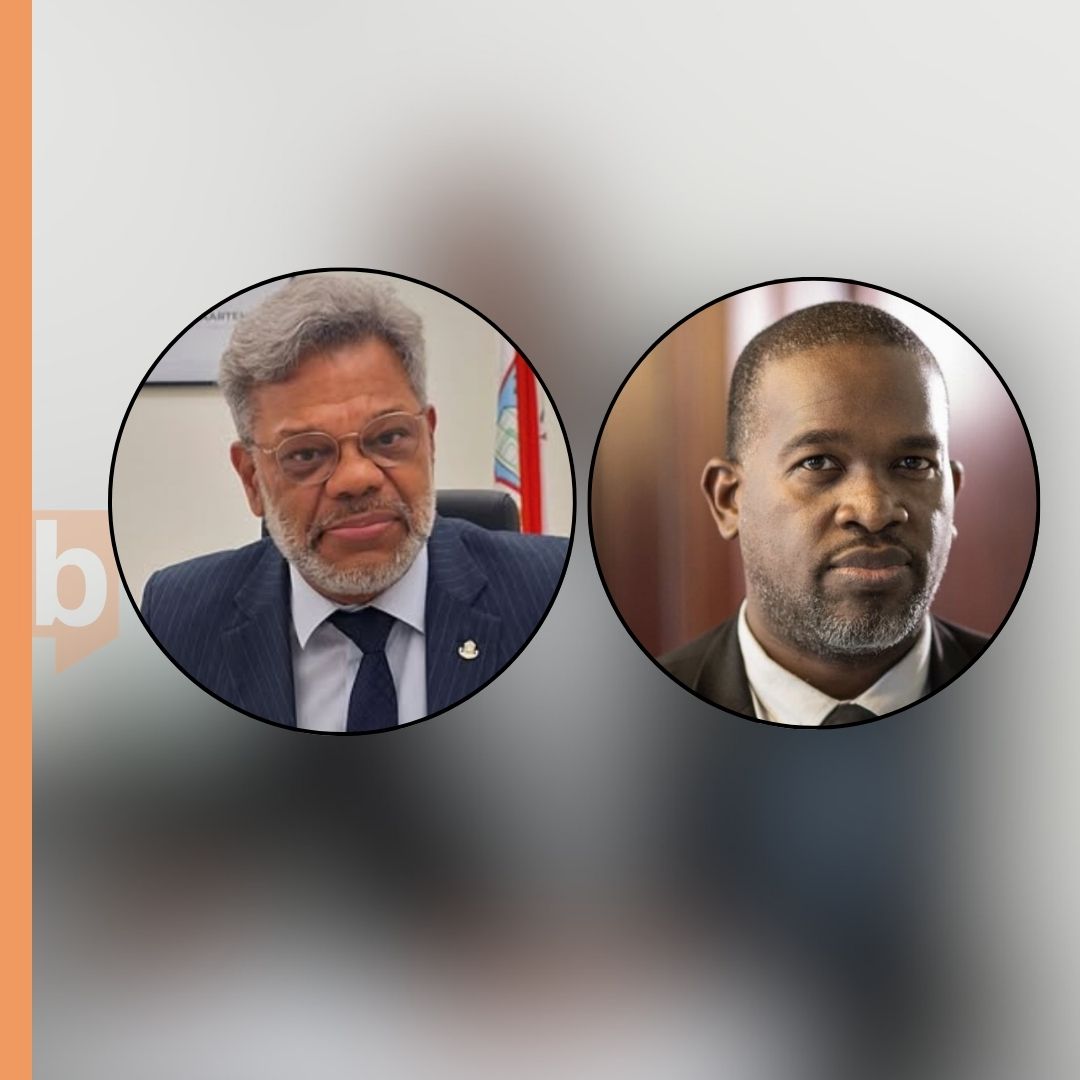



GREAT BAY--Constitutional expert Prof. Dr. Arjen van Rijn has concluded in a legal advisory commissioned by Prime Minister Dr. Luc Mercelina that the Governor of St. Maarten overstepped established constitutional boundaries during the handling of a January 2026 administrative matter, particularly by participating in internal government decision-making on an issue that fell under ministerial responsibility. The Prime Minister has now formally submitted the advisory to the Council of Ministers and, in the interest of transparency, also shared it with His Excellency the Governor and Members of Parliament.
According to the advisory, the Governor exceeded the limits of his constitutional role by taking part in deliberations on a country matter that belonged to the elected government and by involving himself in a decision-making process for which ministers, not the Governor, bear political responsibility. Prof. Van Rijn concluded that this conduct risked undermining the political primacy of the Council of Ministers and blurred the constitutional line between the Governor’s office and the authority of those elected to govern.
The legal opinion was commissioned after developments in January 2026 raised concerns about whether constitutional roles and decision-making boundaries had been properly observed during the handling of an administrative issue involving an employee appointed by, and under the political responsibility of, the Minister of Public Health, Social Development and Labor (The Chief of Staff of Minister brug). In his cover letter dated March 25, 2026, the Prime Minister said the advisory was sought because the matter raised serious questions about the Governor’s dual constitutional position, the limits of the office, and the core principle of ministerial responsibility. He told the Council of Ministers that the findings required careful review because of their potential implications for democratic governance and the preservation of constitutional order.
The advisory recounts that in early January 2026 an incident involving the employee led the Prime Minister to invoke article 45 of the Landsverordening materieel ambtenarenrecht (LMA), which provides for an order measure against a civil servant. On January 7, 2026, the Prime Minister denied the employee access to government buildings, government work locations, and government ICT systems pending the preparation of a formal suspension in the interest of the service. The advisory states that the Prime Minister also immediately submitted a draft national decree to suspend the employee under article 35 in conjunction with article 92(c) of the LMA.
Prof. Van Rijn’s report states that on January 16, 2026, the Governor invited the Prime Minister to a ministerial council meeting at his residence. The Prime Minister was reportedly unable to attend because the meeting was arranged at very short notice and conflicted with prior obligations, while the Minister of VSA was also absent. The advisory says the Governor nevertheless proceeded to meet with Deputy Prime Minister and acting Minister of General Affairs Grisha Heyliger-Marten and other ministers, expressed the view that the order measure was disproportionate, and indicated that the draft decree should not be executed until further notice. The report further says that the Governor encouraged ministers to reconsider the matter and then took part in the Council of Ministers meeting that same day, where ministers adopted decision COM160126 directing that the issue be reconsidered and proposing that the employee be heard again, with legal counsel present, before any decision was made on the suspension.
The legal advisory treats that participation as constitutionally significant. Van Rijn states that even though the Governor occupies a dual office, as both constitutional head of the country government and representative of the Kingdom Government, that position does not give the Governor an independent political mandate within domestic governance. In the report’s analysis, the Governor may consult, question, warn, and encourage reflection, but may not assume or share responsibility for executive decisions that constitutionally belong to ministers. The advisory therefore concludes that by joining the January 16 cabinet discussion and influencing its direction, the Governor moved beyond consultation and entered the realm of active governmental decision-making.
The opinion also records further developments later that month. On January 26, 2026, the Governor again presented the Prime Minister with the earlier draft decree for countersignature while at the same time offering a new proposal not to execute the January 16 draft decree until further notice. On January 27, the Prime Minister received another urgent draft decree from the Governor. According to the advisory, that draft repeated a government position that the employee would remain barred from the Government Administration Building and from government-related functions or government buildings where the Prime Minister was present, while being allowed to work remotely with access restored to the ICT network, government email, and mobile phone. The legal opinion notes that by then the Governor had also been made aware of a March 6 court ruling in which the challenged draft suspension decree had in the meantime been signed.
A major section of the advisory is devoted to explaining the constitutional framework behind the professor’s conclusion. Van Rijn notes that the Governor’s office has a twofold character, but emphasizes that this does not override the principle of ministerial responsibility, which remains central to St. Maarten’s constitutional democracy. The report stresses that ministers, not the Governor, are politically accountable for acts of government and that the Governor therefore does not possess autonomous executive authority in matters of country governance. The Governor’s role in domestic affairs, the report says, must always be understood within the limits imposed by democratic legitimacy and the responsibility of elected officeholders.
To support that view, the advisory examines constitutional practice, case law, and academic commentary from across the Caribbean parts of the Kingdom, including prior tensions in Aruba, Curaçao, and St. Maarten. It places the January 2026 events within a wider pattern of constitutional debate over how far the Governor may go in internal matters of government. The report notes that in earlier controversies elsewhere in the Kingdom, criticism arose whenever Governors appeared to exercise too much influence over decisions that should have remained with the politically responsible ministers. By situating the St. Maarten incident within that broader constitutional history, the advisory argues that the issues at stake are not merely procedural, but go to the heart of democratic governance.
Van Rijn’s central legal conclusion is that the authority to impose an order measure under article 45 LMA, as well as the authority to suspend an official under articles 35 and 92 LMA, rests with the constitutionally competent ministers and the Prime Minister, because those are country decisions for which elected officials are politically answerable. The Governor, in the professor’s view, was free to raise concerns about legality, proportionality, or possible Kingdom implications, but was not entitled to take part in the actual decision-making process, direct ministers on how to proceed, or otherwise place himself in a role that displaced those with constitutional authority over the matter.
The report is especially pointed in two respects. First, it states that the Governor should not have participated in the January 16 ministerial discussion, particularly in the absence of both the Prime Minister and the minister directly responsible for the employee in question. Second, it finds that by advising against execution of the Prime Minister’s proposed decree and joining the reconsideration of the measure, the Governor crossed from permissible consultation into impermissible interference with a domestic executive matter. According to the advisory, those actions exceeded constitutional boundaries and risked weakening the principle that the Council of Ministers, and not the Governor, holds political primacy in governing the country.
At the same time, the professor does not suggest that the Governor has no constitutional role in sensitive matters. On the contrary, he explicitly recognizes that the Governor may consult with ministers, ask for clarification, and warn against legal or constitutional errors. The advisory describes this as a necessary advisory space, a “gray zone” in which the Governor can help protect the constitutional order. But Van Rijn draws a firm line at direct participation in ministerial decision-making, especially when such participation affects the accountability of those elected to govern. In his view, once that line is crossed, the constitutional relationship between the Governor and the Council of Ministers becomes blurred in a way that threatens clarity, responsibility, and democratic legitimacy.
In his closing analysis, Van Rijn states that the January 2026 matter should have been handled differently. He writes that in future the Governor should limit himself to consultation with the competent ministers about the constitutional permissibility of their intended acts, rather than redirecting or effectively taking over their decisions. He adds that the incident demonstrates the need for a clearer practical line between the Governor acting as representative of the Kingdom and the Governor functioning within the country’s constitutional structure. That line, he argues, becomes especially important in moments of political tension, when institutional roles are most vulnerable to confusion.
In his letter transmitting the advisory, Prime Minister Mercelina said the document raises important considerations regarding the proper functioning of democracy, the limits of constitutional authority, and the need to preserve the constitutional order of St. Maarten. He told the Council of Ministers that certain actions described in the report appeared to have exceeded established constitutional boundaries and warranted deliberate review by the government. By also sending the advisory to Parliament and the Governor, the Prime Minister made clear that the issue extends beyond a single personnel case and touches on the institutional balance at the core of St. Maarten’s constitutional democracy.
Join Our Community Today
Subscribe to our mailing list to be the first to receive
breaking news, updates, and more.
