

.jpg)


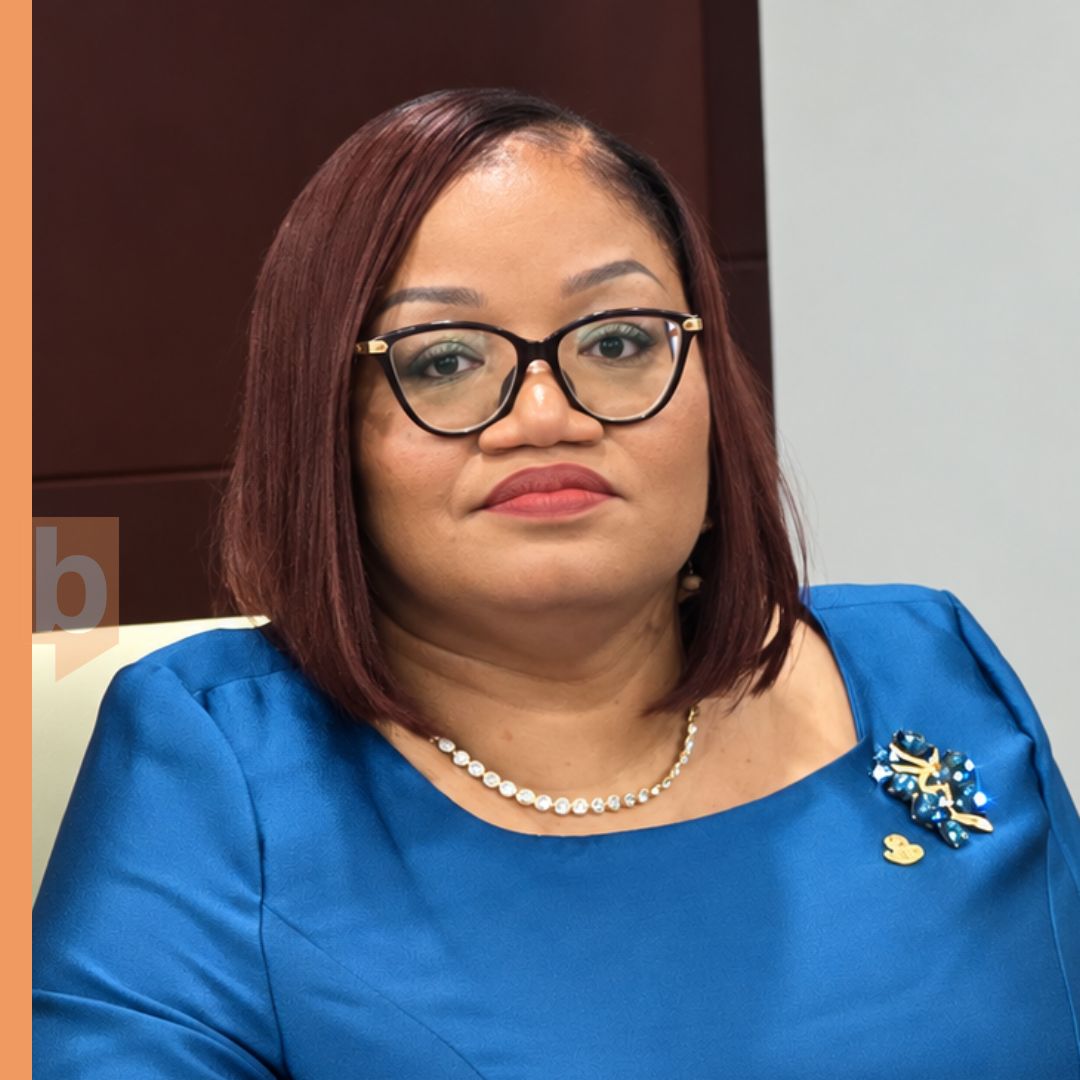
GREAT BAY--Minister of Finance Marinka Gumbs says government must do more than approve budgets and announce policy intentions, it must also provide Parliament with information showing whether ministries are actually carrying out what they were funded to do.
Gumbs backed the principle of providing Parliament with regular performance information after being asked whether she would commit to quarterly reports showing, ministry by ministry, how much was budgeted and how much was actually spent.
Gumbs said she had already made clear during the budget debates that she intends to provide Parliament with information necessary to assess government’s execution of the budget.
“I said in budget debates that I will be giving to Parliament. You know, we need to provide information so that we can also be held accountable, and I think that’s important,” Gumbs said.
She said accountability should be tied directly to what government tells Parliament and the public it intends to accomplish.
“If we say we’re going to do X, Y, Z, it is important that we show that we have done so,” Gumbs said.
The Finance Minister said she has no objection to providing Parliament with the information required to scrutinize government’s performance.
“I have absolutely no problem being transparent and giving what is due to Parliament so that we all can be held accountable for the things we say we want to do and how we’re going to do it,” she said.
The comments came during a wider discussion on execution of the 2026 budget and the government’s approach to the 2027 budget. The interviewer specifically asked what mechanisms would be used to ensure that approved allocations are actually executed and whether quarterly performance reports could show Parliament the difference between planned and actual expenditure across individual ministries.
Gumbs linked that accountability approach to the government’s move toward policy-based budgeting. She said ministries should not simply receive allocations without clearly identifying what policies they intend to execute, how much those policies will cost and whether the ministry has the capacity to carry them out.
She said the 2027 budget process is intended to focus more closely on policies that have a direct impact on the people of St. Maarten, with ministries expected to connect funding requests to specific objectives.
“It’s about really strategizing and analyzing. These are the things that I want to come with for the subsequent year, and in so doing, I need X amount to do so,” Gumbs said, adding that ministries must also demonstrate that they have the capacity to execute what they propose.
The Minister’s comments place greater emphasis on the execution phase of the budget cycle, not simply its passage through Parliament. The issue is particularly relevant as government prepares for parliamentary handling of the 2027 budget, which Gumbs has said is tentatively expected to begin in Central Committee on September 28.
Gumbs has also emphasized that the 2027 budget was prepared earlier than the 2026 budget and is being approached as a more policy-driven document, with spending intended to be linked more directly to government priorities and implementation capacity.
Under the approach described by the Minister, Parliament would have a stronger basis for comparing what ministries promised to deliver with what was actually spent and achieved during the year.
Gumbs said transparency is necessary not only for Parliament’s oversight role, but also for government itself to demonstrate that approved spending is translating into results.
Join Our Community Today
Subscribe to our mailing list to be the first to receive
breaking news, updates, and more.
