.jpg)


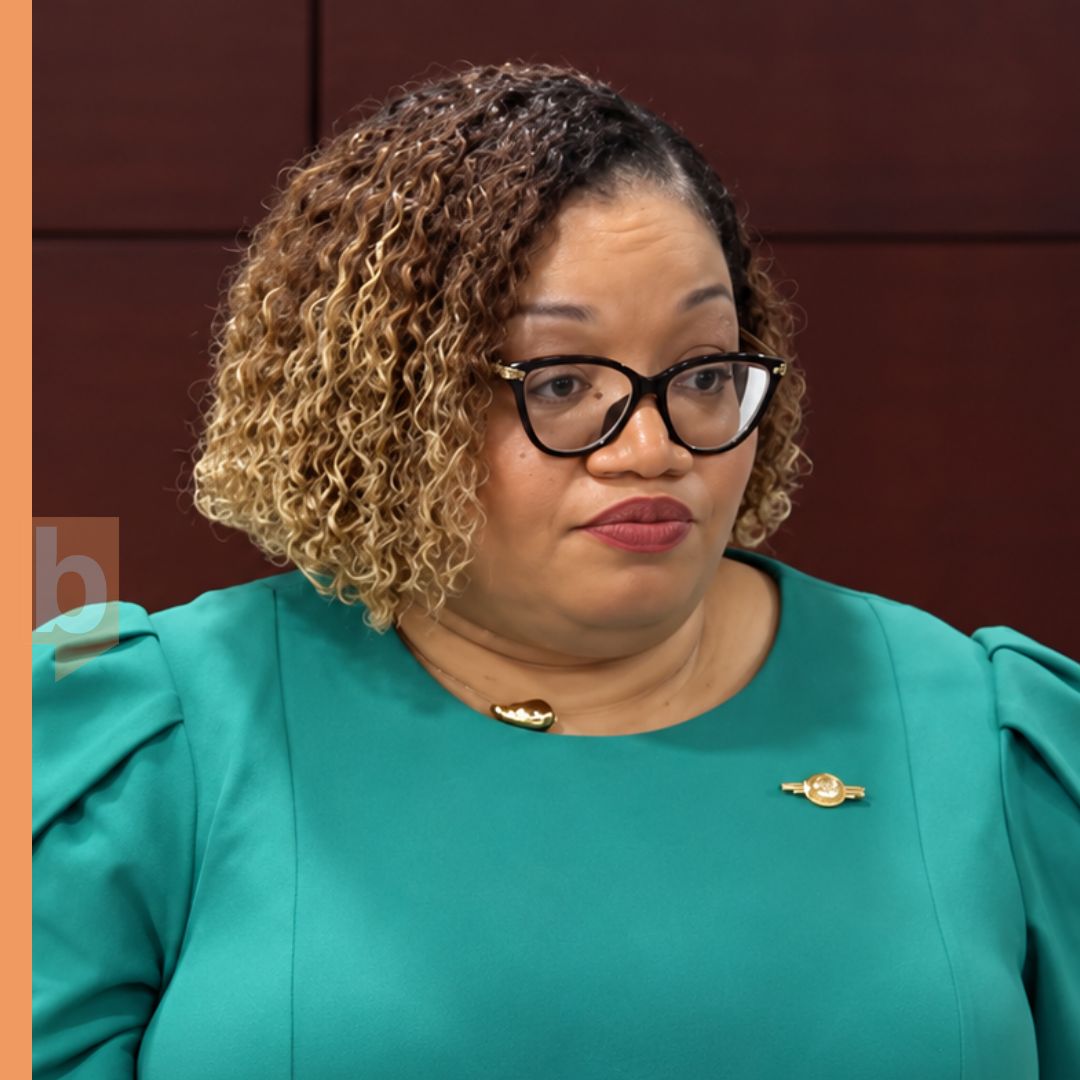
GREAT BAY--Finance Minister Marinka Gumbs has challenged every Government ministry to identify ways to strengthen revenue collection within its own area of responsibility, improve efficiency and reduce unnecessary spending, arguing that the national budget cannot be approached only from the perspective of how much more money ministries want to spend.
The call came near the end of Gumbs’ presentation of the draft 2027 national budget to Parliament, where she acknowledged that ministers have important priorities and legitimate needs but stressed that Government’s financial resources are limited and difficult choices must be made.
Gumbs said the demand for Government resources exceeds what is available across the board. While ministries naturally seek additional funding for programs, projects and services, she said the Council of Ministers must also examine where Government can collect more of the revenue already due, operate more efficiently and reduce avoidable expenditure.
“For that reason, I have consistently advocated for every Ministry to identify opportunities to strengthen revenue collection within its area of responsibility, improve efficiency, and reduce unnecessary spending,” Gumbs told Parliament.
She added that “every guilder saved through better controls and every guilder generated through improved compliance creates fiscal space that can be redirected toward the priorities that matter most to the people of St Maarten.”
The statement places responsibility for strengthening Government finances beyond the Ministry of Finance alone. While Finance remains responsible for taxation and overall public financial management, Gumbs’ position is that ministries administering permits, licenses, fees, services and other Government activities should also examine whether revenue is being properly collected and whether existing expenditure can be managed more efficiently.
Her comments come against the background of a 2027 budget projecting approximately XCG 670 million in revenue against XCG 662 million in expenditure, producing a projected surplus of approximately XCG 8 million.
Government has emphasized that the projected surplus does not depend on proposed new revenue measures that still require legislation or implementation. Instead, the budget is based on existing revenue streams, expected economic growth and ongoing compliance and revenue-enhancement efforts.
Tax revenue remains the largest source of Government income at approximately XCG 497 million. Other revenue is projected at XCG 84 million, fees and concessions at XCG 65 million, and licenses and permits at approximately XCG 25 million.
Tax revenue is expected to increase by approximately XCG 19 million compared with the 2026 budget, while revenue from licenses and permits is projected to increase by approximately XCG 6 million.
Of that increase, Government expects approximately XCG 5 million to come from a higher number of business-license applications and approximately XCG 1 million from residence permits. Fees and concessions are projected to increase by approximately XCG 2 million, driven largely by higher bank-license fees.
Gumbs stressed, however, that the 2027 budget does not include anticipated income from several revenue measures still under development.
These include the proposed tourist tax, revisions to Government fees through amendments to the Legesverordening, stronger compliance in tax assessment and collection, and exploration of a gaming-tax framework.
According to Gumbs, Government deliberately excluded those potential revenues because the measures must first complete the legislative and implementation process. Including income that Government cannot yet be certain it will collect could overstate the country’s financial position.
Once Government has greater certainty about when the measures can be implemented and how much they are expected to generate, the revenue can be reflected in future budget updates and estimates.
The Minister’s wider message, however, was that increasing revenue cannot depend solely on introducing new taxes or fees.
She placed considerable emphasis on compliance, meaning Government collecting revenue that should already be collected under existing laws and systems.
The draft budget itself projects higher collections from wage tax, turnover tax, profit tax, room tax and transfer tax. Government has based its multi-year projections partly on historical revenue performance and the relationship between tax collections and economic growth.
Gumbs said Government continues to believe that additional revenue-enhancing measures will be necessary over the longer term to strengthen the country’s fiscal position. The objective is to broaden and diversify the revenue base while improving compliance and maintaining a fair and competitive business environment.
Her call to ministries also introduces the other side of the equation: expenditure.
Rather than ministries concentrating only on securing larger allocations, Gumbs said they should identify inefficiencies and unnecessary costs that can be eliminated or reduced.
“The challenge before us is therefore not only how we spend public funds, but also how wisely and responsibly we manage them,” she said.
Gumbs argued that stronger revenue collection, controlling waste and setting priorities more effectively would allow limited public resources to be directed toward areas where they can have the greatest impact.
The approach is particularly relevant because the seven ministries together account for approximately XCG 634 million in projected expenditure for 2027. When Parliament, the High Councils of State and Special Entities are included, total expenditure rises to approximately XCG 662 million.
Government is simultaneously dealing with demands for additional personnel, infrastructure, healthcare, education, public safety, housing and other services, while maintaining a relatively modest projected surplus.
Gumbs acknowledged that individual ministers may believe their portfolios require additional funding. However, she stressed that the 2027 budget reflects collective decisions taken by the Council of Ministers after weighing competing priorities against the resources available.
Her position effectively places greater responsibility on individual ministries to demonstrate not only what they want to spend in the coming years, but also what they are doing to collect revenue, improve compliance, reduce waste and obtain better value from the money already allocated.
It also suggests that future discussions about ministry budgets could increasingly focus on two questions rather than one: how much does the ministry need, and what is the ministry itself doing to strengthen Government’s financial position?
Join Our Community Today
Subscribe to our mailing list to be the first to receive
breaking news, updates, and more.