.jpg)


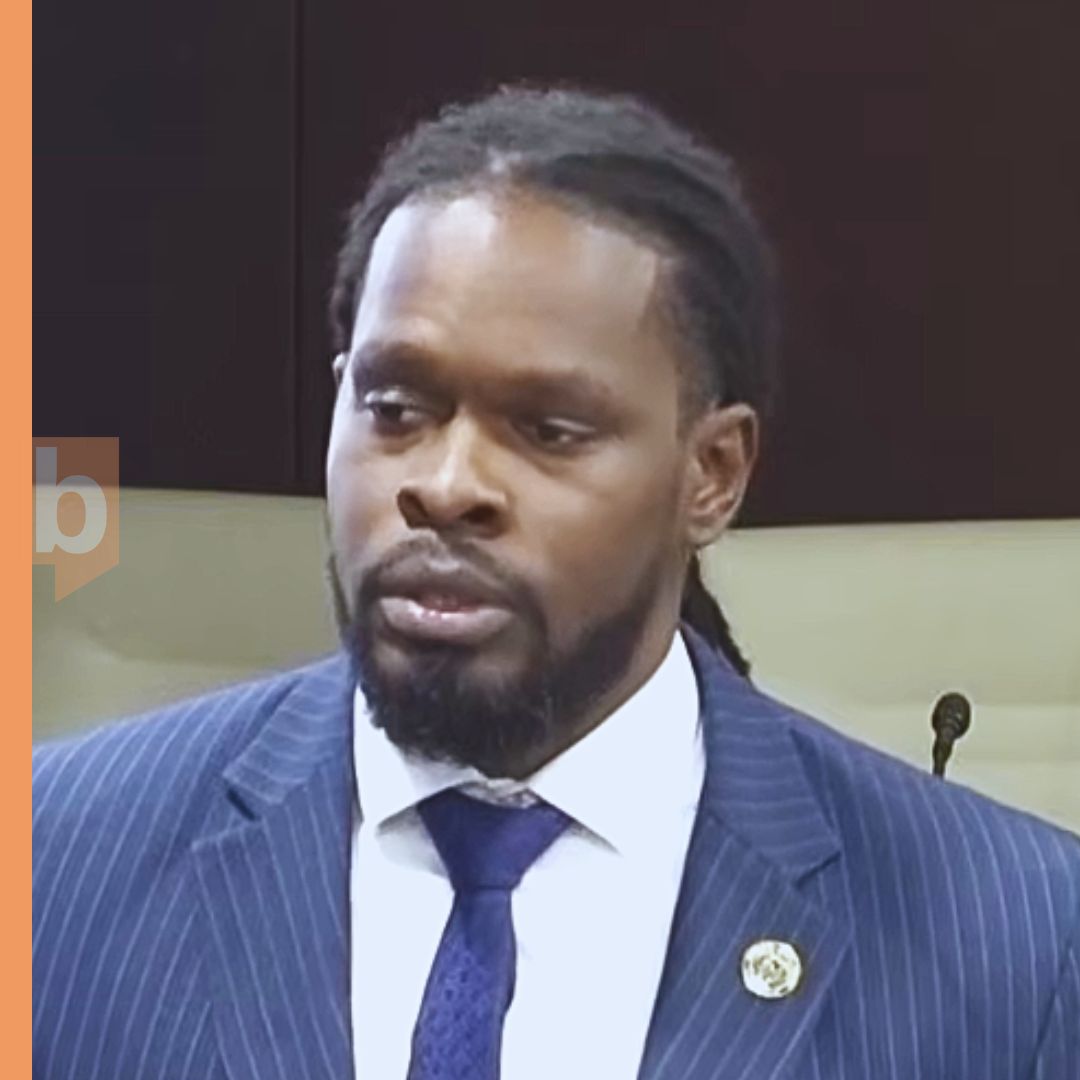
GREAT BAY--Member of Parliament Darryl York used the 2026 budget debate to question whether Parliament has been given enough information to responsibly approve government spending, arguing that ministries continue to request millions of guilders while basic information on previous execution, outstanding taxes, unpaid invoices, staffing shortages and project results remains unavailable.
York said his approach to the budget was deliberately focused on one central question: what did government actually deliver with the money Parliament previously approved?
He said budget debates repeatedly focus on plans for the future, while insufficient attention is given to whether commitments made in previous budgets were fulfilled.
York Questions How Parliament Can Verify 2025 Performance
York said he asked the Ministry of Finance how Parliament could independently verify what was delivered under the 2025 budget. According to him, the response directed Parliament to government’s financial statements.
However, when he separately asked about those statements, he was informed that they were significantly in arrears.
York questioned how Parliament can be told to use accountability documents to assess government performance when those same documents are not current or readily available.
He asked the Minister of Finance to identify the most recent completed financial statements available and explain what information Parliament should use to determine whether the 2025 budget was properly executed before approving further spending.
The MP also questioned whether the country’s move toward policy-based budgeting is sufficiently developed to allow proper measurement of results.
He said government acknowledged that some ministries still lack standardized performance indicators, measurable baselines, targets and evaluation methods.
York asked how Parliament will be expected to judge the effectiveness of the policies funded in 2026 if the tools needed to measure outcomes are not yet consistently in place.
Tax Department Cannot Say How Much Is Outstanding
York placed particular focus on the Tax Administration, saying government could not provide him with a readily available total for outstanding tax debt.
He questioned how government can discuss revenue shortages and new taxes without first being able to state how much is already owed under the existing system.
York said he requested information on the ageing of outstanding tax debt, collection targets and additional enforcement measures, but was not provided with the level of detail he expected.
He said the information becomes more concerning when considered alongside what he described as an 87 percent vacancy rate in tax enforcement positions.
“How much revenue are compliant taxpayers carrying because government cannot effectively pursue non-compliance?” York asked.
He stressed that his criticism was not directed toward Tax Administration employees, but toward whether those workers have sufficient staffing and tools to properly enforce the law.
York also said he wrote the Minister of Finance on May 13 regarding problems at the Tax Department, including staffing shortages and the absence of key personnel, but had not received a response by the time of the budget debate.
Staffing Answers Raise More Questions
The MP also questioned apparently conflicting statements regarding government’s human-resource capacity.
York said Finance identified capacity shortages as one of its principal structural risks, with Finance itself operating at approximately 37 percent occupancy, Fiscal Affairs at 29 percent and Control and Reporting at 13 percent.
At the same time, he said another response indicated reform initiatives would, in principle, not be significantly delayed if existing vacancies remained unfilled.
York asked the Minister to reconcile the two positions.
“If leaving these positions vacant does not significantly affect the reforms, why are the positions necessary?” he questioned. “And if they are necessary, how can their absence not affect implementation?”
TelEm Oversight Under Scrutiny
York also directed attention to government’s oversight of TelEm.
He said numerous questions concerning the company were answered by indicating that the matters had been submitted to TelEm for response.
Those questions included restructuring, employee turnover, outsourcing arrangements, strategic partnerships, possible investment or privatization, and whether TelEm is financially and operationally stronger following restructuring.
York said he also requested TelEm’s 2026-2028 strategic plan and information regarding a turnaround plan that he understood was already overdue.
He questioned how government can identify state-owned companies as potential fiscal risks while being unable to directly answer basic questions concerning one of those companies.
“What kind of oversight has been done over the last year?” York asked.
Consultant Spending and Outstanding Invoices
York also requested greater transparency regarding government consultants.
He said he asked for an overview of consultancy contracts, including costs, procurement methods, expiration dates, knowledge-transfer arrangements and exit strategies, but was informed that no consolidated overview was readily available.
York questioned how government can properly manage consultancy spending without being able to quickly provide Parliament with that information.
He also asked every ministry to disclose how many approved invoices remain unpaid after being forwarded to the Treasury and how many unanswered matters remain pending with that department.
York Challenges Millions for Beautification
The MP raised strong concerns about priorities within the TEATT budget.
York said approximately XCG 123,000 was identified for activities involving vulnerable consumers, while approximately XCG 19 million in beautification capital spending appeared under the same broader strategic objective.
He questioned how those priorities align with government acknowledging that families are struggling with food, electricity, transportation and other living expenses.
York specifically challenged the proposed XCG 4 million flagpole project, saying government acknowledged that no formal agreement was yet in place concerning development rights for the land.
He also questioned why Parliament should approve substantial capital funding before feasibility, architectural and engineering work is completed.
York said government projected possible future income from the project based on a percentage of visitors paying to access the attraction, but asked what study supports those assumptions.
He argued that major financial commitments should ordinarily follow feasibility work, rather than the feasibility being conducted after Parliament has already approved the money.
Casinos and Consumer Protection
York also questioned government’s supervision of the casino industry.
He said government could not provide a consolidated overview classifying all operators as compliant or in breach and asked how effective supervision can take place without that information being readily available.
He also requested estimates of revenue being lost through illegal or unlicensed economic activity but said no validated figure was available.
York further highlighted the absence of comprehensive consumer protection legislation, saying residents continue to face concerns involving prices and business practices without a dedicated enforcement framework.
He asked when government intends to move beyond studies and discussions and begin collecting additional revenues through reforms that have been under consideration for years.
Education Spending, Special Needs and School Maintenance
York directed another significant portion of his contribution toward education.
He noted that approximately XCG 310,000 is budgeted for maintenance across seven public schools, while the Ministry itself acknowledges that this amount is insufficient.
However, he said the Ministry could not provide a complete figure for the accumulated maintenance backlog.
York questioned how Parliament can determine what level of funding is actually needed if the Ministry cannot yet state the value of required repairs.
He also highlighted special-needs education, noting that 67 students are awaiting placement and another 21 are awaiting the commencement or continuation of direct support.
York said families need an actual timeline rather than repeated responses that implementation dates, funding requirements and other elements remain “to be determined.”
He also drew attention to a decline of approximately 913 students, or 12.4 percent, in school enrolment over five years and asked government to determine how much of that decline is attributable to migration, demographics, movement to French-side schools or other factors.
York Questions Increased Travel Spending
York closed by questioning increased travel allocations across several parts of government.
He pointed to increases associated with Parliament, General Affairs and TEATT and argued that government’s leadership should demonstrate restraint when ministries are simultaneously telling Parliament that schools, Justice, social programs and other essential services need additional funding.
York said his concern throughout the debate is not simply how much government intends to spend, but whether Parliament can establish what taxpayers received from previous spending.
Before approving another budget, he said, government must provide clearer evidence of execution, stronger financial accountability and measurable results.
“Parliament is being asked again to approve another year of spending,” York said, “but we first need to know what was delivered with what we already approved
Join Our Community Today
Subscribe to our mailing list to be the first to receive
breaking news, updates, and more.