.jpg)


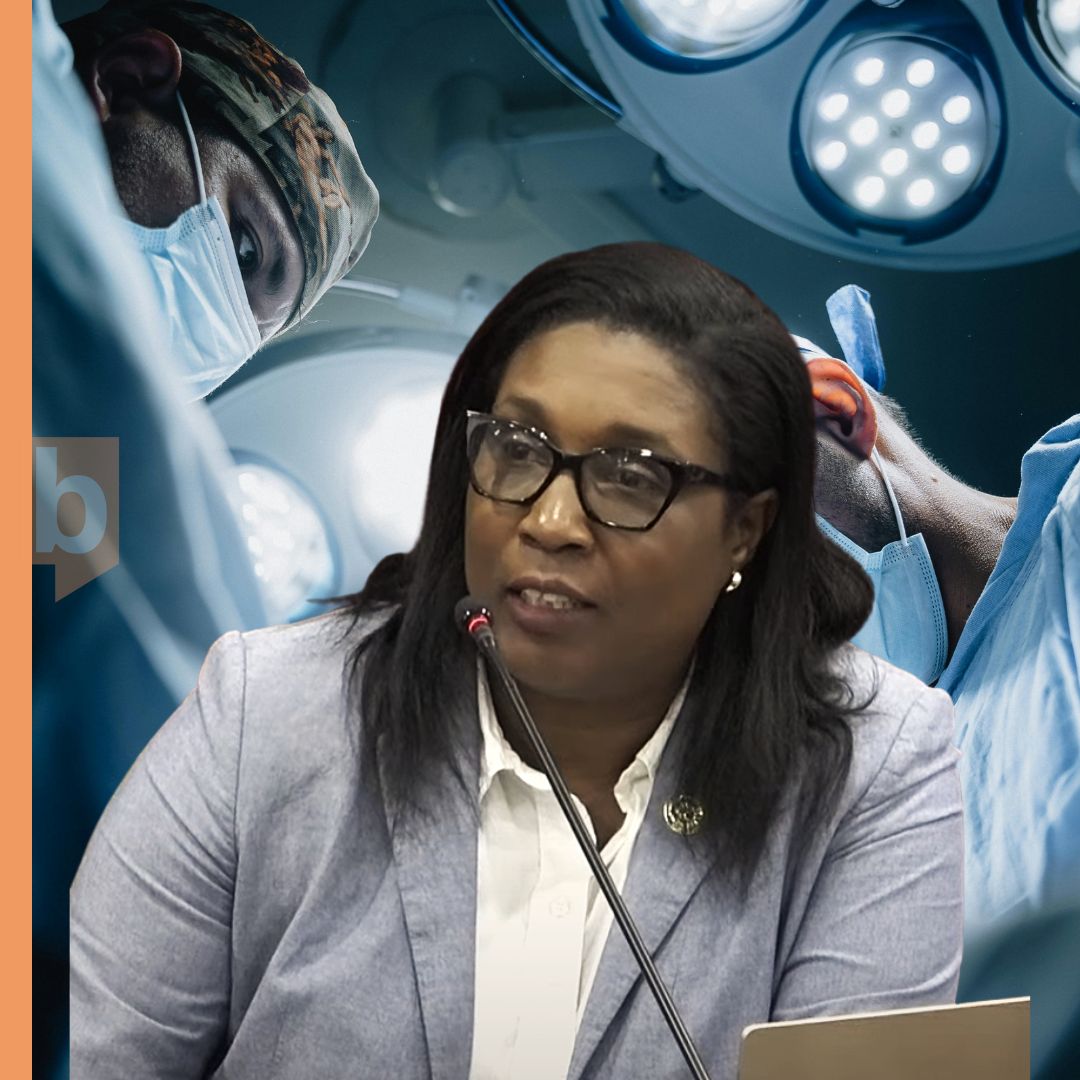
GREAT BAY--Member of Parliament Veronica Jansen-Webster is calling on government to move General Health Insurance forward, warning that St. Maarten cannot continue identifying its healthcare funds as a major financial risk year after year while implementation of the long-discussed reform continues to be postponed.
Speaking during the 2026 budget debate, Jansen-Webster pointed to the Minister of Finance identifying the healthcare funds as one of the country’s major financial risks if the situation is left unaddressed.
She said she agrees with the Minister’s observation that decisions made today will have consequences for the people of St. Maarten, but argued that government has already known for years what needs to be addressed.
Jansen-Webster recalled that discussions surrounding General Health Insurance predate 10-10-10, noting that she was already involved with the issue while working with a healthcare commission before St. Maarten attained country status.
She said she had previously questioned government about the implementation timeline for GHI and has since seen that timeline pushed further back.
Her concern, she said, is that government continues to identify the same healthcare financing problem without completing the reforms intended to address it.
The MP also linked the urgency surrounding GHI to St. Maarten’s ageing population, another financial risk highlighted during the budget presentations. An older population generally brings increased demand for healthcare and higher healthcare expenditure, making reform of the financing system increasingly important.
Jansen-Webster said the healthcare funds are repeatedly identified as a concern during budget debates and in advice from institutions including the Council of Advice and the Committee for Financial Supervision, yet the country continues to return to the same discussion.
“We keep identifying the health funds as a high risk every time we come back here and we talk about the budget,” Jansen-Webster said, arguing that at some point the difficult decisions required to address the problem must be taken.
Civil Servant Contributions Must Be Part of the Discussion
Jansen-Webster also raised what she described as an imbalance between healthcare contributions made in the private sector and those applicable to civil servants.
She said this difference was already recognized as a difficult issue during earlier work on General Health Insurance and could become one of the major points that government will have to address if GHI is to move forward.
The MP asked whether the Ministries of Finance, General Affairs and Public Health, Social Development and Labor have begun discussions with the unions about possible changes to civil servants’ healthcare contributions.
She questioned whether contributions may eventually have to increase in order to bring the different systems more closely in line and establish a sustainable healthcare financing structure.
Jansen-Webster stressed that such a discussion will not necessarily be easy, but said avoiding it will only result in further delays.
“Somebody has to go and talk to the civil servants and explain that in order to have the General Health Insurance, you might need to contribute more into the pot as well,” she said.
She said government must either confront the contribution issue or identify another workable alternative, rather than allowing General Health Insurance to remain stalled indefinitely.
The MP also asked whether government is considering measures to offset the effect on civil servants if increased healthcare contributions ultimately reduce their disposable income.
She questioned whether some form of compensation would be considered if public-sector workers are required to contribute more toward healthcare as part of the transition to a broader insurance system.
Jansen-Webster said the issue requires cooperation between Finance, General Affairs and VSA, particularly because healthcare reform has implications for government finances, employment conditions and the sustainability of the health funds.
Her broader concern is that St. Maarten already knows the challenges facing its healthcare financing system, including recurring deficits, an ageing population and the unresolved implementation of GHI.
She said continuing to postpone the difficult policy decisions will only leave the country confronting the same financial risks in future budget cycles.
“If nobody wants to do it, then we could just sit back again 16 more years and not address the issue,” Jansen-Webster said.
Join Our Community Today
Subscribe to our mailing list to be the first to receive
breaking news, updates, and more.