.jpg)


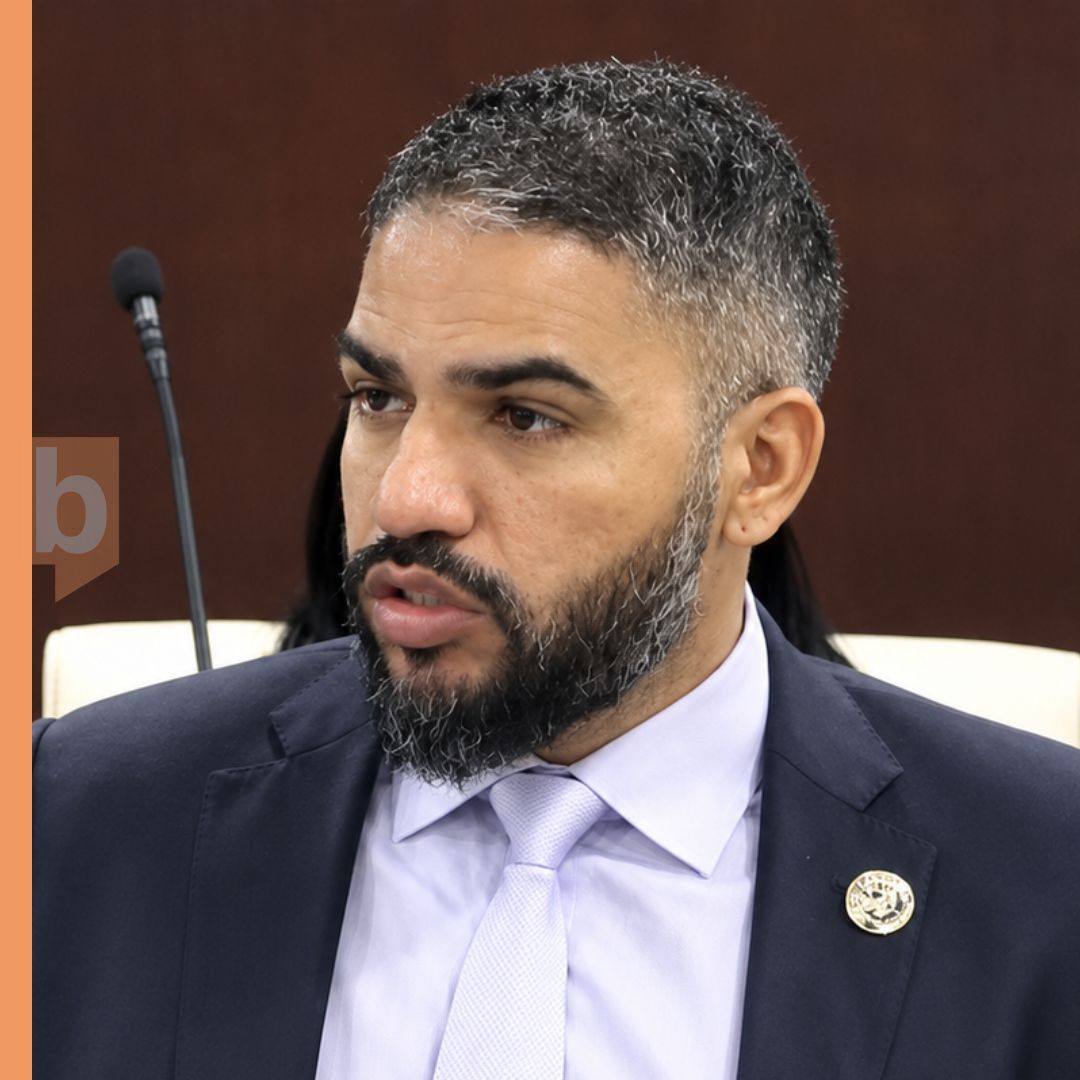
GREAT BAY--Member of Parliament Viren Kotai put a series of pointed questions to the Minister of Justice Nathalie Tackling during the 2026 budget debate, asking whether there is a “personal issue” affecting the continued incarceration of Theo Heyliger and demanding clarity on why limited prison space is being occupied by non-violent offenders while, according to him, violent offenders remain outside Point Blanche Prison.
Kotai directly asked whether there is a personal issue involving the Prosecutor’s Office, the Justice Ministry or another authority when it comes to Heyliger. He said he wanted the matter addressed publicly because of what he described as a perception surrounding who controls decisions over detention, release and the use of scarce prison capacity.
The MP’s questions followed explanations from the Minister of Justice concerning two forms of release and the manner in which an acute shortage of detention capacity can affect when inmates are released. Kotai said those explanations raised a basic question that he believes still requires a clear answer: is Point Blanche Prison full or does government consider sufficient detention capacity to be available?
Kotai said his understanding is that the prison is “full to the brim” and questioned why greater use is not being made of electronic monitoring and ankle bracelets. He specifically asked why persons convicted of non-violent or white-collar crimes could not, where legally permissible, be placed under electronic monitoring to free prison cells for persons convicted of violent crimes or those who must be held in pretrial detention.
In making his argument, Kotai specifically referred to O’Neal Arrindell, Frans Richardson and Theo Heyliger. He said these were examples of inmates who, in his view, could potentially have been placed on ankle monitors, subject to the applicable legal requirements, to create additional space for violent offenders.
Kotai also raised Arrindell’s situation specifically, telling Parliament that, to his understanding, proceedings concerning Arrindell’s release had begun in May. He questioned why, with September approaching, Arrindell remained incarcerated and continued occupying a prison cell despite that process having started months earlier.
The MP said the situation is difficult to understand when St. Maarten simultaneously faces concerns about violent offenders remaining in the community because of detention limitations.
Kotai asked the Minister of Justice how many people are currently waiting to serve sentences at Point Blanche Prison and how many persons convicted of, or facing proceedings for, violent offences remain outside detention because sufficient space is unavailable.
He said he has repeatedly sought such statistics but has not received clear figures showing the number of people waiting for prison space.
Kotai also questioned how much authority the Prosecutor’s Office exercises over the use of detention capacity. Referring to the explanation surrounding early release when additional prison space is required, he asked whether the prosecutor effectively controls who must be released when new detainees need to be accommodated.
“Is the prosecutor the sole controller of what happens at the prison?” Kotai asked, seeking clarity on the division of responsibility between the Prosecutor’s Office, the Minister of Justice and other authorities involved in detention and release decisions.
The MP said the consequences of limited capacity are being felt by the public. He referred to conversations with business owners across St. Maarten who have experienced crime and questioned how victims are expected to feel when alleged perpetrators are arrested but are subsequently seen back in the community.
Kotai said the frustration becomes particularly serious when victims believe the person responsible for targeting them is free while prison cells continue to be occupied by persons serving sentences for offences that did not involve violence.
He acknowledged that he has repeatedly raised the subject, but said the questions remain unanswered and therefore need to be asked again.
Returning specifically to Heyliger, Kotai said he wanted to address what he described as an “unfortunate notion” circulating about who is controlling the situation. He therefore asked directly whether there is any personal issue involving the Prosecutor’s Office, the Justice Department or another authority that is affecting Heyliger’s continued incarceration.
Kotai presented the question as one requiring clarification rather than as an established fact. He argued that, in his view, Heyliger is among those occupying limited prison space that could potentially be made available for violent offenders if electronic monitoring or another lawful form of release were possible.
The MP’s intervention ultimately centered on several questions he wants the Justice Minister to answer clearly: whether Point Blanche Prison is currently full, how many convicted persons are waiting to serve their sentences, how many violent offenders remain outside detention because of capacity limitations, why greater use is not being made of ankle monitors, who ultimately controls decisions involving detention space and release, and whether any personal consideration is affecting the handling of Heyliger’s situation.
Kotai said the country cannot adequately address crime and public safety without greater clarity about how its limited detention capacity is being managed and who is being prioritized for incarceration.
He also questioned who ultimately controls the process when decisions have to be made about detention space, early release and electronic monitoring, asking whether those decisions rest predominantly with the Prosecutor’s Office or whether the Minister of Justice has meaningful authority within the process.
Returning to Theo’s situation, Kotai said the issue should be addressed openly to remove speculation. He asked whether any personal considerations are influencing the handling of the case and whether Theo is occupying prison space that, in Kotai’s view, could potentially be made available for violent offenders.
The MP said his central concern is public safety and the efficient use of St. Maarten’s limited detention capacity. He called on the Minister of Justice to provide clear answers on prison occupancy, the waiting list for sentenced persons, the use of ankle monitoring, the respective authority of the Prosecutor’s Office and the Justice Ministry, and the criteria being used to determine who remains incarcerated when space is limited.
Join Our Community Today
Subscribe to our mailing list to be the first to receive
breaking news, updates, and more.