

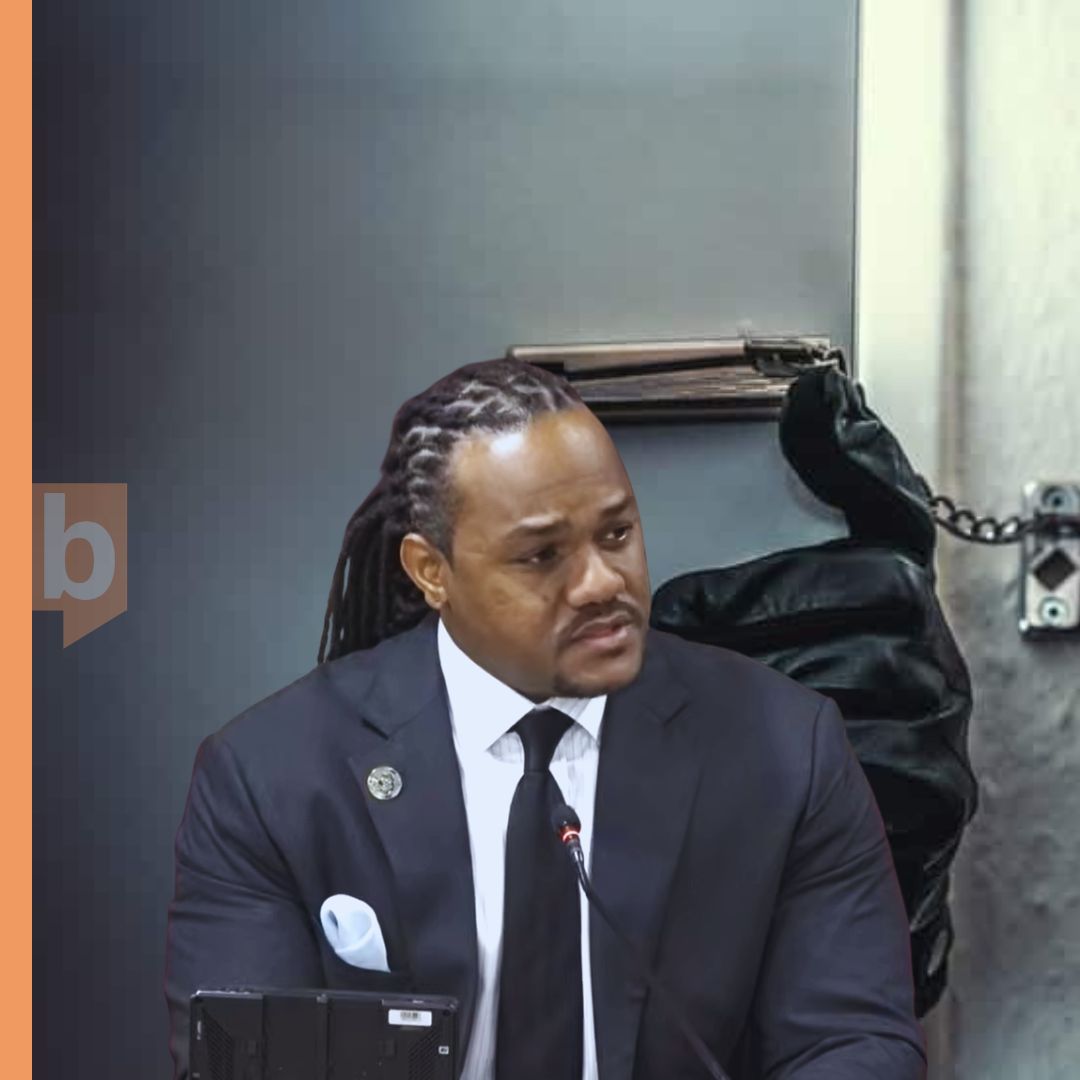



GREAT BAY--Member of Parliament Dimar Labega is calling for a structured national discussion on whether St. Maarten’s laws governing self-defense, firearm licensing and private security remain adequate in light of present-day crime and public-safety concerns.
Labega stressed that the discussion should not be interpreted as a proposal to broadly arm the population or make firearms easily accessible. Rather, he wants Parliament, government, law enforcement, legal professionals, security specialists and the wider community to examine whether carefully regulated changes could provide greater protection to law-abiding residents and businesses while maintaining strict safeguards against misuse.
At the center of the discussion, Labega wants consideration given to a legal framework similar to what is commonly referred to as a Castle Doctrine. Such a framework would address situations in which an individual is confronted by a forcible and unlawful intrusion into a home or business and reasonably believes that human life is under immediate threat.
Labega believes the law should provide greater clarity concerning the rights of occupants to defend themselves and others in those narrowly defined circumstances. He said any such framework would have to clearly establish when defensive force is legally justified, while maintaining protections against excessive, reckless or unnecessary use of force.
The MP said the discussion is necessary because residents should understand both the extent and the limits of their right to defend themselves when confronted by violent crime inside their homes or businesses.
Labega also wants a wider examination of St. Maarten’s firearm licensing system. Rather than unrestricted access to firearms, he is proposing discussion on whether the existing system could be replaced or amended with a transparent, criteria-based process under which only individuals meeting stringent legal, psychological, training and security requirements could qualify.
Under the framework he is proposing for consideration, applicants would be subject to comprehensive background screening, a clean criminal record requirement, mental-health evaluation and mandatory firearm safety and legal training. Applicants would also have to demonstrate that any licensed firearm could be securely stored, including through approved secure-storage systems designed to prevent theft or unauthorized access.
Labega said these safeguards are essential to the discussion because increasing access without corresponding controls could create additional risks for the community. He therefore does not support treating firearm ownership as an unrestricted entitlement, but believes the country should examine whether responsible citizens who satisfy demanding standards should have a clearer legal pathway to apply for a permit.
The MP is also proposing discussion on whether specially trained and licensed armed security personnel should be permitted at businesses facing heightened robbery risks, including jewelry stores, supermarkets, gas stations and other establishments that routinely handle significant amounts of cash or valuable merchandise.
Private security personnel currently operate under significant limitations regarding firearms. Labega believes consideration should be given to creating a specialized category of security officer subject to additional screening, certification, recurrent training, strict weapons controls and clearly defined rules governing when force may be used.
He argues that such a system could provide another layer of protection for high-risk commercial establishments without turning ordinary security personnel into armed guards by default.
Labega acknowledged that proposals involving firearms will understandably generate concern, including fears that wider firearm availability could lead to accidents, escalation of disputes, domestic incidents, theft of weapons or other unintended consequences. He said those concerns should form part of the discussion rather than be dismissed.
For that reason, Labega believes any potential legislative reform would have to be accompanied by strong regulation, enforcement, accountability, training and safe-storage requirements.
His call is partly based on concerns about what he views as an imbalance between criminals who obtain and use illegal firearms and residents who may have limited options when confronted by armed intruders. He has also pointed to demands placed on the St. Maarten Police Force and the difficulty of expecting officers to be immediately present at every emergency, particularly when several incidents occur at the same time.
Labega said the objective should not be to shift the responsibility for public safety away from the police. Law enforcement would remain the primary institution responsible for crime prevention, emergency response and criminal investigation. The question he wants examined is whether the law provides adequate options for citizens during the critical moments before police can arrive.
The MP also believes stronger security provisions could have implications for businesses and the wider economy. Armed robberies and violent crime affect employees, customers, business confidence and St. Maarten’s reputation as a tourism destination. He wants the discussion to consider whether carefully regulated defensive measures could strengthen deterrence while avoiding the risks associated with uncontrolled firearm proliferation.
Labega said the subject deserves serious examination rather than immediate acceptance or rejection based on political or emotional positions. He intends for the proposal to begin a broader conversation about the balance between the right to personal security, the responsibility of the state to protect citizens, the dangers associated with firearms and the circumstances under which individuals should be legally permitted to defend themselves.
The MP believes that any eventual change should only follow consultation with law enforcement, the Public Prosecutor’s Office, legal experts, mental-health professionals, the security sector, businesses and the public, with the ultimate objective of determining what framework is appropriate for St. Maarten.
For Labega, the immediate proposal is therefore not a decision to arm the community. It is a call for St. Maarten to begin a serious discussion about whether its existing self-defense and firearm laws provide the right balance between public safety, individual protection and responsible regulation.
Join Our Community Today
Subscribe to our mailing list to be the first to receive
breaking news, updates, and more.
