.jpg)


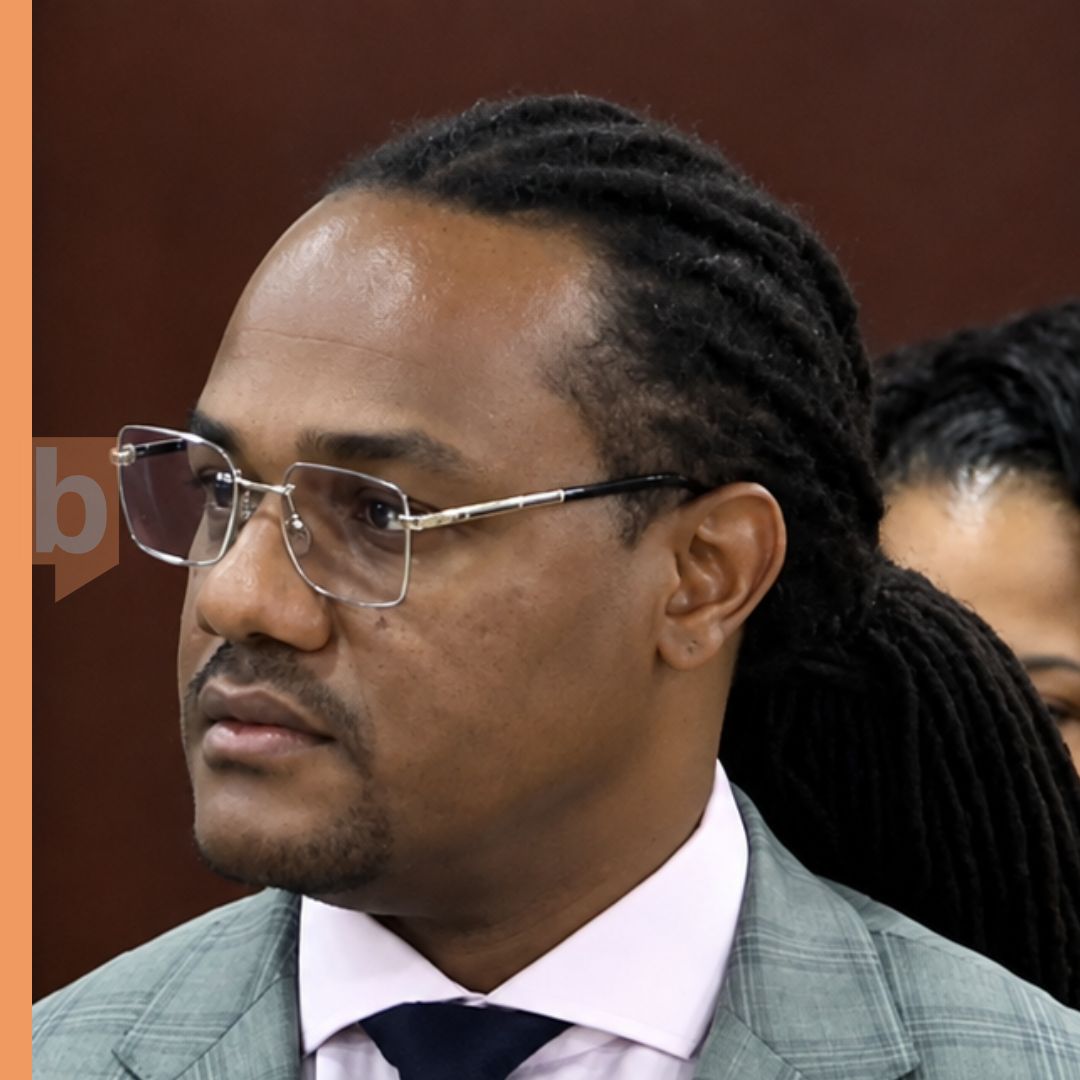
GREAT BAY--Member of Parliament Dimar Labega has submitted a motion calling on government to develop and present a National Poverty Reduction Strategy within six months, arguing that St. Maarten currently has numerous government initiatives that can help reduce poverty but lacks a single coordinated, measurable framework bringing those efforts together.
Labega presented the motion during the second round of the 2026 budget debate on Wednesday, August 26, after reviewing the responses provided by the various ministries to questions concerning how their policies and initiatives would contribute to poverty reduction.
According to Labega, ministries identified several areas of government activity that could improve household circumstances, including workforce development, support for small and medium-sized businesses, agricultural development, food security, healthcare reform, education, job creation and other programs intended to increase opportunities for residents.
He said the problem is not necessarily an absence of initiatives, but that the initiatives are spread across different ministries and policy areas without a clearly articulated national framework showing how they collectively contribute to reducing poverty.
Labega said poverty cannot be treated as the responsibility of one ministry because its effects extend beyond household income. The motion notes that poverty also affects access to healthcare, education, housing, food security, employment opportunities and social mobility, while the continuing cost of living places significant pressure on lower-income households.
The MP said effective poverty policy requires measurable objectives, defined targets, coordinated implementation and transparent monitoring. He argued that a national strategy would also give Parliament a clearer basis on which to assess whether public spending and government programs are producing measurable improvements in the lives of residents.
Under the motion, government would be requested to develop and present the National Poverty Reduction Strategy within six months.
The strategy would be required to include a baseline assessment of poverty and vulnerability in St. Maarten, establishing a clearer picture of the conditions government is attempting to address.
Labega is also calling for measurable poverty reduction targets so that progress can be tracked rather than assessed only through individual projects or general policy statements.
The proposed strategy would further include a monitoring and evaluation framework and identify existing government programs that already contribute to poverty reduction. Government would then be required to show how those initiatives will be integrated into the broader national strategy.
Labega’s motion also calls for annual progress reports to Parliament detailing the targets achieved, challenges encountered, budgetary allocations utilized and recommendations for policy adjustments.
He encouraged his fellow Members of Parliament to support the motion, saying a coordinated national approach is necessary if government wants to connect the work being done across ministries to measurable poverty reduction outcomes.
Labega also highlighted a wider concern about government’s capacity to execute legislation and policy across ministries. He pointed specifically to staffing and backlog challenges within Personnel and Organization, P&O, and Legal Affairs, noting that ministries frequently work on legislation simultaneously despite the limited human resources available to process the workload.
He suggested that the Council of Ministers may have to jointly determine which legislation should receive priority rather than allowing every ministry to push major legislative initiatives through the same limited departments at the same time. Labega said such coordination may require some ministries to temporarily wait while higher-priority legislation moves forward.
In addition to the poverty reduction motion, Labega said he submitted a budget-neutral amendment involving an allocation within the Ministry of Tourism, Economic Affairs, Transport and Telecommunication, TEATT. Based on answers received during the budget debate, he said funding allocated to an agency could not be effectively deployed during 2026.
His amendment proposes reducing that subsidy allocation by Cg 800,000 and redirecting the same amount to project-based allocations within the ministry, while preserving government’s ability to continue preparatory work toward establishing the agency. Labega stressed that the proposal is budget neutral because the Cg 800,000 reduction is fully offset by increases elsewhere within the same budget.
Labega also disclosed that he had prepared several other motions before the budget debate but ultimately decided not to submit them after ministers indicated that government was already pursuing the same objectives. Rather than duplicate work already underway, he said he would hold government to its commitments by requesting quarterly progress reports.
One of those proposed motions concerned additional public safety support for the Police Force of St. Maarten. Labega said he had previously presented the idea publicly and provided the proposed motion to the Minister of Justice for review.
The concept involved examining a public support entity that could assist police, particularly in areas important to the tourism economy. Labega said the Justice Minister subsequently indicated that strengthening this area is a priority and that government is exploring the concept of tourist police while also working to better regulate the commercial security sector and examine possibilities involving armed security personnel.
Labega said a visitor’s experience begins from the moment the person leaves the airport or cruise ship and continues through Philipsburg, the beaches and other areas of the country. For that reason, he said safety and security must be regarded as an important part of St. Maarten’s tourism product. Because the Justice Minister committed to pursuing the issue, Labega decided not to submit the motion but said he will request quarterly updates.
A second motion he chose not to submit concerned the direction of sports development under the Ministry of Education, Culture, Youth and Sport. Labega said the ministry’s presentation aligned closely with what he had intended to propose.
His idea centered on creating a dual-track sports development system. Under the concept, all sports would continue receiving baseline opportunities and support, while a selected number of strategically chosen disciplines would receive more concentrated investment to develop elite athletes and internationally competitive national teams.
Labega stressed that the proposal was never intended to remove participation opportunities from any sport. Rather, he said the objective was to maximize the impact of limited public resources while improving St. Maarten’s chances of achieving international sporting success and increasing national visibility. He decided against submitting the motion after determining that the ministry was already moving in a similar direction and will instead seek quarterly progress reports.
The third motion Labega withheld would have called on the Minister of General Affairs and Minister of Finance to explore a new public-sector pay and performance model.
Labega said government faces critical human-resource challenges and needs to be able to attract and retain qualified personnel for positions that directly affect the functioning of the public service. His proposed motion would have requested development of a realistic model addressing salaries in relation to the cost of living while making compensation for critical and difficult-to-fill positions more competitive.
After hearing the Prime Minister indicate that work in this area had already begun, Labega decided not to bring the motion forward. He said he will nevertheless request quarterly updates on the progress, challenges and implementation of the initiative, effectively continuing to monitor the issue as though the motion had been adopted.
Labega said his decision not to submit those three motions was consistent with an approach he has taken previously: where government clearly indicates that it is already actively pursuing the objective of a proposed motion, he prefers to monitor execution rather than duplicate the commitment through Parliament. The poverty reduction motion, however, was submitted because he believes the missing element remains a coordinated national roadmap connecting the work of all ministries to measurable reductions in poverty.
Join Our Community Today
Subscribe to our mailing list to be the first to receive
breaking news, updates, and more.