.jpg)


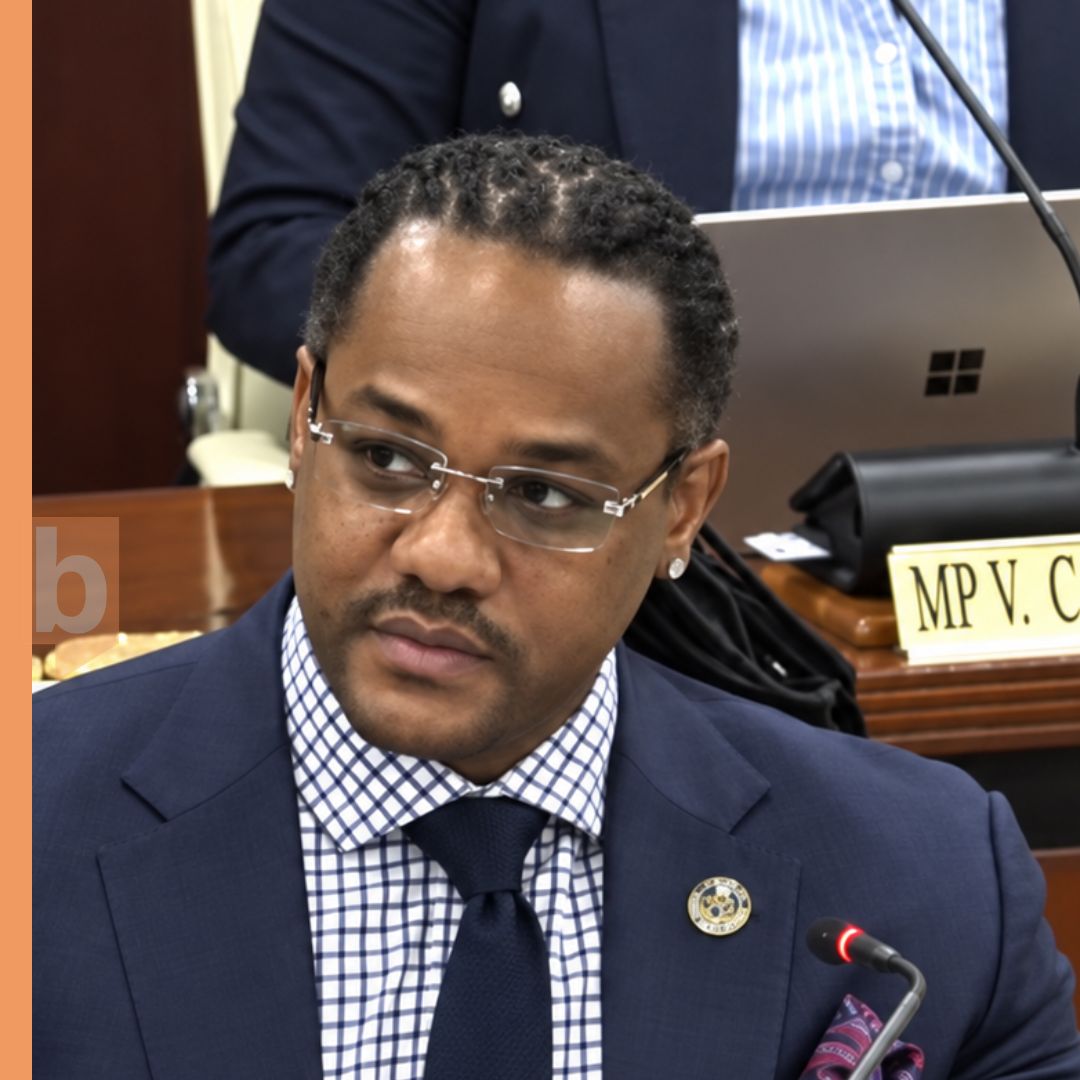
GREAT BAY--St. Maarten: Member of Parliament Dimar Labega has welcomed the upcoming unarmed tourist police pilot program, describing it as a necessary first step to increase law enforcement visibility, deter petty crime, protect the local community and prevent further damage to St. Maarten’s vital tourism product, which supports thousands of jobs, businesses and households across the country.
After recently calling on the Minister of Justice to consider adapting the law to facilitate the arming of qualified security personnel, MP Labega said he appreciated the Minister’s quick actions to address concerns surrounding public safety and the shortage of law enforcement personnel. He said the pilot demonstrates a willingness to take immediate action while longer-term legislative, recruitment and training measures are considered.
“We must face our current reality with pragmatism,” said MP Labega. “St. Maarten is currently facing severe police shortages, limited jail capacity, and an increase in opportunistic petty crime that threatens our community and our vital tourism economy. While a fully staffed, fully armed police force remains our ultimate goal, achieving that requires years of recruitment and extensive training. We cannot afford to sit on our hands and do nothing while waiting for the perfect long-term solution. We must begin somewhere, and we must begin now.”
Labega said the issue goes beyond protecting individual residents or businesses. He stressed that stronger visibility and enforcement are also important to deter further damage to St. Maarten’s tourism product, which remains a major pillar of the economy and directly supports the livelihoods of thousands of people in the local community.
“When incidents of theft, harassment, vandalism or other forms of petty crime occur in areas frequented by visitors, the damage does not stop with the immediate victim,” Labega said. “It can affect the perception of St. Maarten as a safe destination, and that can ultimately affect the same families, workers and businesses that depend on tourism for their income.”
Labega said concerns about an unarmed tourist police force should be considered within the purpose of the pilot. He stressed that firearms are not the only tools available to deter petty crime, pointing instead to the importance of visible law enforcement, quicker response and a greater likelihood that offenders will be identified and apprehended.
He said opportunistic offenders often take advantage of areas where there is little visible monitoring or enforcement. Increasing the presence of trained personnel in high-traffic areas, particularly locations frequented by residents and visitors, can therefore serve as an immediate deterrent while providing additional eyes and personnel on the ground.
The tourist police pilot is expected to place personnel equipped with basic enforcement tools, including batons and handcuffs, in designated areas. Labega said this approach can help address petty crime and vandalism while allowing fully trained and armed officers of the Police Force of St. Maarten, KPSM, to concentrate on violent crime, high-risk interventions and other incidents requiring a higher level of police response.
Responding to concerns raised about officer safety and the credibility of an unarmed force, Labega stressed that the pilot should be regarded as a starting point rather than the final model.
“An unarmed initial phase allows us to get boots on the ground immediately to tackle the rise in petty crime. However, support for this pilot does not mean we stop here. I encourage the Ministry of Justice to utilize this trial period to evaluate the legislative and training requirements needed to safely introduce more options in the next phase,” Labega said.
He added that this evaluation should include the legal framework governing the equipment and protective tools that personnel may carry, as well as the level of training, supervision and safeguards required before additional measures are introduced.
Labega said public safety ultimately requires a layered approach involving visible enforcement, stronger police capacity, appropriate legislation, prevention and continued investment in the country’s justice system. He added that protecting the tourism product must remain part of that effort because safeguarding tourism also means safeguarding employment, household income and the broader economic stability of the community.
“This pilot is an essential interim step to stabilize our streets. True progress takes time, but this initiative proves we are moving in the right direction,” Labega concluded.
Join Our Community Today
Subscribe to our mailing list to be the first to receive
breaking news, updates, and more.