.jpg)


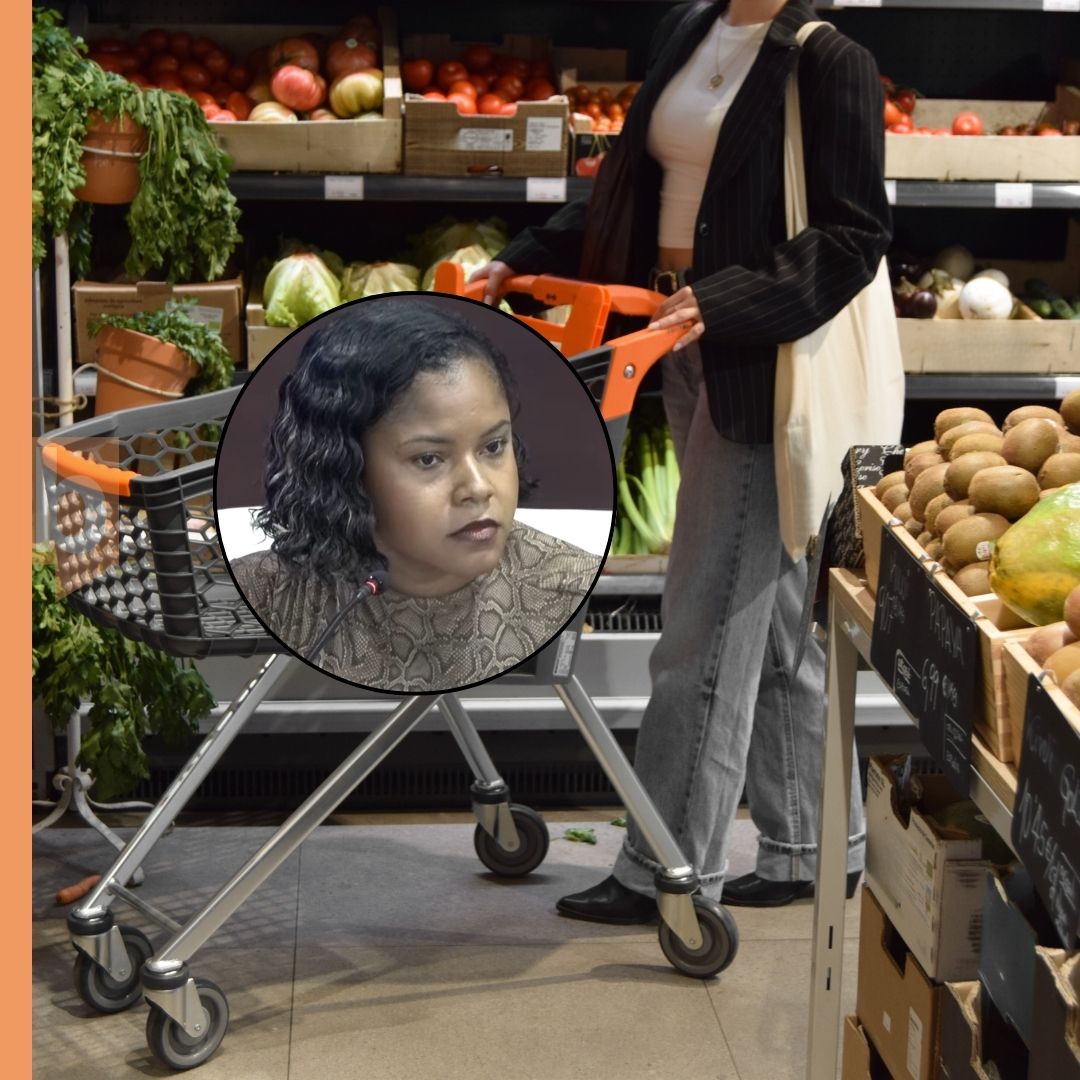
GREAT BAY--Member of Parliament Sjamira Roseburg has tabled a second motion aimed at addressing the rising cost of basic necessities, calling on government to connect tax relief on essential goods with active price monitoring so that exemptions granted under the turnover tax, BBO, actually result in lower prices for consumers.
Roseburg’s motion notes that the cost of food, cooking gas and other basic necessities has risen significantly, placing increased pressure on low- and middle-income households. It points out that Article 8, paragraph 17 of the National Ordinance on Turnover Tax, LBBO, already exempts a limited number of basic necessities from BBO, but does not currently include vegetables, fish and meat other than chicken, cooking gas and several other household essentials.
The motion argues that a tax exemption is only meaningful if the savings are passed on to shoppers through lower retail prices. According to Roseburg, there is presently no legal requirement compelling businesses to pass those savings on to consumers and no systematic mechanism linking tax exemptions granted by the Ministry of Finance with price monitoring by the Ministry of Tourism, Economic Affairs, Transport and Telecommunication, TEATT.
Roseburg noted that the Minister of TEATT already has authority under the Price Ordinance to establish maximum prices for goods and services and to impose requirements concerning business price administration. However, the motion states that this authority is generally used during declared emergencies rather than as an ongoing consumer protection tool for basic necessities.
The MP is separately preparing legislation to amend the LBBO by expanding the list of tax-exempt basic necessities and introducing a mandatory pass-through requirement, in-store labeling and monitoring obligations. Her motion makes clear, however, that government does not have to wait for that legislative process to be completed before acting on prices using powers that already exist.
The motion sets out two possible routes for government action. Under the first, the Minister of TEATT would immediately use existing authority under the Price Ordinance to temporarily establish maximum or reference prices and price-administration requirements for basic necessities that are already exempt from BBO.
Such temporary controls would remain in place until Roseburg’s proposed amendment to the LBBO takes effect and establishes a permanent system requiring tax relief to be reflected in consumer prices.
The second option calls on government to introduce its own amendment to the Price Ordinance. That amendment would establish a permanent, non-emergency mechanism allowing the Minister of TEATT to set and monitor maximum or reference prices for goods that are exempted from BBO as basic necessities.
Under this approach, government would bring the required legislation to Parliament separately from Roseburg’s own planned amendment of the LBBO.
Regardless of which approach is ultimately pursued, Roseburg is calling for the Inspectorate of TEATT, IETA, to receive a structural mandate to periodically monitor the retail prices of basic necessities without that authority depending on a declared state of emergency.
Government would also be required to publish a comparative “basic basket” price overview twice per year, showing the retail prices of BBO-exempt basic necessities and allowing Parliament and the public to determine whether the tax exemptions are actually resulting in lower prices.
The motion further requests that government report to Parliament in writing within 90 days on the approach selected, how the Price Ordinance is currently being applied outside emergency situations and whether IETA has sufficient capacity to carry out structural price monitoring.
Roseburg’s proposal is intended to address what she sees as a gap between tax policy and consumer protection. While government may remove BBO from essential goods to ease the cost of living, she argues that without monitoring and enforcement there is no guarantee that the financial benefit will reach households at the cash register.
Roseburg stressed that she is not only asking government to act. In her capacity as a co-legislator, she said she has also prepared the corresponding amendment to the LBBO that would support the measures outlined in the motion and establish a more permanent legal framework. She indicated that the amendment is ready to move forward, reinforcing her position that Parliament should also use its legislative authority rather than place the responsibility entirely on government.
The proposed amendment would complement the motion by addressing the underlying law governing BBO exemptions and creating the structural mechanism needed to ensure that tax relief on basic necessities is ultimately reflected in prices paid by consumers. Roseburg said the process should be approached as a shared legislative responsibility between Parliament and government.
Join Our Community Today
Subscribe to our mailing list to be the first to receive
breaking news, updates, and more.