.jpg)


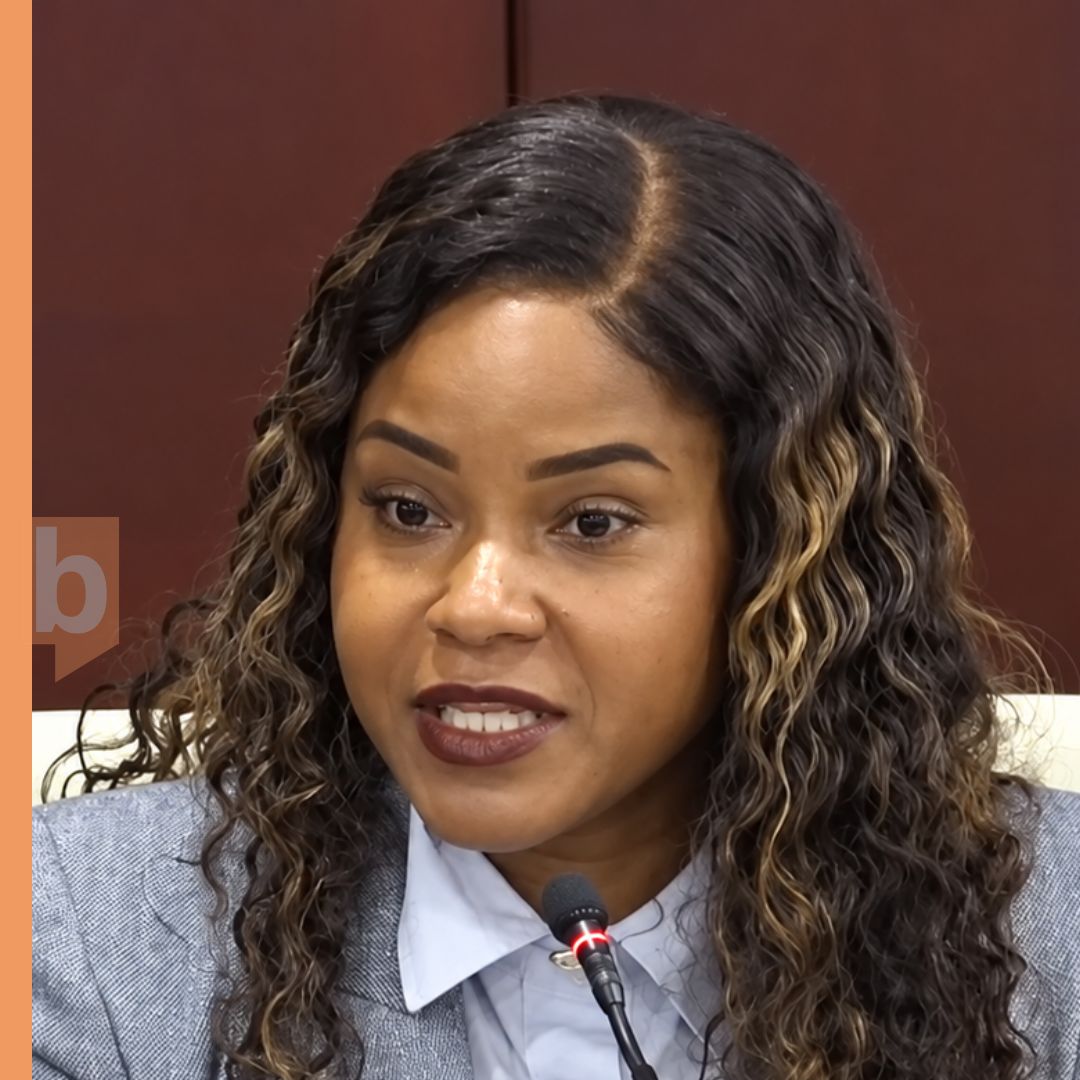
GREAT BAY--Member of Parliament Sjamira Roseburg has proposed the creation of a dedicated government-wide pool of legislative lawyers focused exclusively on completing priority laws that can generate revenue, strengthen enforcement and move long-standing government initiatives from planning into implementation.
Roseburg presented the proposal during Monday’s continuation of the Central Committee meeting on the draft 2027 national budget, arguing that St. Maarten does not only have a shortage of ideas, but a serious bottleneck in getting legislation drafted, finalized and moved through the legal process.
She pointed to information in the budget showing that Legal Affairs has 17 positions, but only seven are currently filled, with no department head in place. Roseburg said the shortage places pressure on a department expected to support multiple ministries, each with its own legislative priorities.
Rather than having individual ministries separately seek lawyers, consultants and legal drafting support, Roseburg proposed establishing one central pool of approximately four to six experienced legislative lawyers who would work alongside Legal Affairs for a fixed period of 12 to 18 months.
Their assignment, she said, should be narrowly defined: complete the priority legislation that Government has already identified as necessary to generate revenue, improve enforcement or deliver relief to the population.
Roseburg proposed that the Council of Ministers agree on one government-wide list of priority legislation, with each ministry identifying its most urgent one to three laws. From that process, Government could establish a clear order of priority rather than allowing ministries to compete individually for limited Legal Affairs capacity.
Among the measures she referenced were legislation related to the visitor levy, tourism taxation, the Gaming Control Authority, short-term rentals, illegal dumping fines, immigration fees, price regulation and motor vehicle inspection fees.
She argued that several of these measures have been discussed repeatedly as possible sources of additional government revenue, but their impact cannot be felt until the required laws and regulations are completed.
Roseburg said the approach could also reduce repeated third-party consultancy costs by creating a standing framework through which vetted legislative lawyers could be engaged quickly instead of every ministry beginning a separate procurement process each time legal drafting support is needed.
She further proposed that Parliament be given a clear tracking mechanism showing where each priority law stands, what stage it has reached, what remains outstanding and the expected completion date.
According to Roseburg, this would allow Parliament to move beyond repeatedly asking whether legislation is coming and instead monitor concrete progress against agreed deadlines.
She also questioned whether Government would be prepared to create a specific allocation in the 2027 budget for temporary legislative capacity within Legal Affairs, particularly for laws tied directly to revenue generation.
Roseburg recalled that approximately XCG 100,000 was shifted during the 2026 budget amendment process to allow Legal Affairs to temporarily engage legislative lawyers. She asked Government to explain whether that funding has helped reduce the backlog, what laws are currently being worked on and whether additional resources are required in 2027.
The MP also asked whether Government would support a standing framework agreement with a pre-approved pool of legislative lawyers so that ministries could obtain specialized drafting assistance without repeatedly starting separate hiring or procurement procedures.
Roseburg framed the proposal as a practical response to a problem that affects the entire budget. She argued that Government can identify new taxes, fees, enforcement measures and economic initiatives, but the projected benefits remain delayed when the required legislation is not completed.
She urged the Council of Ministers to consider treating legislative capacity as a government-wide priority rather than a problem for individual ministries to solve separately.
Roseburg said the objective should be simple: agree on the most urgent laws, assign a dedicated team to complete them, establish clear deadlines and allow Parliament to track progress until they are delivered.
Her proposal places legislative drafting directly within the broader discussion on Government revenue, implementation and the ability of the 2027 budget to produce results that residents can actually feel.
Join Our Community Today
Subscribe to our mailing list to be the first to receive
breaking news, updates, and more.