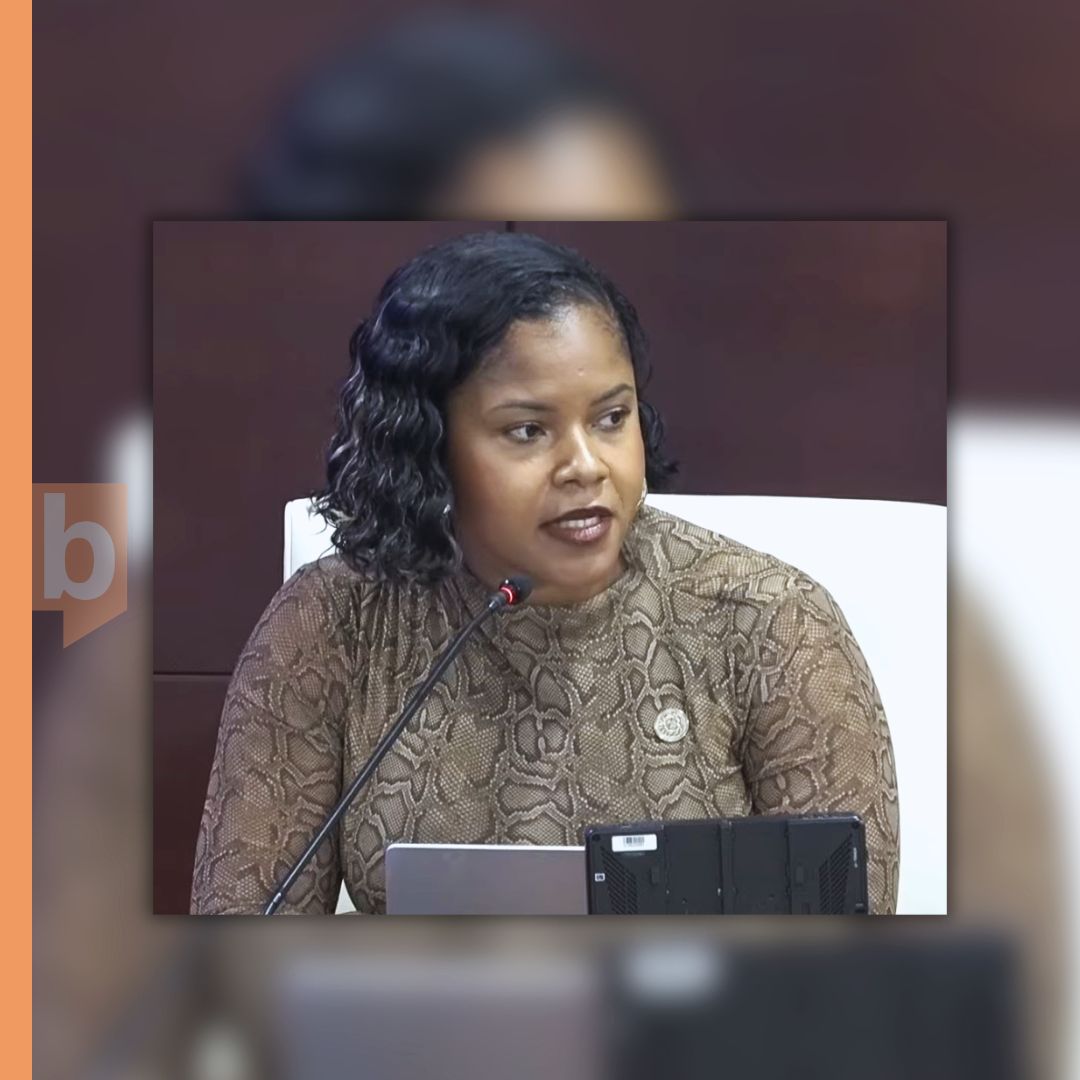



GREAT BAY--MP Sjamira Roseburg, Chair of Parliament’s Committee for Kingdom Affairs and Interparliamentary Relations, CKAIR, has put a series of questions before the Kingdom government seeking clarity on St. Maarten’s financial responsibilities, representation and decision-making authority in the implementation of the border treaty, while the committee has also identified several Kingdom-related issues it wants placed at the center of discussions during IPKO in St. Maarten in January 2027.
During Wednesday’s CKAIR meeting, Roseburg focused her questions on what happens after the border treaty takes effect, particularly whether St. Maarten will have a guaranteed role in decisions that directly affect the country.
Her first questions dealt with the financial consequences for St. Maarten. Roseburg asked who will bear the costs associated with implementing the obligations arising from the treaty, including the regularization of affected persons within the deadline established under Article 12, boundary marking and maintenance, and any changes affecting the status of roads under Articles 6 and 7.
She specifically asked whether a Kingdom contribution will be reserved to cover these obligations or whether the costs will fall on St. Maarten’s budget.
Roseburg also sought a guarantee that St. Maarten will have a structural and permanent place within the Dutch delegation to the Joint Boundary Commission established under Article 9 of the treaty. She questioned whether St. Maarten’s representation would remain assured over the longer term after the treaty enters into force, stressing that the commission will be dealing directly with matters affecting St. Maarten.
A third issue raised by Roseburg concerned future adjustments arising from the work of the Joint Boundary Commission. She asked the Kingdom government to confirm whether any proposal by the commission to adjust coordinates or other elements of the established boundary can proceed only with the explicit consent of St. Maarten.
Her concern was that the treaty provisions refer to consent by the treaty parties at the Kingdom level, making it important to establish whether St. Maarten itself will have a decisive voice before future changes affecting its territory can be approved.
Roseburg further asked whether the leading role St. Maarten played in the negotiation process, as described in the explanatory documents accompanying the treaty, will remain the guiding principle during implementation and in any future adjustments. She indicated that St. Maarten’s involvement should continue beyond the negotiation phase and be reflected in how the Kingdom handles the treaty going forward.
The questions are expected to form part of Parliament’s report on the matter as it moves through the Kingdom procedure. Roseburg explained earlier in the meeting that reports submitted by the Parliament of St. Maarten within such procedures are answered by the Kingdom government.
The committee later turned its attention to preparations for the Interparliamentary Kingdom Consultation, IPKO, scheduled to be hosted by St. Maarten from January 13 to 15, 2027.
Following an adjournment during which committee members deliberated, Roseburg outlined a proposed direction for St. Maarten’s contribution to the upcoming consultation. She said the committee wants the themes discussed at the planned Kingdom Conference organized by government to connect with the issues St. Maarten brings to IPKO.
The committee is considering an overarching theme centered on the Kingdom’s vision and goals for 2027 and beyond. Roseburg said the approach would encourage discussion about the basis of the relationship between the countries of the Kingdom, the present structure and what a shared future should look like.
Among the proposed areas for discussion are the colonial past and existing power imbalances within the Kingdom, including how those historical relationships continue to influence decision-making and relations between the countries.
The committee also identified the consequences of slavery and the structural disadvantages still faced by the Caribbean countries, the democratic deficit within the Kingdom, and financial and human capacity limitations.
Financial relations are also expected to feature prominently. Roseburg identified the manner in which loans are provided and conditions are enforced, as well as the broader financial relationship between the Netherlands and its Kingdom partners, as subjects the committee wants incorporated into the discussions.
No committee member raised objections or proposed additional subjects when Roseburg presented the summary following the closed deliberations. She indicated that preparations would continue and that the committee would be kept updated as the January 2027 IPKO approaches.
Join Our Community Today
Subscribe to our mailing list to be the first to receive
breaking news, updates, and more.