.jpg)


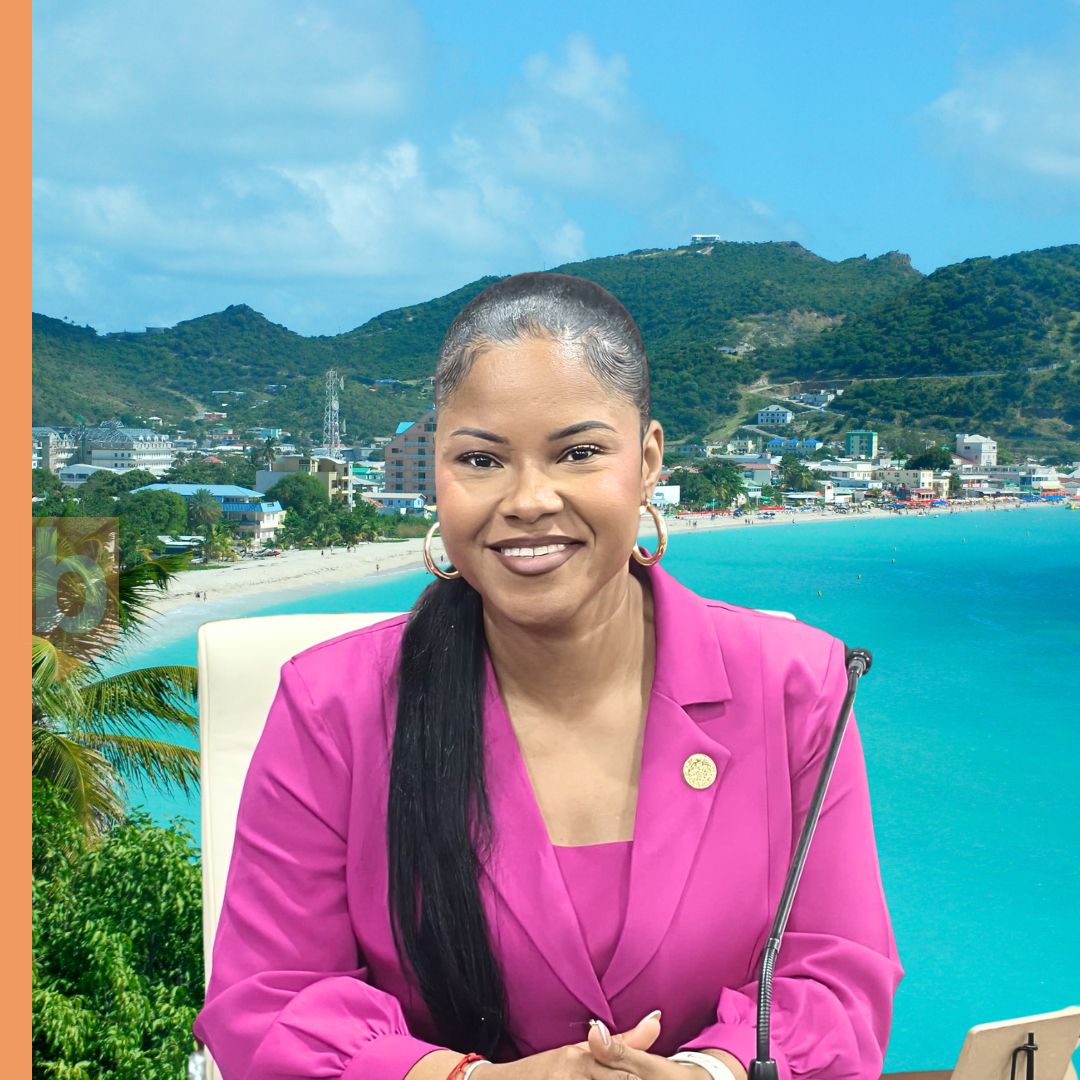
GREAT BAY--As St. Maarten celebrates 16 years of country status, Member of Parliament Sjamira Roseburg is calling for renewed commitment to nation building, meaningful action on the cost of living and a stronger voice for the Caribbean countries within the Kingdom of the Netherlands. She also warned that continued inequalities in the Kingdom's constitutional arrangements risk leaving Caribbean citizens feeling like second-class citizens.
In her Constitution Day message, titled "Sixteen and Growing: Building Our Nation Together," Roseburg reflected on the country's achievements since October 10, 2010, while acknowledging the frustration many residents continue to experience over high grocery prices, electricity bills, unreliable internet services and other everyday challenges.
"When I ask people how they feel about 10-10-10, hardly anyone says 'proud,'" Roseburg noted, explaining that conversations about country status often turn quickly to the financial pressures facing households.
"I hear you. You live these problems every day. What you need is action," she stated.
The MP acknowledged the contributions of those who laid the foundation for St. Maarten's country status, expressing gratitude for their work while emphasizing that today's political leaders have a responsibility to build on that legacy.
Roseburg compared the country's development to that of a 16-year-old, still growing, learning from mistakes and determining its future. She noted that St. Maarten has already endured major challenges, including Hurricane Irma and the COVID-19 pandemic, but maintained that resilience alone is not enough.
"A constitution made us a country. People make us a nation," she said, emphasizing that nation building extends beyond Parliament and government institutions to the contributions of teachers, nurses, returning graduates, workers and ordinary citizens.
Addressing the everyday struggles of residents
Roseburg outlined several legislative and policy priorities she is pursuing in Parliament, emphasizing that the benefits of country status must translate into improvements in people's daily lives.
Among these is her initiative legislation to expand exemptions from the turnover tax (BBO) on essential products, including vegetables, meat, cooking gas and menstrual products. She stressed that businesses must pass any resulting savings directly to consumers.
She also reiterated her position that banking services, particularly instant transfers, should be free or substantially more affordable, arguing that residents should not face excessive charges simply to move their own money.
Reliable electricity, water and internet services remain central concerns. Roseburg indicated that she is examining stronger consumer protection measures, exploring the possibility of providing free Wi-Fi in public spaces and continuing to question electricity charges affecting households.
On employment, she highlighted her attention to legislation being advanced through the Ministry of Public Health, Social Development and Labor (VSA) to address the repeated use of temporary employment contracts.
She also pointed to her proposal to utilize the Crime Fund for conflict resolution training in schools and mentorship initiatives aimed at helping young people navigate social challenges.
Kingdom must confront unequal treatment of Caribbean citizens
A central part of Roseburg's Constitution Day message focused on St. Maarten's position within the Kingdom and what she described as the need for genuine equality among its four countries.
As Chair of Parliament's Committee for Kingdom Affairs and Interparliamentary Relations (CKAIR), Roseburg expressed strong agreement with an article published in the Dutch newspaper de Volkskrant on October 10 by Wouter Veenendaal, Professor of Kingdom Relations at Leiden University, and Oberon Nauta, senior adviser at research bureau DSP.
According to Roseburg, the authors argued that the Kingdom is failing its Caribbean citizens by exercising increasing control over financial management and governance while distancing itself from responsibilities involving education, healthcare, social security and climate adaptation.
She highlighted their criticism that, since 2010, The Hague has tightened its oversight of the Caribbean countries while treating several essential public services as matters falling exclusively under their autonomy.
Roseburg warned that this approach contributes to unequal living conditions and undermines the principle that all Dutch citizens within the Kingdom deserve equal dignity and protection.
She pointed to the Kingdom Charter's responsibility to safeguard fundamental rights and standards of governance, arguing that these obligations should not depend on where within the Kingdom a citizen resides.
The MP also supported the authors' criticism of what they described as the Kingdom's democratic deficit, particularly the limited ability of the Caribbean countries to directly influence decisions taken at the Kingdom government level.
Roseburg noted that only the Dutch Parliament can hold the Kingdom government accountable, while the Caribbean countries do not have representation in that Parliament as countries.
She drew attention to other autonomous territories, including Åland, the Faroe Islands, Greenland, the Azores and Madeira, which have forms of representation in their respective national parliaments.
For Roseburg, these examples raise an important question about why the Caribbean countries of the Kingdom should remain without comparable representation.
She maintained that the Caribbean countries need a significantly stronger voice in Kingdom decision-making and that the Netherlands must be prepared to step back from excessive involvement in their internal affairs.
"As CKAIR chair, I will carry that message to IPKO and to The Hague," Roseburg pledged, referring to the Interparliamentary Kingdom Consultations.
Her remarks also emphasized St. Maarten's historical struggle for self-determination, recognizing the resistance of enslaved people such as One Tete Lokhay, workers who fought for fair wages and the voters who supported country status in the 2000 referendum.
Roseburg said honoring that history requires continued willingness to address the legacy of slavery, historical injustice and meaningful forms of repair.
Unity and public involvement essential to nation building
Beyond political and constitutional reform, Roseburg called on residents to rediscover the solidarity demonstrated following Hurricane Irma, when neighbors, churches, volunteers and communities supported one another regardless of political affiliation or background.
She stressed that the same sense of responsibility should guide the country's development every day, rather than emerging only during disasters.
Acknowledging that legislative change requires cooperation from fellow parliamentarians and government, Roseburg encouraged citizens to remain actively involved in public affairs, voice their concerns and hold elected representatives accountable.
She urged residents to follow her parliamentary updates, contact her office and participate in discussions about the country's future.
As St. Maarten enters its seventeenth year as a country, Roseburg said its next stage of development must focus on creating opportunities for young people to remain and prosper at home, ensuring dignity and security for the elderly, and establishing genuine equality within the Kingdom.
"Sixteen is when you decide what kind of adult you'll become," she stated, calling on citizens to help determine the future of their country.
"Our best years are not behind us. We will build them, together," Roseburg concluded.
Join Our Community Today
Subscribe to our mailing list to be the first to receive
breaking news, updates, and more.