

.jpg)


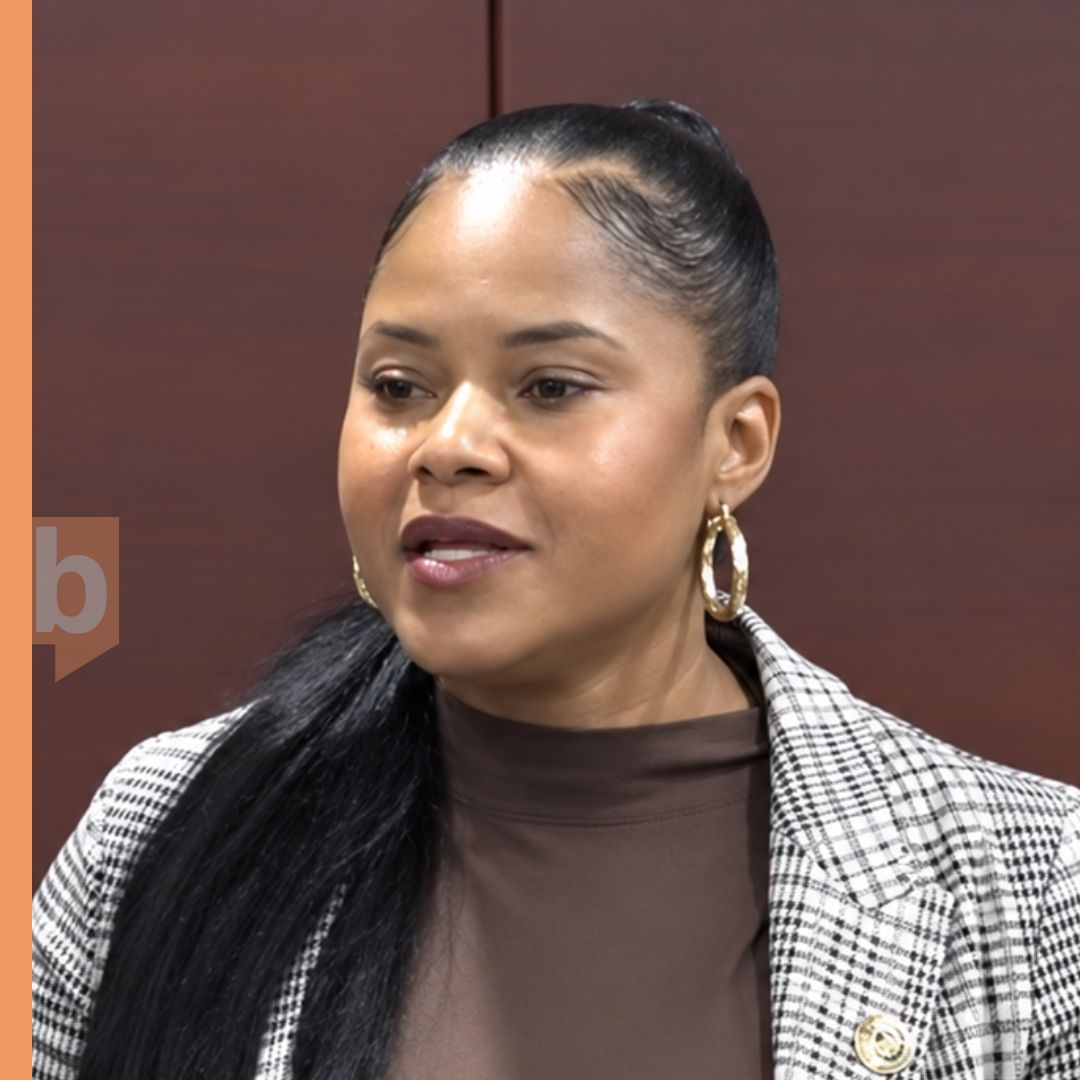
GREAT BAY--Member of Parliament Sjamira Roseburg on Thursday urged Government to examine whether St. Maarten is approaching circumstances serious enough to justify extraordinary public-order measures, including the possibility of a state of emergency, while separately pressing the Ministry of Justice to create prison capacity now instead of waiting until prosecutors urgently need cells.
Roseburg made the remarks during the continuation of Parliament’s urgent meeting on traffic accidents, road safety and other Justice-related matters. The meeting, which began July 7, resumed Thursday with Minister of Justice Nathalie Tackling answering MPs’ questions.
Her questioning and statements went beyond simply asking whether crime is increasing. Roseburg questioned whether the current consequences for criminal behavior are sufficiently certain to deter people, particularly young offenders, from taking the risk of committing crimes.
She welcomed the Minister’s announcement of additional law-enforcement reinforcement and said greater visibility on the streets could have an immediate deterrent effect. Roseburg argued that people considering criminal activity make their own assessment of the possibility of being caught and the consequences they are likely to face.
The MP said recent arrests involving younger suspects, including teenagers, should force the country to examine whether its response is strong enough.
Tackling herself warned a day earlier about what she described as a hardening of crime, including more violent activity, firearm possession and increasingly young suspects, with police encountering boys as young as 14 and 15 on the streets late at night.
Roseburg told Parliament that while additional manpower is a positive development, the country also has to consider whether the threat of consequences is actually being felt by those contemplating crime.
She framed it as a risk calculation. If someone considering an offence believes there is little chance of being caught, or believes that even after being arrested there will be no prison space available, Roseburg questioned whether that person is receiving a strong enough reason to stop.
In her view, the current situation requires policymakers to think beyond conventional responses.
Roseburg drew comparisons with hurricanes and other exceptional situations where governments are required to activate measures that would not ordinarily be necessary.
“Extraordinary situations ask for extraordinary solutions,” was the central point of her intervention.
She asked Tackling to examine how close St. Maarten may be to the legal threshold for stronger emergency measures and what Government could lawfully do if crime escalates further.
State of emergency raised for discussion
Roseburg did not declare that St. Maarten is presently under a state of emergency or say that Government had decided to impose one. Rather, she raised the possibility as something she believes should be examined given the direction of the crime situation.
She also referenced previous periods of zero-tolerance enforcement, saying such approaches may not always be popular but can create a clear understanding that violations will have consequences.
The MP urged the Minister to examine what additional measures are available within the law and to communicate clearly to the public where Government intends to draw the line.
Her argument was that Government should not wait until crime reaches a more serious stage before determining what legal tools could be used.
Tackling: a crime peak, not a crisis
Tackling responded by acknowledging that St. Maarten is experiencing a peak in crime, but said she does not believe the situation currently qualifies as a crisis or a state of emergency.
The Minister nevertheless agreed that authorities must continue strengthening enforcement and detention capacity.
Government has been increasing security operations while also seeking cooperation with Kingdom partners on Justice issues, including detention and organized crime. Recent Four-Country Justice consultations have included detention capacity, youth crime and organized crime among the shared priorities.
Roseburg: do not wait until prosecutors need five or six cells
A major part of Roseburg’s questioning centered on Point Blanche Prison.
She challenged the practice of waiting until prosecutors identify an immediate need for prison spaces and then trying to determine which inmates may qualify for exceptional early release.
Instead, Roseburg asked whether the law could be used proactively to create a reserve of detention capacity.
She suggested that where Government already knows there is a structural capacity shortage, authorities could assess inmates closest to their normal release dates and, where legally permissible, create perhaps 10 or 15 spaces before another major arrest requires them.
Her question was straightforward: Why wait until five or six cells are urgently needed if Government already knows the shortage exists?
Roseburg acknowledged that creating space could mean releasing some inmates earlier than their full sentence, but argued that the country must examine the broader public-safety effect.
In her reasoning, guaranteed available prison space could change the calculation of someone contemplating a crime because that person would know arrest can be followed by actual detention.
Roseburg specifically returned to Article 1:37 of the Criminal Code, which has been used in discussions surrounding exceptional conditional release when detention capacity is insufficient.
She questioned whether the provision could legally support a more proactive approach when Government can already foresee a need for additional cells.
The detention shortage is not new. Tackling has previously explained that Article 1:37 may be used only in exceptional circumstances connected to actual capacity pressure and requires individual assessment, rather than providing a general power to release prisoners simply to maintain empty cells.
Roseburg nevertheless asked whether the present interpretation is achieving the larger objective.
She questioned whether waiting until a capacity emergency arises and then freeing spaces is sufficiently effective, particularly if people outside the prison believe the system is too full to hold them.
Tackling warns: “We will create space”
Tackling sought to directly counter that perception.
She told Parliament that authorities are working to move away from the idea that someone arrested will automatically be released after a short period because Point Blanche has no available capacity.
The Minister said that where the offence is sufficiently serious, or authorities are dealing with repeat offending, space will be found.
Her message was that offenders should not assume overcrowding guarantees freedom.
Tackling also pointed out that the increasing number of minors being arrested creates a different detention issue because juveniles do not ordinarily go to Point Blanche Prison. Juvenile cases may involve the Miss Lalie Center or alternatives to incarceration depending on the circumstances.
Tackling highlighted Government’s plan to create 16 temporary detention spaces at the Foreigners Detention Center in Simpson Bay.
The Ministry reached an agreement with UNOPS to renovate an unused portion of the facility to accommodate 16 low-risk detainees while construction of the new Point Blanche prison continues.
The Minister told Parliament that the additional spaces form part of a broader effort to find capacity wherever legally and operationally possible.
The new Point Blanche Prison currently under construction is designed for up to 196 inmates, more than doubling existing capacity when completed.
The Minister also issued a warning to persons who have already been convicted but have not yet served custodial sentences because of capacity constraints.
As space becomes available, Tackling said authorities intend to begin executing those outstanding sentences.
Her message was that people should not believe that a sentence disappears simply because there was no immediate detention space when it was imposed.
Tackling said Government wants to restore the principle that criminal conduct has consequences.
That response directly touched on Roseburg’s deterrence argument. Roseburg’s concern was that the perception of unavailable prison space may encourage risk-taking, while Tackling sought to make clear that Government intends to remove that perception.
Roseburg also presses Parliament to help move laws forward
Roseburg’s remarks Thursday were also broader than prison capacity.
She pointed to Parliament’s recent work on possible modernization of the Road Traffic Ordinance and said MPs had already demonstrated that Parliament can contribute constructively by reviewing legislation and submitting recommendations.
She noted that MPs had provided input on matters including breathalyzer legislation and welcomed the fact that Parliament was now collectively working on issues that had been discussed for years.
Roseburg then asked whether Parliament could similarly help move the long-delayed Criminal Procedure Code forward.
She noted that the legislation has been pending for years while many of St. Maarten’s laws require modernization.
Tackling explained that the Criminal Procedure Code was developed through a Dutch Caribbean working group because maintaining similar criminal procedural rules across countries sharing the Common Court of Justice helps avoid additional complexity and expense.
According to Tackling, Aruba has already approved its legislation with relatively minor changes. In St. Maarten, however, lawyers previously brought into Parliament’s Justice Committee submitted extensive comments and proposals on the draft.
The Ministry must now analyze and formally answer those comments before parliamentary debate can continue.
Tackling said this has become a significant workload because the subject requires specialized legal expertise and the Ministry has limited legislative capacity. Officials are also continuing to work with the professor involved in drafting the legislation.
The Minister said the objective remains to complete that analysis and return to Parliament so a decision can be taken on the legislation’s next stage.
Join Our Community Today
Subscribe to our mailing list to be the first to receive
breaking news, updates, and more.
