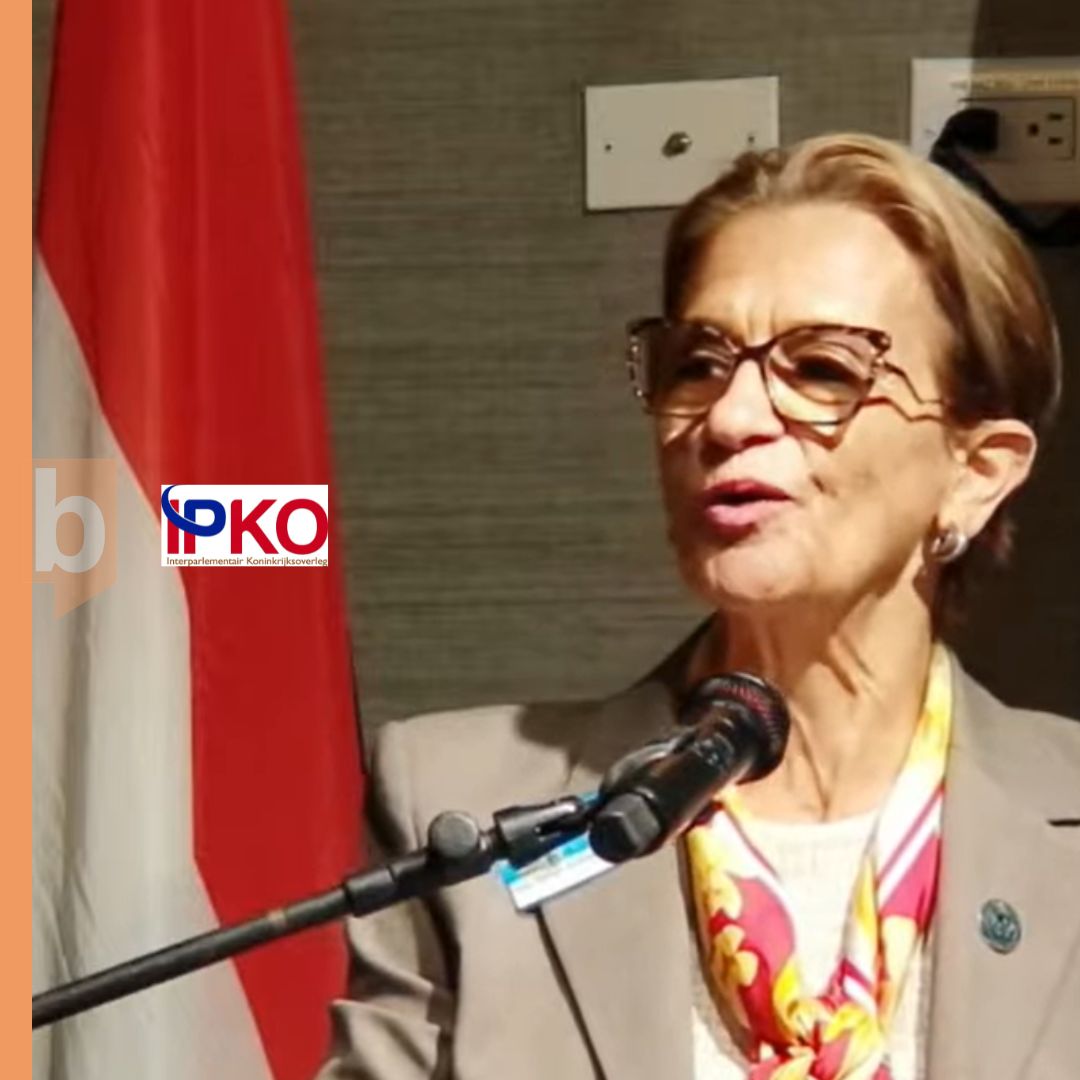



ORANJESTAD, Aruba--President of the Parliament of St. Maarten and delegation leader, MP Sarah Wescot-Williams, received public praise from Aruba Member of Parliament Hendrik Tevreden during the opening of the Interparliamentary Kingdom Consultations (IPKO), with the Aruba MP stating that Wescot-Williams “always ignites the fire within” when she speaks and urging her to continue inspiring colleagues with “boldness” built on experience and strength.
Wescot-Williams thanked the Aruba MP for the remarks and used the exchange to underline what she described as a central test for IPKO, whether the forum is prepared to address the subjects that cause friction within the Kingdom, not only the safer themes.
“We really need to go back to putting the issues on the table that might bring disagreement and deal with those disagreements,” she said, cautioning that the consultations risk becoming too comfortable, too presentation-driven, and too easy to conclude without follow-through.
In her opening statement, Wescot-Williams said it was her pleasure to address colleagues once again in her capacity as President and delegation leader of St. Maarten at IPKO. She noted that, over the past two years, delegations met only once annually due to various circumstances, hosted by the Netherlands, and welcomed the return to the regular rhythm of two meetings per year.
Continues below..
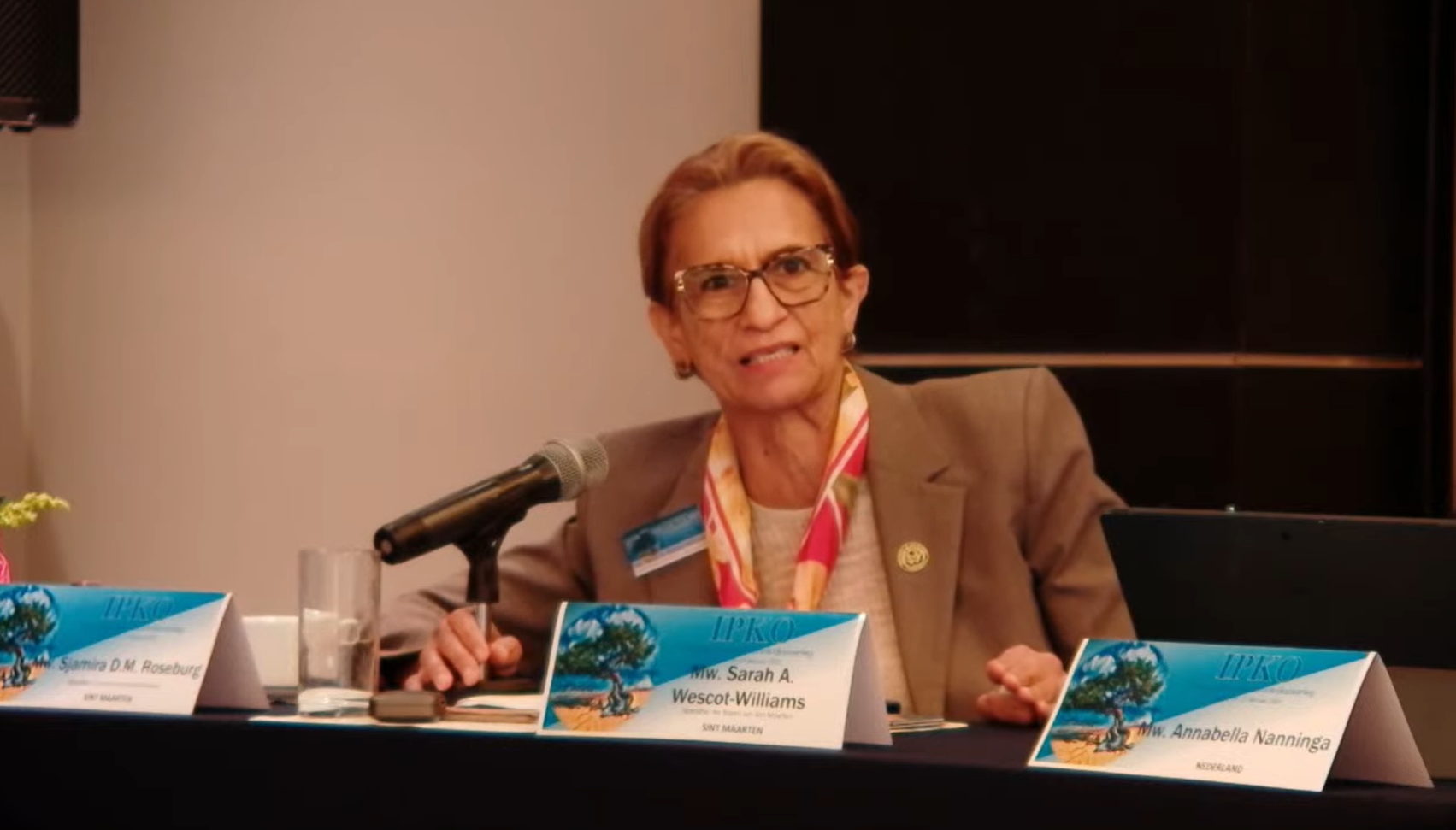
She thanked Aruba for hosting what she referred to as a Caribbean edition of IPKO and described the setting as personally meaningful, noting that it felt good to be back in the country where she grew up. She also emphasized that the fact the parliaments continue to meet face-to-face reflects resilience and a commitment to maintaining dialogue within the Kingdom.
A question of impact: what are citizens actually gaining?
Wescot-Williams then shifted from the agenda to what she called a more fundamental reflection about IPKO itself: what the four parliaments collectively want to achieve through the forum, and what citizens can tangibly point to as outcomes.
She pointed to her long involvement with the consultative platform across its different eras and titles, from earlier versions before 10/10/10 to the post 10/10/10 period. She said she has served as both a minister and a parliamentarian, in coalition and in opposition, and that this experience carries not only perspective, but responsibility to ask difficult questions now.
She warned that if members do not raise those questions, newer participants could assume that “this is simply how things are done,” and IPKO could become a tradition and routine rather than a continually evaluated instrument of parliamentary responsibility.
Wescot-Williams referenced decades of debate across the Kingdom on dispute regulation and the balance within constitutional arrangements, and said it is no longer sufficient for a dispute regulation to simply survive changes in governments.
She also referenced the longstanding concern about the Kingdom’s democratic deficit and noted that despite milestones such as 50 years of the Charter and discussions about renewal, some issues remain substantially unresolved.
Against that background, she pointed to the agreement reached in June 2024 to establish an expert committee on the democratic deficit, describing it as an important step. She said the committee has work to complete within a defined period, and she urged members of parliament to be ready for more than another document on a shelf.
If the report is received and treated like “a football again,” she cautioned, then parliaments might as well decide they do not want another report. In her view, analysis alone is not enough, conclusions must be drawn and, where necessary, action must follow.
“Not merely collegiality and fellowship,” but real oversight
Wescot-Williams emphasized that IPKO must not become simply a biannual gathering remembered mainly for collegiality and fellowship, valuable as those are. She said the forum must be judged by impact.
She argued that the geopolitical landscape is shifting and that there is renewed international attention on the Kingdom in the global arena, including expectations that the Kingdom, as a whole, upholds responsibilities for all citizens across its parts. At the same time, she said questions about equality of rights and equal treatment for all citizens within the Kingdom are becoming more prominent and cannot be treated as theoretical.
In that context, she encouraged political parties, factions, and individual members across the Kingdom to reflect seriously on the collective parliamentary role and whether the parliaments are fully exercising it. She posed the question of whether IPKO is being used as a strategic instrument of democratic oversight and direction.
If that reflection leads to the conclusion that strengthening, adjusting, or rethinking aspects of the work is necessary, she said parliaments must have the courage to act. She stressed that her call was not to weaken IPKO, but to keep it meaningful, relevant, and effective.
A direct appeal to move out of the “safe zone”
In response to the Aruba MP’s question about what should change or be brought back to IPKO, Wescot-Williams said that the consultations should return to intense, honest dialogue on the issues that can divide the Kingdom, rather than selecting only safer topics.
She noted that the current pattern can involve presentations on issues, with each country giving its perspective, but stopping short of parliamentary action. She cautioned against a tendency to move on too quickly and “forget,” and argued that parliaments must be able to do something about the matters they discuss.
She also pointed to examples of difficult, unresolved issues that require parliamentary persistence, including the democratic deficit and the long-discussed idea of a Kingdom Conference. She said IPKO has stood behind such calls in the past, but too often the momentum is allowed to fade.
Wescot-Williams stated that governments are being allowed “to get away with too much,” which in her view weakens the oversight function of all four parliaments. While acknowledging the value of meeting across the Kingdom and the importance of relationships, she said that at some point parliaments must recognize that some topics are painful, and must still be addressed.
Her appeal was for members to face each other on what matters, respect each other’s positions, and identify how parliaments can help solve the problems, not just describe them.
Join Our Community Today
Subscribe to our mailing list to be the first to receive
breaking news, updates, and more.