

.jpg)


THE HAGUE--The issue of democratic deficit within the Kingdom of the Netherlands was brought into sharper focus during the Interparliamentary Kingdom Consultation, IPKO when Dr. Rachnilda “Nilda” Arduin told IPKO that historical inequality continues to shape Kingdom relations and must be taken into account if the countries within the Kingdom of the Netherlands are to participate on the basis of true equal standing. Arduin's exchange was prompted by a question from MP Sjamira Roseburg, Chairlady of the Committee of Kingdom Affairs and Interparliamentary Relations of the Parliament of St. Maarten.
Arduin, who represents St. Maarten on the expert group examining the democratic deficit within the Kingdom, said equality cannot simply mean treating unequal situations the same.
Article continues below...
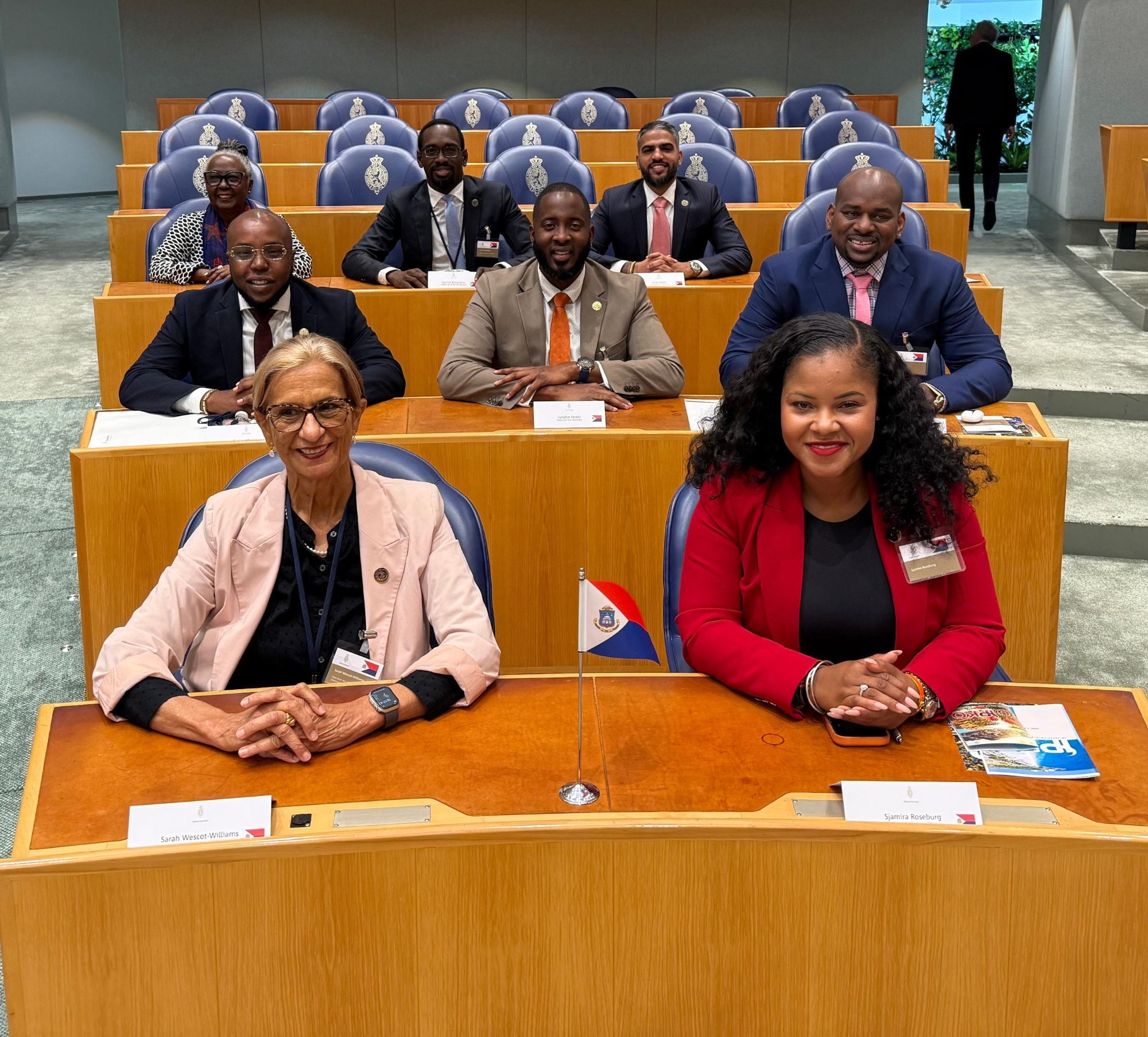
In her questioning, MP Roseburg said the presentation given by the expert group had referred to equal standing within the Kingdom, but stressed that equal standing is not necessarily the same as equality. She noted that equal standing requires taking into account the historical, geographical, and institutional differences between the countries.
Responding to Roseburg’s question about capacity, institutional differences and the legacy of slavery, Arduin said the Caribbean countries require the proper tools, support and recognition of historical realities to participate meaningfully in Kingdom decision-making.
Roseburg asked how the expert group views the issue of capacity in that context. In other words, she asked how countries within the Kingdom can genuinely participate on an equal footing when the available resources, expertise, and institutional capacity are not always equal. She also connected the issue to the shared history of slavery, noting that this historical background continues to form part of the broader context in which Kingdom relations must be understood.
Responding to the question, Drs. Arduin said it had been agreed within the delegation that she would address the issue of capacity. She explained that the distinction between equality and equal standing is central to any meaningful discussion about the democratic deficit in the Kingdom.
Arduin used a simple example to illustrate the point. She referred to three people standing behind a wall, each of a different height. If all three are treated exactly the same, the tallest person may already be able to see over the wall, the second person may see part of what is happening, while the shortest person may not be able to see over the wall at all. Giving each person the same step would still not solve the problem, because those who are already taller would rise even higher, while the shortest person may still not be able to see.
According to Arduin, that is why equal standing must be created in a way that allows everyone to participate meaningfully. In her example, this could mean giving the shorter person two steps, while the tallest person may not need any step at all. She said this does not make the arrangement undemocratic. Rather, it recognizes that treating unequal situations exactly the same can preserve inequality instead of correcting it.
Arduin said this distinction is important in the Kingdom context because the Caribbean countries have different populations, different scales, and different capacities when compared to the Netherlands. Those differences do not make the countries unequal in dignity or status, but they do require different forms of support and consideration if all countries are to participate as true equals.
She also addressed the historical dimension raised by MP Roseburg, saying it is an aspect that is often not sufficiently included in the reality of Kingdom relations. Arduin said the only reason the countries are together in the Kingdom is because of their shared history. She pointed to 1863, when slavery was abolished, and stated that while formerly enslaved persons received freedom, they did not receive equality.
According to Arduin, institutional inequality continued after abolition. She said this was reflected in legal and structural arrangements that prevented freed persons and Aruba’s free Indigenous people from reaching the same level as free colonists. She referred to historically limited civil rights and said these limitations were institutional in nature.
Arduin then pointed to 1948, when universal suffrage was introduced, and to 1954, when the countries agreed to cooperate in a new way under the Charter for the Kingdom, based on equal standing. However, she stressed that the structural disadvantages created over time were not automatically erased by those developments.
She said the introduction of voting rights did not mean that the civil rights and institutional limitations of the past suddenly disappeared, nor did the Charter of 1954 suddenly allow all countries and peoples within the Kingdom to “see over the wall” equally. The question today, she said, is whether the countries can now truly look one another in the eye and speak to each other as equals.
Article continues below...
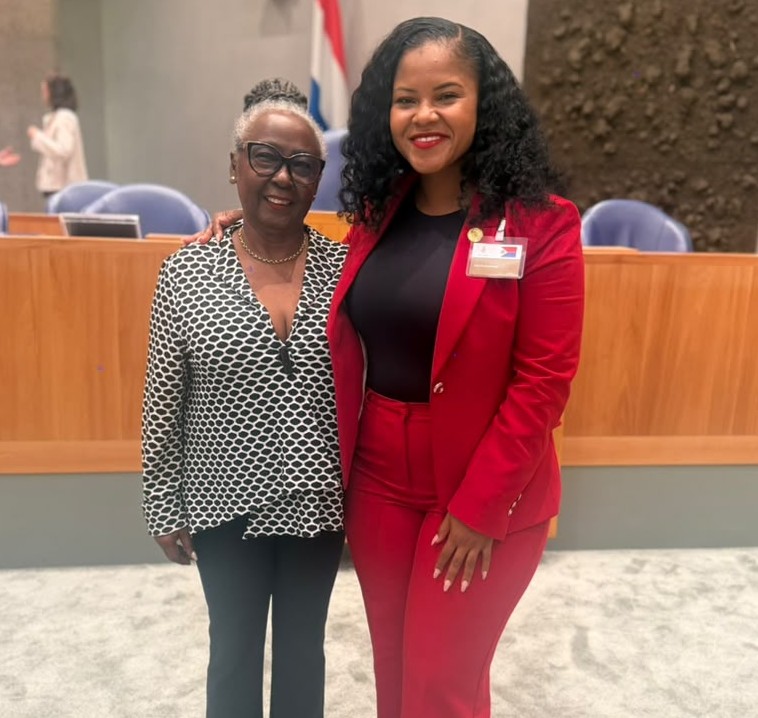
Arduin said the answer is still no, and that this is why the expert group must examine what resources and “steps” are necessary for the countries to participate in the Kingdom on a genuinely equal basis. She said this is part of the analysis the expert group is attempting to carry out: determining where the countries stand and what forms of support are needed for them to move forward as equal partners.
She explained that the expert group will conduct field research as part of its work. While in the Netherlands, the group will not only make presentations, but will also meet with the Ministers Plenipotentiary of Curaçao and St. Maarten, as well as with the State Councilors of the Caribbean countries at the Council of State.
Arduin said the group will also meet with the State Secretary, because it wants to hear from those directly involved in the field about the actual bottlenecks in Kingdom relations. She said the group also wants to understand why certain proposals made in the past were not implemented.
She emphasized that Kingdom relations are, in the end, human relations. According to Arduin, the matter cannot be solved only with rules or proposals on paper. The expert group, she said, must understand what the practice looks like and what obstacles exist in day-to-day relations between the countries.
At the end of its assignment, the expert group hopes to present IPKO with a report that identifies what resources and measures are needed for the countries to move forward with each other on the basis of true equal standing.
The exchange between MP Roseburg and Drs. Arduin placed the democratic deficit discussion in a broader historical and practical context. It also highlighted that the issue is not only about formal legal equality, but about whether the countries in the Kingdom have the real capacity, tools, and influence needed to participate meaningfully in decision-making that affects them.
The discussion comes as the four parliamentary delegations participating in IPKO have confirmed that follow-up has been given to agreements made during the IPKO held from June 7 to 10, 2024, in The Hague. This includes the formal establishment of the expert group titled “Democratic deficit within the Kingdom.”
The delegations stated that the expert group is tasked with delivering a report to IPKO within a nine-month period calculated from January 1, 2026. The report will focus on existing and new proposals to reduce the democratic deficit within the Kingdom of the Netherlands, as well as the scope and meaning of key provisions in the Charter for the Kingdom.
The Charter provisions under review include Articles 3, 11, 26, 27, 38, 43, and 51. These provisions touch on Kingdom affairs, consultation, cooperation, Kingdom legislation, mutual arrangements, guarantees of fundamental rights and good governance, and intervention powers within the Kingdom structure.
Article continues below...
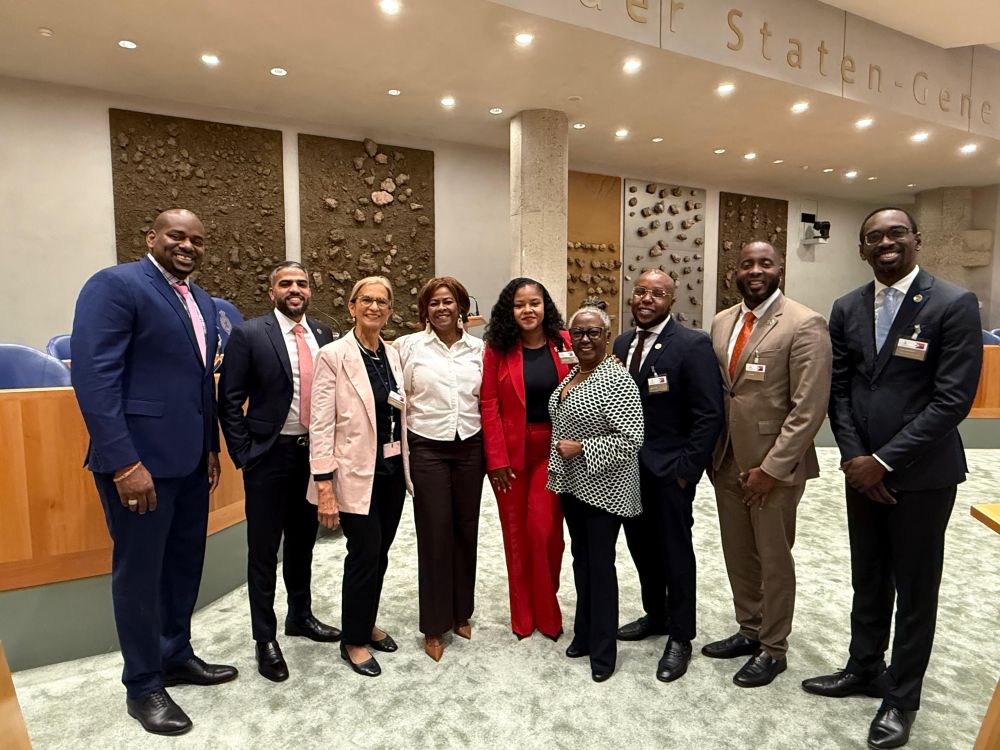
IPKO is the interparliamentary consultation platform through which delegations from the parliaments of Aruba, Curaçao, the Netherlands, and St. Maarten meet to discuss Kingdom-wide issues and agree on follow-up actions.
The expert group is comprised of one expert designated by each delegation. Mildred Schwengle represents the Parliament of Aruba, Aubrich Bakhuis represents the Parliament of Curaçao, Rachnilda Arduin represents the Parliament of St. Maarten, and Leonard Besselink represents the Kingdom Relations committees of the States General of the Netherlands.
The establishment of the expert group reflects a shared intent by the four delegations to move from recurring discussion toward structured analysis and actionable proposals. Its findings are expected to guide future IPKO deliberations and follow-up on one of the most persistent issues in Kingdom relations.
Join Our Community Today
Subscribe to our mailing list to be the first to receive
breaking news, updates, and more.