.jpg)


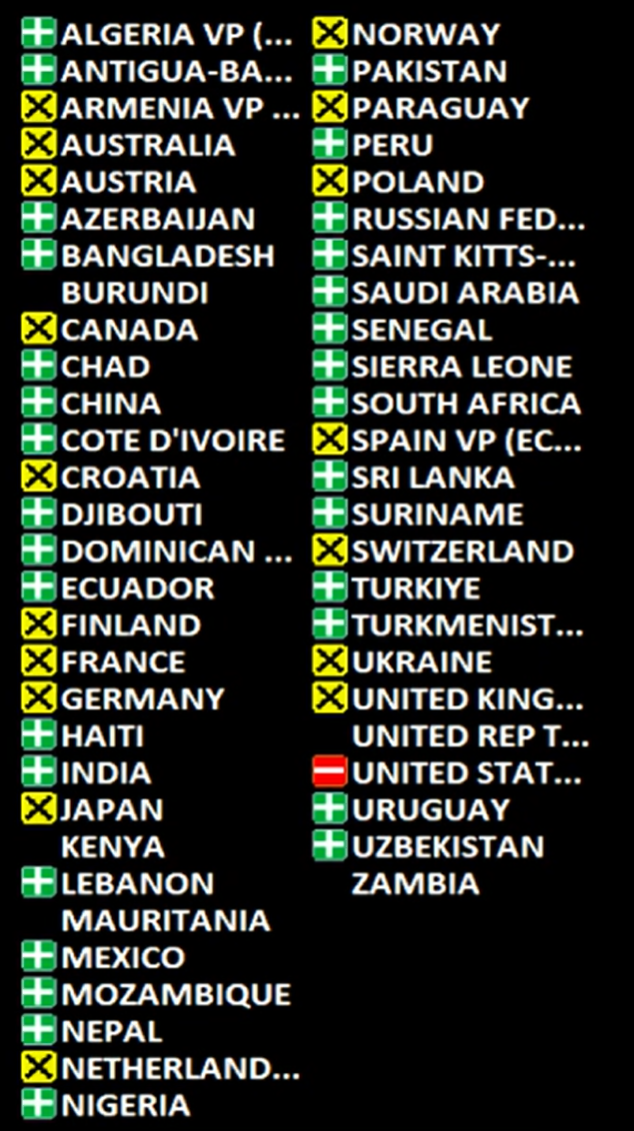
GREAT BAY--The ONESXM Association has expressed concern over the decision by France and the Kingdom of the Netherlands to abstain from a United Nations Economic and Social Council resolution connected to the implementation of the Declaration on the Granting of Independence to Colonial Countries and Peoples.
According to the association, the resolution was adopted with 31 countries voting in favour, one voting against and 17 abstaining.
The United Nations Economic and Social Council considers the implementation of the 1960 decolonization declaration each year, including support provided by UN agencies and international institutions to territories that have not completed the decolonization process.
ONESXM said the abstentions by France and the Netherlands carry particular significance for St. Martin, which remains divided between administrations connected to the two European governments.
The association said neither side consulted the people of St. Martin before taking its position on the resolution.
“Two governments voted. One people were unheard,” ONESXM stated.
The organization said its concern extends beyond the two abstentions. It pointed to what it described as a continuing pattern in which decisions affecting St. Martin’s constitutional and political future are taken without the direct participation of the island’s people.
According to ONESXM, St. Martiners continue to be spoken for rather than included in decisions concerning their homeland.
The association connected the vote to the ongoing process surrounding the treaty between France and the Kingdom of the Netherlands to formally define the land border between St. Maarten and Saint-Martin.
The treaty was concluded in May 2023 and is intended to provide legal clarity on a border that had not been comprehensively defined since the Treaty of Concordia in 1648. The Netherlands advanced the proposed Kingdom legislation needed to approve the agreement earlier this year.
ONESXM argued that the border process has also moved forward without a referendum or meaningful island-wide consultation.
The association said that after nearly four centuries, decisions continue to be formalized by the administering governments while the St. Martin people remain outside the decision-making process.
It said this is particularly concerning as questions of sovereignty, self-determination, constitutional reform and decolonization receive renewed attention across the Caribbean and internationally.
“St. Martin cannot continue to be treated as two separate administrative possessions whenever governments find it convenient, while its people are denied a unified voice on matters affecting the future of the entire island,” the association stated.
ONESXM described the island’s reality as one people living under two administering powers without a direct democratic mandate from St. Martiners on the fundamental question of their constitutional future.
The organization said the people must be consulted before governments take positions on their behalf.
ONESXM has previously offered to assist St. Maarten’s government and Parliament with preparations for a consultative referendum. Its proposal called for a public information period, representation for supporters and opponents of independence, neutral specialists and possible UN involvement in the process.
The proposed question is:
“Should St. Martin become an independent country, yes or no?”
The association stressed that it is not seeking to determine how people should vote. It said its position is that the decision belongs to the people and should be made through a free, fair and democratic process.
The organization has argued that a generation has reached voting age since St. Maarten’s last constitutional referendum in 2000 without being directly consulted about the country’s political direction.
ONESXM has also raised St. Martin’s decolonization and self-determination concerns at international forums, maintaining that the people on both sides of the island share a common history and identity despite the separate Dutch and French administrative systems.
The association said the latest UN vote reinforces its position that St. Martin must develop its own democratic voice instead of relying on France and the Netherlands to represent its views on decolonization.
“Until St. Martin speaks with its own democratic voice, others will continue to speak for us,” ONESXM stated.
“Two governments abstained. One people were unheard. It is time for the people of St. Martin to be asked.”
Join Our Community Today
Subscribe to our mailing list to be the first to receive
breaking news, updates, and more.