.jpg)




GREAT BAY--The Parliament of St. Maarten on Monday debated a proposal to establish an ad hoc parliamentary committee focused on sustainable and affordable electricity and water, reflecting deep and cross-party concern about the ongoing challenges surrounding NV GEBE and their impact on residents.
The proposal by Chairlady Sarah Wescot-Williams, submitted by the Committee of Petitions under Article 21, paragraph four of Parliament’s Rules of Order, follows the receipt of a public petition dated November 5, 2025, submitted on behalf of residents of St. Maarten. The petition, supported by signatures gathered during multiple town hall meetings by MP Omar Ottley, called for immediate relief and long-term solutions to persistent electricity and water issues, including affordability, reliability, and governance.
The Committee of Petitions determined that, while the petition could not be handled procedurally as a formal petition, the issues raised warranted continued parliamentary action. The resulting draft proposal recommends the establishment of a topical ad hoc committee to examine the functioning of NV GEBE and the broader national need for sustainable and affordable utilities.

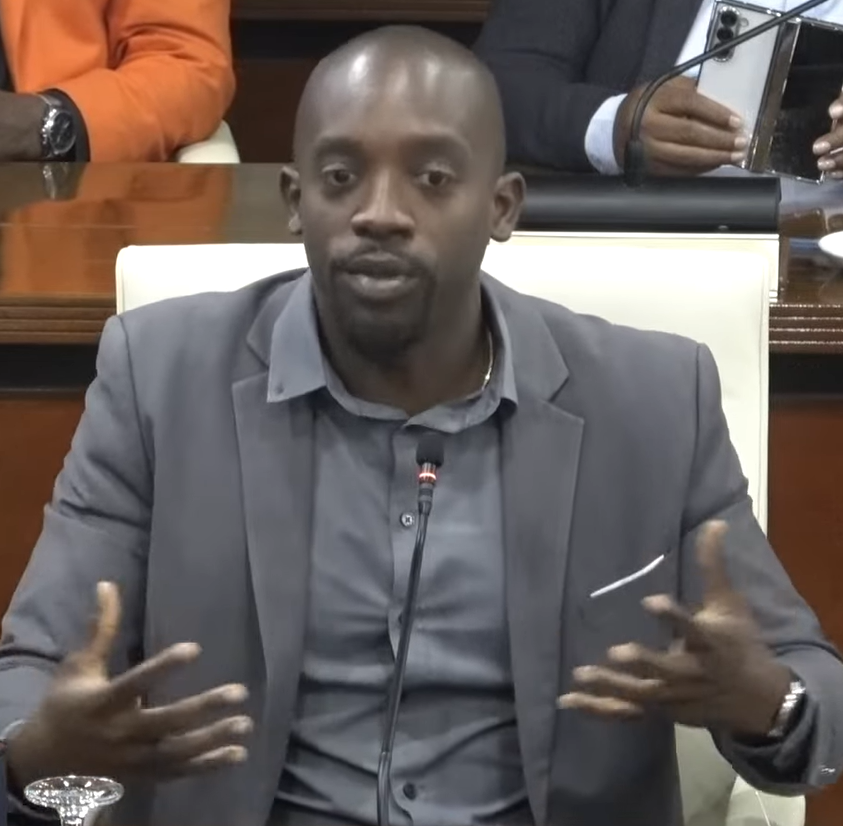
During the debate, MP Egbert Doran recalled that he had already submitted a letter to the Prime Minister and Council of Ministers on August 30, 2024, advocating for the creation of a National Supervisory Committee for NV GEBE. In that letter, Doran argued that political interference, perceived or real, had eroded public trust in the utility company and that balanced, impartial oversight was necessary to stabilize the sector and restore confidence.
Doran emphasized that his letter envisioned direct government involvement to avoid the situation Parliament now faces, where repeated letters and questions have not yielded timely execution. He expressed frustration that, nearly 18 to 19 months later, the country remains without clear answers or tangible relief, despite earlier assurances by government.
“This situation has become a tragedy for many of our people,” Doran said, stressing that electricity and water access is not an abstract policy issue but a daily reality affecting households facing disconnections and rising costs.
MP Doran said that too often in Parliament the focus shifts away from the substance of an issue and onto the person delivering the message. He described it as unfortunate that valid concerns are sometimes dismissed or delayed simply because of who raises them, rather than being addressed on their merits. Doran noted that this tendency has repeatedly prevented urgent matters from reaching the point of decision and action, to the detriment of the public.
Several Members of Parliament echoed concerns about delays and questioned whether another committee would lead to concrete outcomes.
MP Ardwell Irion said he had little confidence that an ad hoc committee, under the current circumstances, would deliver results. He pointed to previous motions, proposals, and public promises that did not materialize into action, including earlier commitments by the Prime Minister to provide relief to citizens.
Irion argued that funds had reportedly been available for relief but were not disbursed, reinforcing his concern about a lack of execution. “Without execution, another committee risks becoming a mechanism to buy more time,” he said.
MP Francisco Lacroes raised similar concerns, questioning what would be different this time and warning against a process that appears to prolong deliberation without delivering solutions. He urged Parliament to ensure that any new structure produces measurable results.
MP Lyndon Lewis expressed fatigue with repeated discussions that have not translated into relief for residents. While acknowledging the seriousness of the issue, he stated that he did not wish to serve on the proposed committee, noting that he has already participated in numerous committees without seeing sufficient effectiveness. Lewis emphasized that constituents continue to approach MPs directly with urgent complaints related to NV GEBE.
MP Veronica Janesm-Webster urged Parliament to allow the process to unfold, noting that additional information is expected from government. She pointed out that a closed-door meeting with the Prime Minister is scheduled to continue later this week, as requested by MPs, to allow for the sharing of confidential information related to NV GEBE. She said she is awaiting clarity on what actions the current board has taken and what steps government has been able to enforce.
Jansen-Webster also stressed that resolving the crisis requires collaboration among Parliament, government, and the government-owned company itself. She noted that while Parliament and government may pursue reforms in the public interest, NV GEBE also operates with its own corporate considerations that must be addressed through coordinated action.
A significant portion of the debate focused on how the ad hoc committee should be composed.
Chairlady Wescot-Williams emphasized that Parliament has a responsibility to use the instruments available to it when government responses are insufficient. She outlined the powers of parliamentary committees, including the ability to hold hearings, conduct work visits, and invite experts and stakeholders.
Wescot-Williams underscored the importance of efficiency and suggested that committee membership should prioritize MPs with relevant expertise, such as engineering, regulatory experience, or prior involvement with NV GEBE, while maintaining the right of all MPs to attend meetings and contribute.
Lewis and MP Ludmila DeWeever both supported limiting committee membership to one representative per faction to improve efficiency, cautioning that a committee with too many members risks becoming unwieldy and ineffective.
Conversely, MP Lacroes and others argued that factions with only two MPs may require flexibility to ensure their perspectives are fully represented, while still supporting a streamlined structure.
At the conclusion of the debate, the Central Committee agreed in principle to proceed with the proposal for the ad hoc committee on sustainable and affordable electricity and water. The matter of membership composition will be further refined before the proposal is submitted to a public meeting of Parliament for formal approval.
Once established, the committee’s initial steps will include appointing members and electing a Chairperson and Vice Chairperson. Parliament emphasized that the committee’s work must focus on practical outcomes, accountability, and relief for residents.
Members across factions acknowledged that electricity and water affordability remains one of the most pressing national issues, affecting every household and business in St. Maarten. While views differed on the best path forward, there was broad agreement that Parliament must continue to press for solutions and maintain sustained oversight in the public interest.
Join Our Community Today
Subscribe to our mailing list to be the first to receive
breaking news, updates, and more.