.jpg)


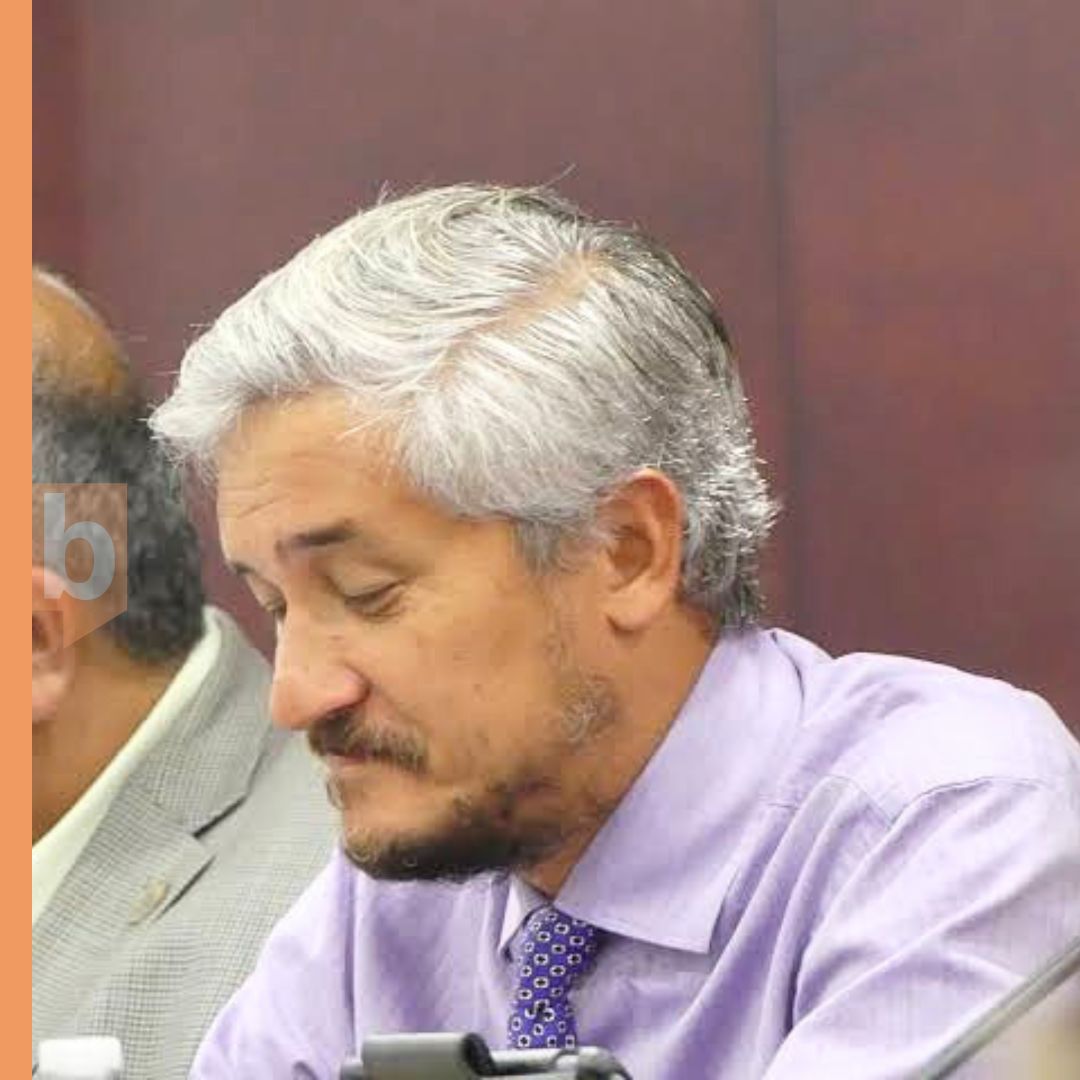
GREAT BAY--Questions are being raised about the Ministry of Justice’s decision to involve the United Nations Office for Project Services, UNOPS, in reviewing the sentence calculation connected to former Member of Parliament Theodore Heyliger’s unsuccessful request for early release. The same entity that, together with the Dutch government, is responsible for the construction of the new Point Blanche prison.
The Minister of Justice’s ten-page decision includes a briefing note prepared by a UNOPS Technical Rule of Law Adviser. The note compared calculations submitted by Point Blanche Prison and Heyliger’s representative and supported the Ministry’s sentence-expiry and conditional-release dates, while correcting several minor counting errors. The adviser did not formally determine whether Heyliger should be released. However, the findings contained in the briefing note were apparantly used in the Minister’s decision to reject his request.
This raises a central question: what is UNOPS’ official role in calculating individual prison sentences and reviewing early-release applications? And why does such a roile even exist for UNOPS? UNOPS is a United Nations agency specialising in infrastructure, procurement and project management. Its publicly stated role in St. Maarten relates primarily to the design and construction of the new Point Blanche Prison.
The US $52 million prison project is being jointly financed by the Government of St. Maarten and the Dutch Ministry of the Interior and Kingdom Relations. The United Nations Office on Drugs and Crime, UNODC, which is a separate United Nations body, has been publicly identified as supporting prison management, staff training and rehabilitation. No publicly available policy has been identified showing that UNOPS forms part of St. Maarten’s statutory early-release process or has a formal role in determining sentence percentages or release dates for individual prisoners.
The Government’s published 2023 conditional-release policy identifies prison management, the probation service, the Central Conditional Release Board and the Minister of Justice as the principal authorities involved in evaluating prisoners and deciding on conditional release. UNOPS does not appear in that published decision-making structure.
This does not necessarily mean that UNOPS was prohibited from reviewing the calculation. It does, however, require the Government to explain who requested the review, under what legal or contractual authority it was conducted and whether the adviser was providing an administrative calculation or a legal opinion.
The Ministry should also clarify the adviser’s qualifications, the instructions provided for the review and whether UNOPS will now be asked to examine the sentence calculations of other prisoners.
The matter also creates a potential conflict-of-interest concern. UNOPS is implementing the new prison project intended to address the same overcrowding conditions being cited as justification for temporary early releases. The organisation therefore has an institutional relationship with the Ministry of Justice and a role in the broader detention reform process. A UNOPS adviser has now also been used to support a decision affecting an individual prisoner.
There is also a broader constitutional question. The new prison project is jointly funded with the Dutch Government, while an earlier UNOPS prison-design project in St. Maarten was financed by the Netherlands. The involvement of UNOPS in sentence-execution matters may therefore raise concerns about whether external project partners are gaining influence over an area that falls under the authority of St. Maarten’s own institutions.
Funding from the Netherlands does not, on its own, give the Dutch Government or UNOPS authority over early-release decisions in St. Maarten. Under local law, that responsibility rests with the Minister of Justice.
The involvement of external partners has therefore raised questions about the scope of their role and whether it is limited to technical support. The Government has not yet publicly clarified whether UNOPS has any continuing function in reviewing individual sentence calculations or early-release matters.
Further clarification may also be needed on the legal and administrative basis for UNOPS’ involvement, including how its advice is used and where responsibility begins and ends when decisions affect an individual prisoner.
Transparency is especially important because UNOPS has faced serious international controversy in recent years.
UNOPS checkered past
A review of the international record of the United Nations Office for Project Services, UNOPS, reveals several incidents that raise questions about its governance, financial controls, oversight and performance on major public assignments.
No verified case was identified in which UNOPS was formally expelled from an entire country. However, its record includes a government freezing funding, the closure of an overseas office after a multimillion-dollar scandal, the termination of a major procurement assignment and the forced departure of a UNOPS official following conflict with a host government.
The most serious controversy involved UNOPS’ Sustainable Infrastructure Investments and Innovation initiative, known as S3i, which operated from Helsinki, Finland.
Finland froze its funding to UNOPS in December 2021 after misconduct allegations emerged involving the head of S3i. UNOPS’ executive director resigned in 2022, the S3i chief executive was dismissed in January 2023 and the investment program was later discontinued. The Helsinki office closed on December 31, 2023.
The scandal involved approximately US$60 million placed in high-risk ventures connected to a British businessman. A United Nations tribunal initially found that former senior UNOPS official Vitaly Vanshelboim had committed serious misconduct through undisclosed financial relationships and ordered him to repay US$58.8 million.
A June 2026 ruling by the United Nations Appeals Tribunal maintained findings of serious misconduct but concluded that responsibility for the losses could not properly rest with one official alone. It pointed to broader institutional failures, including inadequate due diligence, weak checks and balances and shortcomings at other levels of UNOPS leadership.
The ruling showed that risky decisions involving tens of millions of dollars had moved through UNOPS’ approval and oversight systems without adequate safeguards.
Vanshelboim was arrested in Spain in 2025 following a United States warrant accusing him of bribery, wire fraud and money laundering. Spanish judges approved his extradition on several charges, although the allegations remain before the courts and do not amount to a conviction.
UNOPS has also faced criticism over its performance on major government assignments.
In Mexico, the organization was contracted to support large-scale purchases of medicines and medical supplies. The arrangement was intended to improve transparency, secure better prices and address medicine shortages.
The procurement exercise encountered serious problems. In June 2021, UNOPS reported that 55 per cent of the requested pharmaceutical product codes had received no bids. Medicine shortages and patient complaints continued.
In October 2022, Mexico’s Institute of Health for Wellbeing announced that UNOPS would no longer be required for consolidated medicine and medical-supply purchases for 2023 and 2024. The decision ended its central role in one of its most prominent procurement assignments.
Mexico did not prohibit UNOPS from operating in the country, and the wider shortages cannot be attributed solely to the agency. Even so, the government’s decision to end the arrangement after procurement problems and continued shortages represented a significant setback.
Political friction also resulted in the forced departure of a UNOPS official from Sri Lanka.
In 2009, Australian national Peter Mackay, who worked with UNOPS, was given approximately two weeks to leave the country despite reportedly holding a longer-valid visa. The action followed casualty assessments that challenged the government’s account of civilian deaths during the final stages of the civil war.
The incident did not involve financial misconduct, and UNOPS itself was not expelled. It nevertheless shows that its personnel and operations have become involved in serious disputes with host governments.
In Guatemala, prosecutors opened an investigation in October 2025 into alleged irregularities surrounding a major agreement between the Ministry of Public Health and UNOPS for medicines, supplies, equipment and logistical services.
The allegations were disputed and emerged during a broader political conflict between President Bernardo Arévalo’s administration and Guatemala’s prosecution authorities. No final judicial finding of wrongdoing by UNOPS has been identified, and the organization has continued operating in the country.
Taken together, these incidents show that UNOPS’ status within the United Nations system should not place its contracts, decisions or management practices beyond scrutiny.
UNOPS has acknowledged weaknesses and introduced reforms following the S3i scandal. Those reforms do not erase the governance failures, the millions of dollars placed at risk or lost, the funding freeze, the closure of an overseas office, the departure of senior officials or the loss of a major government assignment.
UNOPS has successfully implemented projects in many jurisdictions, but its record also includes poor judgment, weak oversight, conflicts of interest, performance concerns and disputes with governments.
Join Our Community Today
Subscribe to our mailing list to be the first to receive
breaking news, updates, and more.