
.jpg)


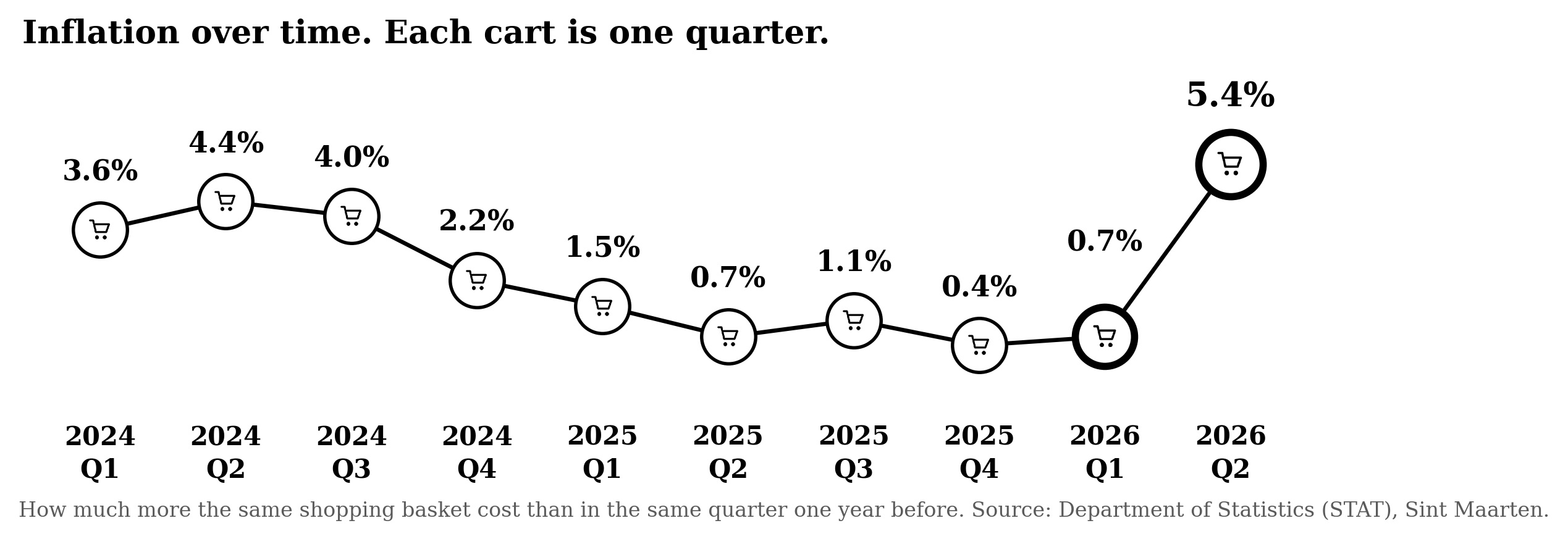
GREAT BAY-- The cost of living in St. Maarten rose sharply during the second quarter of 2026, with inflation reaching 5.45 percent compared with the same period one year earlier, according to the Department of Statistics (STAT).
Prices also increased by 4.03 percent between the first and second quarters of 2026, representing a significant acceleration over a relatively short period. STAT calculated that a household spending XCG 1,000 on a particular basket of goods and services one year ago would now spend approximately XCG 1,054 for those same items.
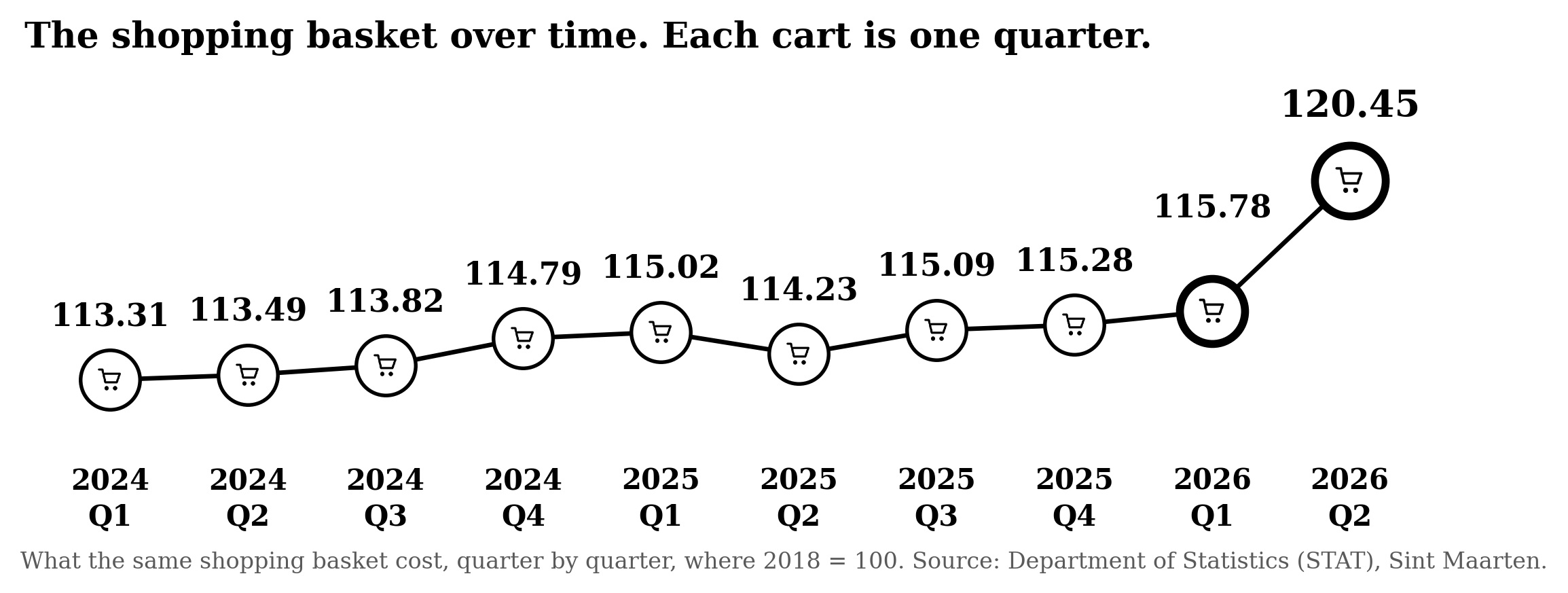
The latest figures mark a notable shift from the more moderate price movements recorded over the previous two years. Between the first quarter of 2024 and the first quarter of 2026, prices increased by approximately 2.2 percent. By comparison, the Consumer Price Index increased by 4.03 percent in just the three months between the first and second quarters of 2026.
The overall Consumer Price Index reached 120.45 in the second quarter, based on 2018 being equal to 100. The quarterly data show a substantial jump from the index of 115.78 recorded in the first quarter of 2026.
Two of the strongest contributors to the increase were electricity-related costs and transportation.
The GEBE fuel clause increased by 40.4 percent compared with the first quarter of 2026, while also standing 34.6 percent higher than in the second quarter of 2025. Gasoline prices increased even more sharply on a year-on-year basis, rising 38.37 percent compared with the previous quarter and 42.79 percent compared with the same period in 2025.
Transportation recorded the largest increase among the major household expenditure categories. Prices in the category rose 16.32 percent from the first quarter and 21.50 percent compared with the second quarter of 2025, driven largely by the increase in gasoline prices.
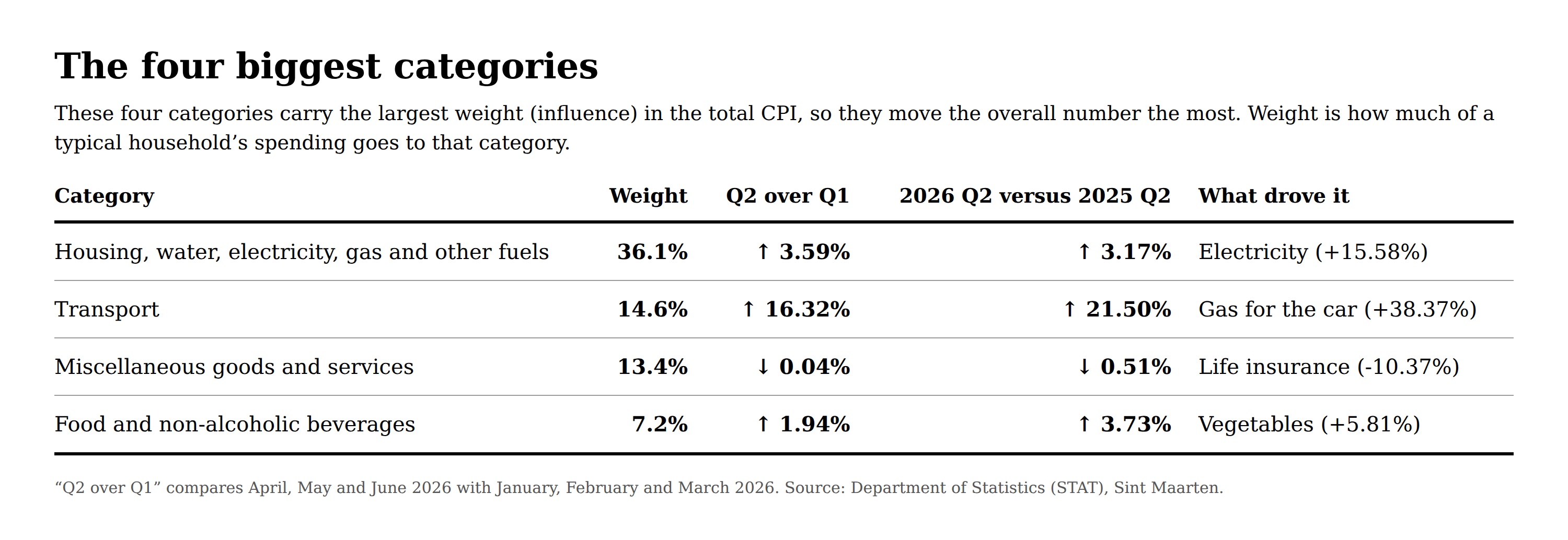
Housing, water, electricity, gas and other fuels, which represent the largest share of the Consumer Price Index at 36.1 percent, increased by 3.59 percent quarter-over-quarter and 3.17 percent year-over-year. Electricity costs within the category increased by 15.58 percent.
Food and non-alcoholic beverages, which account for 7.2 percent of the CPI basket, increased by 1.94 percent compared with the previous quarter and 3.73 percent compared with Q2 2025. Vegetable prices increased by 5.81 percent during the quarter.
Miscellaneous goods and services was the only one of the four largest expenditure categories to record a slight decline, falling 0.04 percent compared with the previous quarter and 0.51 percent compared with the same period in 2025. The movement was influenced by a 10.37 percent decline in life insurance costs.
The figures underline the impact rising essential costs can have on household budgets. When prices increase faster than income, households are able to purchase less with the same salary. Increases in electricity, gasoline and food can also have wider effects because these costs are directly or indirectly connected to many other goods and services throughout the economy.
STAT uses the Consumer Price Index to track changes in the cost of a representative basket of goods and services purchased by households. The data allow households, businesses and government to follow changes in living costs and assess how price movements are affecting the economy.
The Department of Statistics said the full report, including additional information on changes in the GEBE fuel clause and gasoline prices over time, is available through its official website.
Join Our Community Today
Subscribe to our mailing list to be the first to receive
breaking news, updates, and more.