


.jpg)


GREAT BAY--St. Maarten, Saba and St. Eustatius have formally agreed to collaborate on genealogical and scientific research into the lasting legacy of slavery, with an initiative aimed at helping descendants trace their family histories, uncover ancestral connections and preserve the shared heritage of the three islands.
The agreement was formalized on Friday, October 16, 2026, through the signing of a Memorandum of Understanding (MoU) for the project titled "Slavery Past Action Agenda: Genetic Legacies of Slavery and Poverty of Saba, Sint Eustatius, and Sint Maarten."
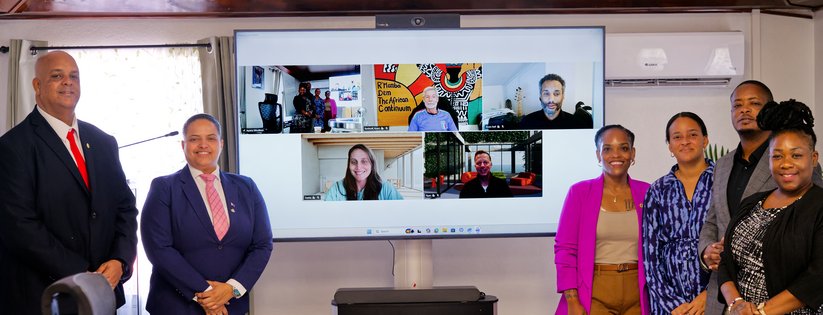
Minister Melissa Gumbs signed the agreement on behalf of the Government of St. Maarten, while Commissioner Eviton Heyliger represented the Public Entity Saba and Commissioner Reuben Merkman signed on behalf of the Public Entity St. Eustatius.
The agreement establishes a framework for regional cooperation on research into the islands' shared history, particularly the ancestral connections and historical experiences shaped by transatlantic slavery.
According to the Public Entity Saba, the collaboration recognizes the importance of documenting ancestral histories and helping communities better understand how the past continues to connect families across the three islands.
A central component of the initiative will be genealogical research, which involves examining family histories and tracing relationships between generations.
The project also envisions the development and use of digital archives and the collection of oral histories, allowing historical records and personal accounts to contribute to a more comprehensive understanding of the islands' shared heritage.
These approaches are intended to help descendants investigate family connections that may extend across St. Maarten, Saba and St. Eustatius.
The initiative seeks to bring together historical documentation, family records and community knowledge to create a lasting record of the islands' interconnected histories.
Oral histories are expected to form an important part of the effort, providing opportunities for community members to share family stories, experiences and knowledge passed down through generations.
The collection and preservation of such information can complement written historical records and contribute to a broader understanding of ancestral connections.
Digital archives are also envisioned as a means of preserving research findings and historical materials for future generations.
The three governments intend to collaborate with research institutions and universities to support the scientific and genealogical components of the project.
Community participation is another stated objective, with residents and descendants expected to have opportunities to contribute to the research process.

The initiative places particular emphasis on the importance of understanding the shared past of the three islands rather than examining their histories entirely separately.
The signing represents a formal commitment by the three governments to pursue a coordinated approach to researching and documenting the legacies of slavery.
Although St. Maarten, Saba and St. Eustatius have distinct political and administrative arrangements today, the islands share historical connections that the initiative seeks to explore and document.
The project is intended to deepen understanding of these connections and preserve information that can be passed on to future generations.
The agreement comes amid broader discussions throughout the Caribbean part of the Kingdom about the history of slavery, historical recognition and the importance of ensuring that Caribbean communities participate in documenting and interpreting their own heritage.
The project is specifically focused on genealogical and related scientific research, including the development of historical records and opportunities for community participation.
The October 16 announcement did not specify the project's total budget, implementation timetable, participating universities or the procedures through which descendants will be able to take part.
It also did not provide details on how any genetic information might be collected, protected or used as part of the research.
Those matters remain to be clarified as the three governments move from the signing of the agreement toward implementation.
For St. Maarten, the collaboration creates an opportunity to participate in a regional effort to document family histories and ancestral relationships while contributing to a permanent record of the shared heritage of the Windward Islands.
The three governments say their objective is to advance research, encourage community involvement and preserve knowledge of the islands' common history for future generations.
Join Our Community Today
Subscribe to our mailing list to be the first to receive
breaking news, updates, and more.