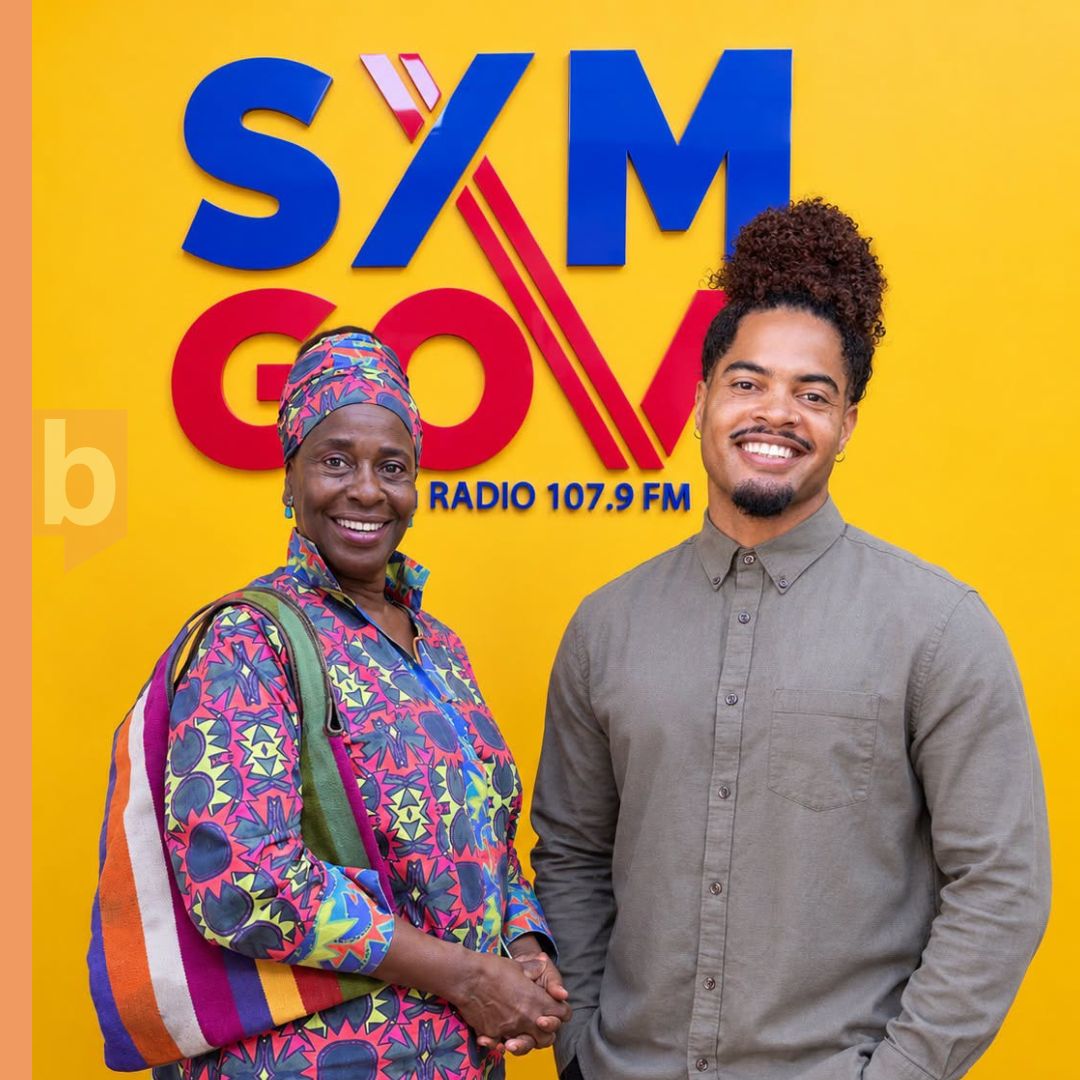



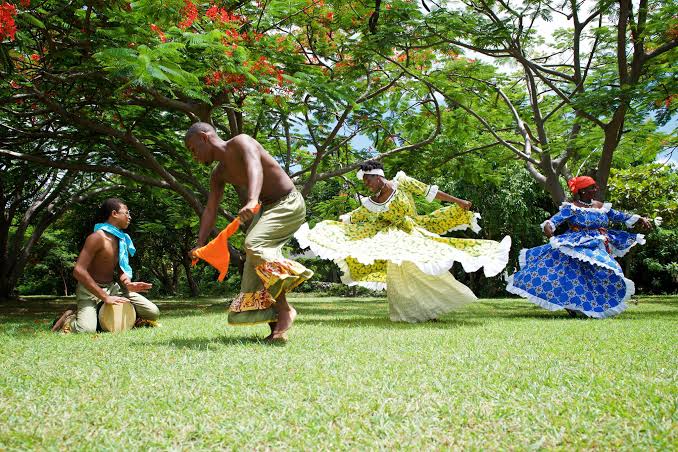
GREAT BAY--St. Martin's traditional Ponum dance will take center stage at an international conference in California next week, as cultural advocate Clara Reyes and dance movement therapist Jonathan van Arneman present a new approach to examining how the island's ancestral traditions could contribute to modern therapeutic practices, particularly in addressing trauma, emotional well-being, and cultural identity.
The two will participate in the 61st Annual American Dance Therapy Association Conference in Long Beach, California, beginning November 5, where they will introduce the Ponum as a case study in a presentation titled "Culture to Clinic." Their work explores how cultural practices developed through historical experiences of oppression, resistance, and liberation might provide insights for contemporary mental health treatment.
Speaking during a special edition of the government's Inside Government radio program with host Cedric Peterson, Reyes and Van Arneman explained that their presentation will combine historical research, cultural preservation, and professional dance movement therapy to examine the relationship between traditional movement and psychological healing.
Van Arneman, who currently works as a traumatic grief counselor in Philadelphia, said the presentation will introduce a multi-step model for examining traditional cultural practices and determining whether elements of those practices may have applications in clinical settings.
The objective is not to encourage therapists around the world to adopt the Ponum itself. Instead, the presentation will use St. Martin's traditional dance to demonstrate how professionals might explore the therapeutic knowledge embedded within their own communities and cultural traditions.
Van Arneman emphasized that the Ponum belongs to the people of St. Martin and that its historical significance must remain central to any professional examination of its potential therapeutic value.
The presentation will examine the circumstances in which the dance emerged, the historical experiences reflected in its movements and songs, and the ways in which those elements may connect with contemporary approaches to processing trauma.
From Liberation Dance to Possible Therapeutic Applications
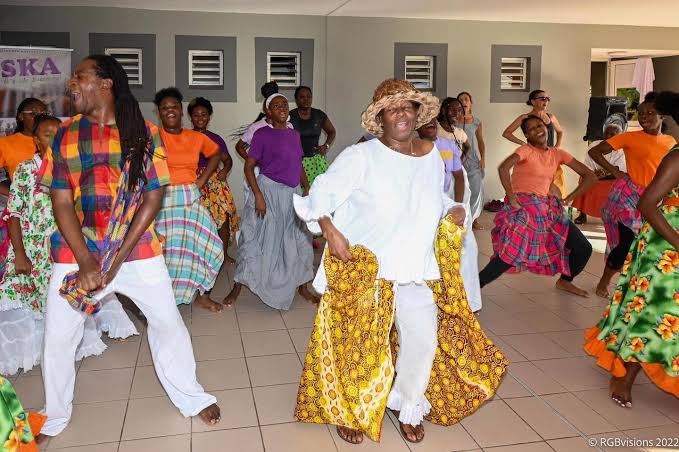
The Ponum is closely associated with St. Martin's history of enslavement, resistance, and emancipation. Reyes explained that its significance extends beyond cultural performance because its movements, songs, and rhythms preserve memories of people celebrating freedom after generations of oppression.
Drawing on years of research and interviews with elderly St. Maarteners, Reyes described the Ponum as a form of living history that communicates experiences which written accounts alone cannot fully capture.
She recalled witnessing the dance in the early 1980s before becoming involved in research and documentation efforts during the 1990s. Her work included interviewing elderly residents across the island, collecting firsthand accounts, and reconstructing the movements and traditions associated with the dance.
According to Reyes, the Ponum carries particular historical significance because it reflects the participation of enslaved St. Martiners in their own liberation struggles, including the events surrounding the abolition of slavery on the French side in 1848 and the eventual abolition of slavery on the Dutch side in 1863.
She emphasized that the dance challenges portrayals of enslaved people as passive recipients of freedom, instead preserving evidence of their resistance, determination, and active pursuit of liberation.
Van Arneman explained that the dance's progression from expressions of oppression to movements associated with freedom and celebration presents questions worth investigating through dance movement therapy.
He described the field as the psychotherapeutic use of movement to pursue specific therapeutic goals, including helping individuals process grief, trauma, anxiety, and other emotional challenges.
Unlike dance performed primarily for exercise or entertainment, dance movement therapy involves intentional clinical interventions designed around the needs of individuals receiving treatment.
Van Arneman believes the Ponum's combination of movement, chanting, rhythm, collective participation, and personal expression may offer insights into how people historically responded to traumatic experiences.
He pointed to elements of the dance involving physical tension and release, communal witnessing, individual expression, and movement performed in partnership with others as areas warranting further examination.
However, he acknowledged that historical or cultural significance does not automatically establish a traditional dance as a clinically effective form of psychotherapy.
The proposed approach requires further investigation, professional assessment, and evaluation before any Ponum-based intervention could responsibly be presented as an established treatment.
A Model That Other Cultures Could Explore
The "Culture to Clinic" presentation will outline a process through which therapists and researchers can examine the historical purpose, social context, movement patterns, and cultural significance of traditional practices.
Van Arneman explained that understanding why a particular cultural form developed is essential before considering its possible therapeutic applications.
He cited examples of Caribbean dance traditions being examined within therapeutic settings, including work involving Jamaican dancehall and cultural identity among migrants.
The goal is to encourage professionals to investigate whether their own cultural traditions contain knowledge that could inform mental health practices, rather than simply importing the Ponum into unrelated cultural environments.
Reyes will provide the historical and cultural foundation of the presentation through four principal areas: historical background, critical examination of the tradition, aesthetic characteristics, and performance.
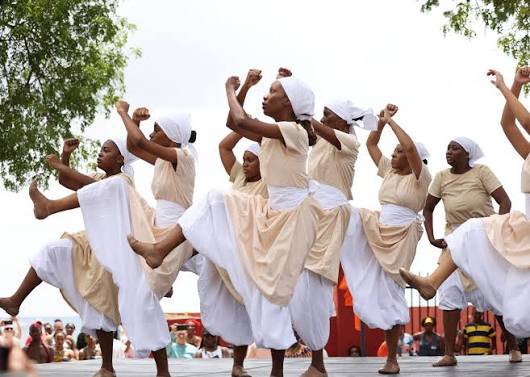
Conference participants will also be introduced to elements of the Ponum's movement vocabulary, allowing them to experience aspects of its rhythm, physical expression, and relationship between singing, drumming, and dancing.
Reyes emphasized that the Ponum must be presented with respect for its historical origins and the people whose experiences shaped it. She explained that preserving the integrity of the dance has remained central to her work and that future generations must understand its cultural meaning rather than treating it merely as entertainment.
Future Research Could Bring the Approach Home
While the international presentation represents an opportunity to introduce St. Martin's cultural heritage to professionals working in dance movement therapy, Van Arneman sees the conference as the beginning of a longer process.
He expressed interest in eventually examining how the Ponum might be applied therapeutically within St. Martin itself, particularly among individuals dealing with trauma, grief, and experiences connected to cultural identity.
Van Arneman currently works with individuals experiencing traumatic grief in Philadelphia and is pursuing professional licensure. He explained that although his existing therapeutic work has drawn on certain principles he recognizes within the Ponum, he is not currently applying the traditional dance in its complete form with St. Martin clients.
He acknowledged that research involving the local population would require careful consideration of the island's historical experiences, cultural circumstances, and specific mental health needs.
The possible application of the Ponum to therapeutic practice therefore remains an area for further investigation rather than an established treatment approach.
For Reyes, the opportunity to collaborate with a younger professional who grew up learning the dance demonstrates how cultural preservation can create opportunities for new generations to examine traditional knowledge through different professional disciplines.
She views the project as a continuation of earlier efforts involving cultural workers, researchers, and community elders who helped preserve the Ponum when knowledge of the dance was at risk of disappearing.
Bringing St. Martin's Cultural Identity to the World
Beyond its possible therapeutic applications, both presenters believe the conference offers an opportunity to challenge the tendency to view St. Martin primarily through tourism.
Reyes said international perceptions of the island often focus on beaches, entertainment, and hospitality, overlooking the depth of its history, intellectual traditions, and cultural contributions.
She wants the presentation to demonstrate that St. Maarten possesses cultural knowledge capable of contributing to international conversations in education, history, the arts, and mental health.
Van Arneman similarly sees the presentation as an opportunity to highlight the relationship between ancestral knowledge and the country's future development.
He described the work as part of a broader conversation about nation-building, arguing that the knowledge preserved within St. Maarten's cultural traditions may offer opportunities for research, professional development, and community empowerment.
The collaboration also highlights a career field that may be unfamiliar to many young people in St. Martin.
Van Arneman explained that professionals enter dance movement therapy through different educational backgrounds, including dance, psychology, and other disciplines. His own academic background was in economics before he transitioned into artistic work and later pursued dance movement therapy.
During his time as artist-in-residence at the National Institute of Arts, he became increasingly interested in the relationship between movement, cultural memory, identity, and the human body.
Those interests eventually led him toward professional training in dance movement therapy. He encouraged young people interested in the field to explore available educational opportunities and invited students and recent graduates to contact him for guidance.
For Reyes and Van Arneman, the upcoming conference is intended to demonstrate that St. Martin's cultural traditions are not simply representations of the past, but potential sources of knowledge deserving further research and professional consideration.
Their presentation will place the Ponum before an international audience while opening a new discussion about how the island's history of resistance, liberation, and cultural expression might contribute to understanding emotional well-being and the possibilities of culturally informed therapeutic approaches.
Join Our Community Today
Subscribe to our mailing list to be the first to receive
breaking news, updates, and more.