


.jpg)


ST. EUSTATIUS--The Public Entity St. Eustatius has officially launched the Statia Climate Action Plan, setting out a long-term approach to strengthening the island’s resilience to drought, rising temperatures, stronger storms, coastal erosion, threats to food and water security and other effects of a changing climate.
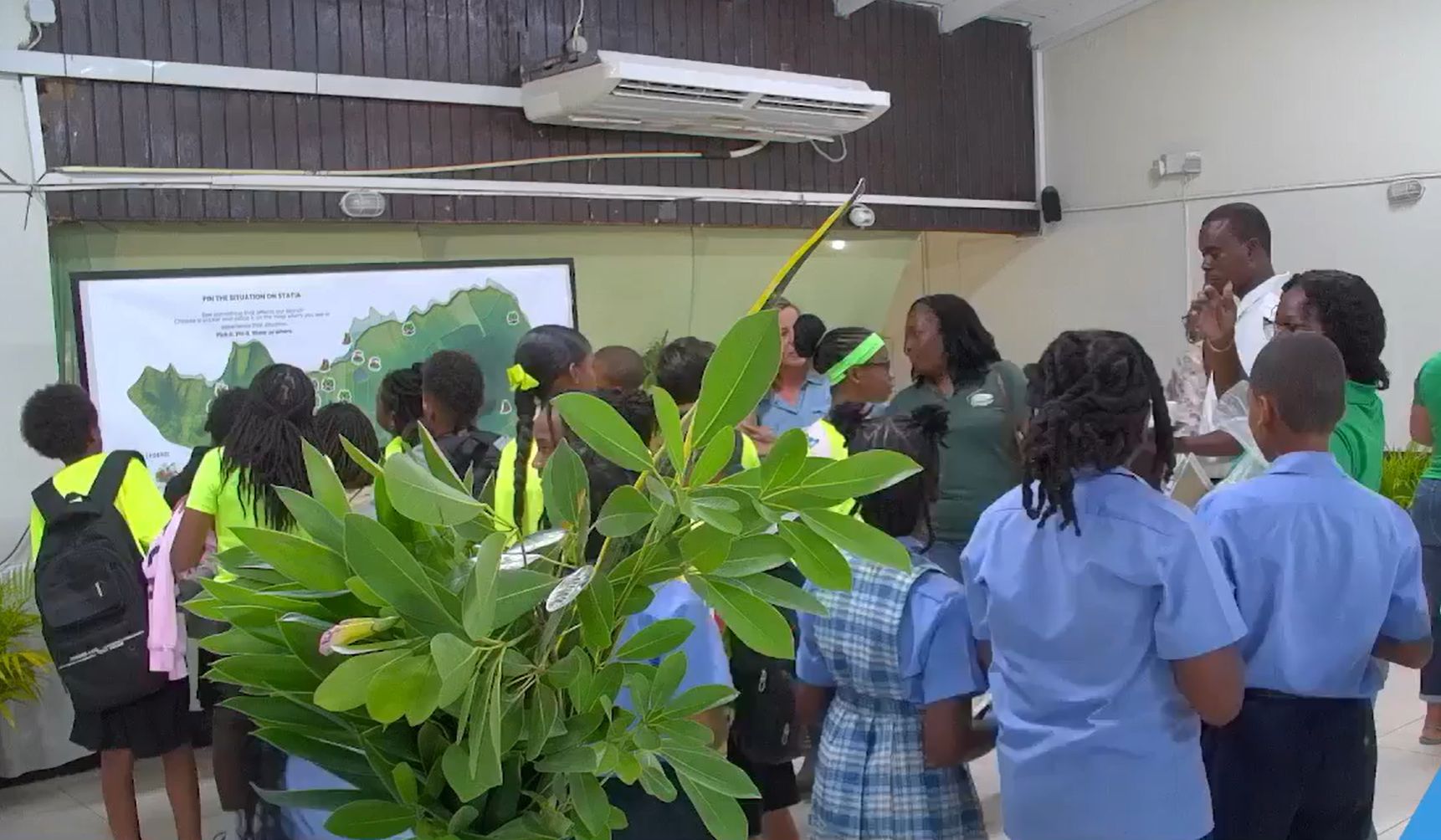
The plan was presented during a community-focused launch attended by government representatives, organizations, businesses, farmers, fishers, educators, students, emergency responders and members of the public. Organizers emphasized that the plan is intended to move beyond policy and provide a practical roadmap for protecting St. Eustatius while making the island more resilient and self-reliant.
Acting Island Governor Sharon Hassell said the Climate Plan is ultimately about the future of St. Eustatius and the responsibility of the present generation to protect the island for those who will inherit it.
She pointed to longer dry periods, rising temperatures, stronger storms, erosion and changes affecting marine and terrestrial ecosystems as challenges that will increasingly influence how the island lives and develops. At the same time, she stressed that the plan is not defined solely by risk, but by the actions St. Eustatius can take now to shape its own future.
Among the questions raised by Hassell were how the island can retain more rainfall rather than allowing it to run from hillsides into the sea, strengthen local food production, protect the natural environment while creating development opportunities, and ensure critical infrastructure and services are prepared for changing conditions.
The plan consequently reaches across a wide range of areas, including water and food security, nature, disaster preparedness, infrastructure, renewable energy, the economy, heritage, health and education. Its development included input from government, organizations and members of the community.
Commissioner of Economy, Infrastructure and Nature Rechelline Leerdam described the launch as the beginning of an implementation journey rather than the completion of a policy exercise.
Leerdam said climate change is already affecting daily life on St. Eustatius, from farmers dealing with longer drought periods and heavy rainfall washing away soil, to households facing higher costs, businesses depending on tourism and communities concerned about the effects of hurricanes and disruptions to essential supplies.
She said the island is experiencing rising temperatures, changing rainfall patterns, longer droughts, stronger tropical storms and hurricanes, sea-level rise and warming oceans. These conditions place additional pressure on water supplies, food production, public health, infrastructure, livelihoods and household budgets.
Particular attention is being given to Lower Town, which the plan identifies as highly vulnerable because it contains critical infrastructure and services, including the harbor, power plant, water plant, fuel storage facilities, businesses, heritage sites and key supply-chain connections.
The experience of the 2017 hurricanes and the COVID-19 pandemic demonstrated how quickly essential services and supplies such as food, fuel, medicine, electricity, communications, transportation and healthcare access can be disrupted, Leerdam noted.
“The lesson is clear,” she said during the launch, explaining that resilience must be planned, financed and implemented before the next crisis occurs.
The Climate Action Plan identifies priorities including climate-proofing Lower Town, strengthening supply-chain resilience, improving regional cooperation and integrating climate action across different areas of island life.
Flagship areas highlighted during the launch include strengthening climate resilience and food security, protecting harbor access and enhancing emergency-response capacity.
Leerdam said implementation will require continued advocacy in The Hague, sustainable multi-year financing, coordination across ministries and strong partnerships with regional neighbors. She also stressed that government cannot build a climate-resilient St. Eustatius alone, and that households, farmers, fishers, businesses, schools, churches, community organizations and young people will all have a role.
The Commissioner also framed climate adaptation as an opportunity to strengthen local agriculture, restore ecosystems, protect heritage, improve infrastructure and create economic opportunities while reducing some of the island’s vulnerabilities and dependencies.
Policy Advisor for Economy, Nature and Infrastructure Lenaria Brown said the Climate Plan was developed through the knowledge, experiences and contributions of people across the community rather than by one person or organization.
The launch itself was designed to reflect that approach. Participants were invited to identify areas affected by erosion, drought, pollution and tree loss on an interactive map, while also suggesting ideas for a greener and more resilient St. Eustatius.
Two climate experience cubes were also used to present contrasting simulations of St. Eustatius’ possible future, one depicting where the island could be heading without sufficient action and another illustrating what could be possible if action is taken.
Organizations and businesses participating in the event demonstrated climate-related work already taking place on the island. STINAPA and PPMO highlighted environmental restoration and the Adopt a Tree program, while STUCO presented renewable energy, electric vehicles and charging infrastructure. Made in Statia showcased local agriculture and fruit production, while Golden Rock Resort highlighted sustainability measures within the tourism sector.
Locally sourced food and beverages were also incorporated into the launch as a practical demonstration of supporting domestic production.
The launch will be followed by the Statia Climate in Action competition, which is expected to be introduced in the coming week. The initiative will invite ideas capable of moving beyond discussion and becoming practical solutions that can create positive change on the island.
Full details of the competition, including prizes and participation requirements, will be released through the government’s communication channels.
Officials stressed throughout the event that publication of the Climate Action Plan is only the starting point. Its long-term value will depend on whether its priorities are translated into decisions, financing, projects and sustained community participation.
As Hassell noted, today’s residents are temporary custodians of an island that will eventually be inherited by another generation. The decisions taken now on water, energy, food, infrastructure, coastlines and the natural environment will therefore help determine the St. Eustatius that future generations receive.
Join Our Community Today
Subscribe to our mailing list to be the first to receive
breaking news, updates, and more.
