.jpg)


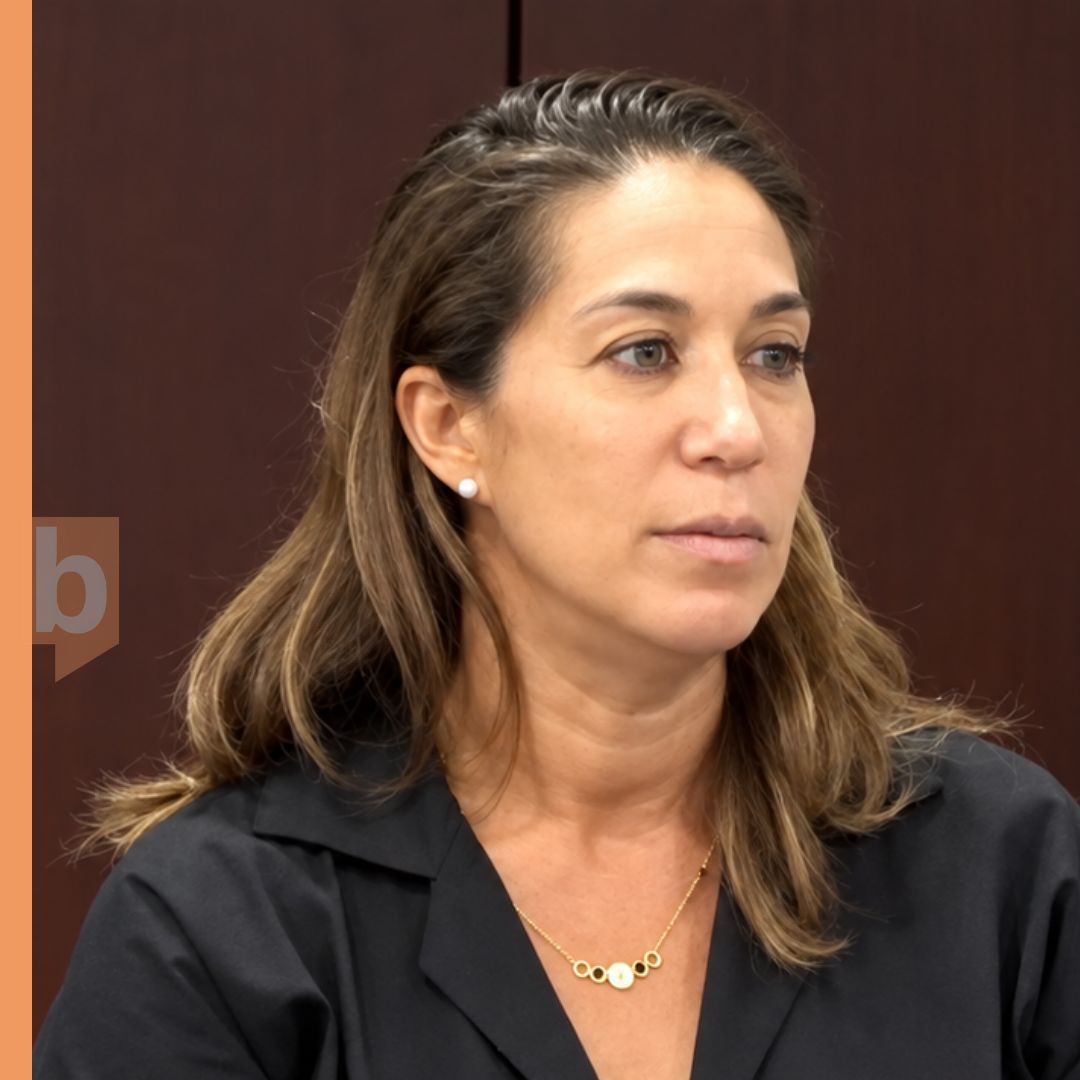
GREAT BAY--Minister of Justice Nathalie Tackling provided Parliament with detailed answers Thursday to a series of questions first posed by Member of Parliament Egbert Doran in July, offering clarification on several issues that have generated public concern following fatal traffic accidents, including when an accident becomes a criminal investigation, how intoxication is proven, what happens when a driver leaves the scene and whether a person connected to an active criminal investigation can be deported.
The questions were originally raised during the July 7 urgent meeting on traffic accidents and road safety, which followed the June 11 collision on Brouwers Road that claimed the life of Ryan Gumbs. That meeting was adjourned and reconvened Thursday, September 24, with Tackling returning to Parliament to respond to outstanding questions.
Doran had used the July meeting to ask a detailed series of legal and procedural questions prompted by the Gumbs case and wider public concern about how serious and fatal traffic collisions are handled. His questions covered criminal liability, detention, intoxication testing, leaving the scene of an accident, the division of responsibility between police and prosecutors, and the intersection between criminal proceedings and immigration enforcement.
When does an accident become a criminal investigation?
Tackling told Parliament there is no single automatic point at which a traffic accident changes its legal character and becomes a criminal case.
She explained that a fatality, serious injury, suspected impairment, leaving the scene, dangerous driving behaviour, witness accounts, camera footage and findings from a technical investigation are among the circumstances that may justify a criminal investigation.
KPSM conducts the factual investigation under the authority of the Public Prosecutor’s Office. The Prosecutor’s Office determines the prosecutorial direction and how the suspected conduct may be legally classified, while criminal liability is ultimately determined by the court.
The Minister also explained that simply being involved in an accident does not automatically make someone a criminal suspect. Under Article 47 of the Criminal Procedure Code, facts and circumstances must create a reasonable suspicion that the person committed a criminal offence. A person involved in a collision could therefore initially be considered a witness, victim or suspect depending on the evidence available.
Causing death through negligent or reckless driving is already covered by law
The discussion also clarified that St. Maarten’s Criminal Code already contains provisions dealing specifically with fatal traffic collisions.
Article 2:284 provides for criminal liability when a road user causes an accident through culpable conduct and another person dies. The maximum prison sentence is four years, rising to six years where the conduct amounts to recklessness. Article 2:286 increases the applicable prison term by half when the offender was under the apparent influence of alcohol or mind-altering substances at the time of the collision.
Whether those provisions apply in a specific case depends on what investigators can establish from the evidence. Tackling said an investigation can involve questioning the suspect, taking witness statements, collecting camera footage, examining the traffic situation, carrying out a technical inspection of the vehicles and reconstructing the collision where necessary. Blood or urine analysis may also form part of the investigation when available.
Major limitation in proving intoxication
One of the more significant clarifications concerned alcohol and drug testing.
According to Tackling, the current Criminal Code and traffic legislation do not allow investigators to compel involuntary blood collection in these circumstances. She said a suspect can be asked to voluntarily provide blood or urine samples, but only those tests can definitively determine the extent to which alcohol or another substance was present.
This becomes particularly important when a driver leaves the scene. Tackling acknowledged that leaving delays the investigation and can interfere with the ability of police to establish whether alcohol or drugs played a role, because the passage of time can affect testing.
While the Minister said the present legal framework allows investigations and prosecutions to proceed, she also told Parliament that enforcement could be strengthened through additional resources, breathalyzers and other equipment capable of accurately measuring alcohol concentration, together with further legislative measures governing driving under the influence.
What does the law say about leaving the scene?
The Minister also addressed a question that has generated considerable discussion since the Gumbs case: what exactly is required of a driver after a serious collision?
Article 9 of the Road Traffic Ordinance generally prohibits a driver involved in a collision involving death, injury or property damage from leaving before the identity of the driver and vehicle can properly be established. The law separately prohibits leaving an injured person in a helpless condition.
However, the law contains a 24-hour exception concerning prosecution for leaving before identification has been established.
A driver who leaves may avoid prosecution for that specific offence if the driver voluntarily reports the accident to an investigating officer within 24 hours, does so before being arrested or questioned as a suspect and provides the information necessary to establish the identity of the person, vehicle and driver.
Tackling stressed that the requirements must be satisfied for the exception to apply. Reporting days later would not meet the 24-hour provision, and the exception does not permit someone to leave an injured person helpless.
The existing 24-hour provision has already become the subject of proposed legislative change. MP Francisco Lacroes submitted an amendment in July aimed at tightening Article 9 in cases involving death or serious bodily injury.
Who decides whether a suspect stays in custody?
Tackling explained that KPSM gathers evidence and carries out the investigation, while the Prosecutor’s Office directs the investigation and determines whether criminal proceedings should be initiated.
Decisions concerning continued pretrial detention can eventually require involvement of an examining judge. The Minister also noted that pretrial detention is not legally available for every traffic-related offence, meaning custody cannot simply continue because an investigation remains active.
The Minister of Justice, she stressed, does not have authority to overrule prosecutors or judicial authorities in an individual criminal investigation.
Deportation and criminal cases are separate legal tracks
Doran also sought clarity on one of the central questions arising from the Gumbs case: whether a person connected to an active criminal investigation can be removed from St. Maarten under immigration law.
Tackling said criminal proceedings and immigration proceedings operate as separate legal tracks. A person’s immigration status does not determine whether the person should be criminally investigated or prosecuted.
Criminal detention takes priority while a valid criminal detention order remains in effect. Immigration authorities only become involved once the person has been released from criminal custody and transferred for immigration processing.
Importantly, Tackling said there is currently no legal requirement for Immigration to obtain a formal clearance from KPSM or the Prosecutor’s Office before executing a removal order confirming that the individual is no longer needed for an investigation.
However, she said that when the Prosecutor’s Office has a genuine investigative reason for a person to remain available, prosecutors can communicate that requirement and the person’s availability should then be respected for a reasonable period connected to that investigative need.
Minister says communication can improve
Tackling said she does not consider the division of legal responsibilities itself unclear, but acknowledged that there has since been internal discussion about improving communication in cases that could create public concern or involve significant public-order considerations.
She indicated that police, prosecutors and the Minister should communicate more readily before persons in sensitive cases are simply transferred into the immigration process.
In relation to the Gumbs case specifically, Tackling told Parliament that when she contacted the Prosecutor’s Office, she was informed that the individual had already been released from criminal custody and transferred to immigration authorities. She said she was not advised that prosecutors required him to remain in St. Maarten for the investigation. She also said public-order concerns, including the possibility of retaliation, were among the considerations communicated to her before the immigration decision was taken.
The Minister emphasized that removal from St. Maarten does not erase possible criminal liability. She said an investigation can continue, legal assistance can be sought from authorities in another country for investigative acts such as questioning, and prosecution can still proceed where legally justified. In some circumstances, a defendant may also be tried in absentia if the legal requirements are met.
Tackling was unable to provide Doran with statistics showing how many people had been deported while connected to active criminal investigations during the past three years. She explained that criminal-investigation information and immigration-removal information are maintained by separate agencies and are not recorded in a way that allows such cases to be readily identified and combined.
Join Our Community Today
Subscribe to our mailing list to be the first to receive
breaking news, updates, and more.