.jpg)
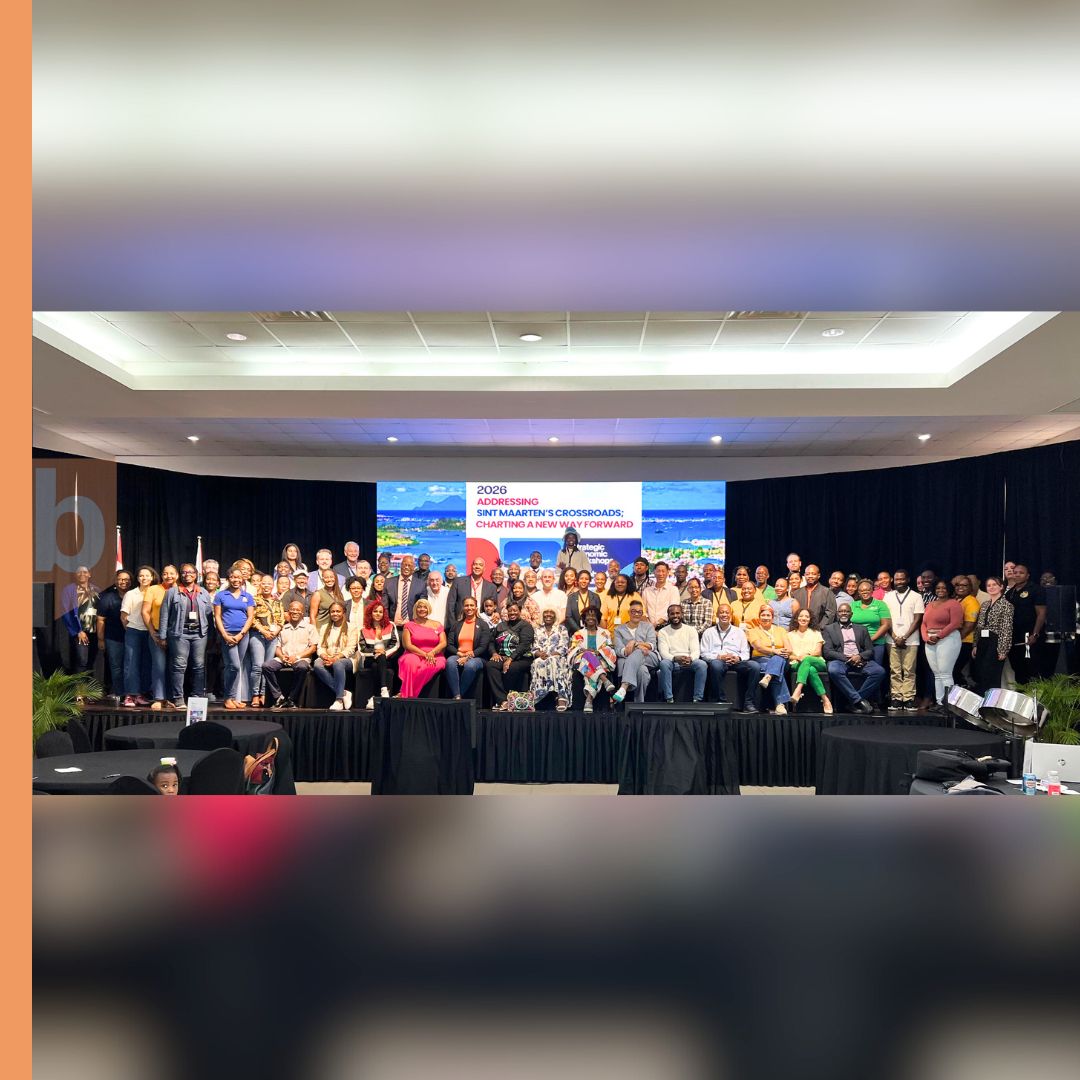



GREAT BAY, St. Maarten--The Ministry of Tourism, Economic Affairs, Transport and Telecommunication (TEATT) has concluded its Strategic Economic Workshops and Stakeholder Consultations, held February 2 to 6, 2026, at the Belair Community Center, under the theme “Addressing Sint Maarten’s Crossroads; Charting a New Way Forward.”
Over five days, the sessions convened local and international experts, government officials, private sector leaders, and community stakeholders for focused discussion on St. Maarten’s economic direction. The week marked the opening stage of a broader process that will lead into implementation planning through the development of a Strategic Economic Plan, aimed at reinforcing stability, advancing diversification, and strengthening quality of life for the people of St. Maarten.
“This week was never meant to be comfortable. It was meant to be real,” stated the Honorable Minister of TEATT during her closing remarks. “Forward by Design is not a slogan. It is a decision to move from drifting to designing. The true measure of success will not be what was said here, but what we do next.”
Rolando Tobias served as Master of Ceremonies throughout the week, supporting continuity and facilitating stakeholder engagement across the daily sessions.
Programming was organized across five thematic days, each centered on a key pillar of economic development:
Day One, Setting the Stage and Defining the Path Forward established national context and current economic realities. Keynote contributions were delivered by Secretary General Miguel de Weever, Bernise Stoffer of RVO, Shervin Frederick of TEATT, and international tourism strategist Vincent Vanderpool-Wallace. Discussions focused on connecting short term stability to long term transformation, while strengthening coordination across institutions.
Day Two, The Future of Tourism, Yachting, Safety and Security was moderated by tourism strategist Jim (James) Hepple and examined opportunities and risks influencing the next chapter of tourism. Contributions from Chief of Police Carl John, hotelier Emil Lee, Anastacio Baker, Alex Gumbs of Port St. Maarten Group, and Leslie Dickerson, Director of the Nature Foundation, emphasized stronger coordination, climate conscious planning, improved mobility, and ensuring tourism growth remains aligned with community wellbeing.
Day Three, Policy and Cross Sector Alignment focused on collaboration across ministries and sectors, with attention to economic policy, labor dynamics, health, education, housing, transportation, and competition law. Local contributions came from Jessica Rogers, Sharilyn Bryson, Peggy Ann Dros, Fenna Arnell, Kenson Plaisimond, Erin Ellis, and Lucien Wilson. International input was also provided by Matthijs Visser from the Netherlands, drawing on experience connected to Aruba’s Competition Authority. Discussions reinforced that policy cannot function in silos, and that coordinated governance is necessary for durable outcomes.
Day Four, Innovation and Diversification examined emerging sectors and new opportunities for growth. Gregory Richardson explored innovation, cybersecurity, and the digital economy, while Brian Deher addressed maritime development through the Blue Economy and Josiah Halley presented opportunities connected to agriculture within the Green Economy. Discussions centered on the idea that diversification strengthens tourism, while building additional pathways for broader growth.
Day Five, Orange Economy and Next Steps placed culture, creativity, and entrepreneurship at the center of economic discussion. A panel moderated by King Verse featured Kelvin Hodge James (King James), Bianca Dijkhoff (DJ BB Bad), Zillah Duzon, Mercedes Wyatte (Elektra), Renata de Weever, Clara Reyes, and Pearl Hendrickson. Panelists highlighted the need to protect St. Maarten’s creative identity, recognize local ambassadors, create meaningful incentives, and move from assumptions to genuine engagement through listening and including creatives in development planning. The closing session emphasized that consultation must now transition into structured action.
The Ministry underscored that the workshop series is a starting point for implementation. Insights gathered during the week will inform stakeholder interviews, policy analysis, and the drafting of a Strategic Economic Plan, which will be shared for additional feedback ahead of finalization.
“The results we saw in 2025, including over 1.6 million cruise passengers and more than 855,000 passenger arrivals, were achieved through collective effort,” the Minister noted. “But growth must translate into opportunity and quality of life for our people. That is the direction we are building toward.”
Recognizing that not all stakeholders were able to attend every session, the Ministry encouraged continued engagement. Residents, organizations, and stakeholders who wish to provide input can contact the Ministry of TEATT at event-teatt@sintmaartengov.org, with feedback to be incorporated into the ongoing development of the Strategic Economic Plan.
The Ministry extended thanks to its partners, including TWO and RVO, as well as the participating government departments, stakeholders, technical crews, event planners, catering teams, and venue staff that supported the week’s execution. Appreciation was also expressed to the business leaders, civil servants, experts, and community stakeholders who contributed to the dialogue.
“This week confirmed that Sint Maarten does not lack ideas or talent. What we need now is alignment, ownership, and execution,” the Minister concluded. “On Monday we set the stage. This week we aligned. And from here, together, we move forward, by design.”
Join Our Community Today
Subscribe to our mailing list to be the first to receive
breaking news, updates, and more.