

.jpg)


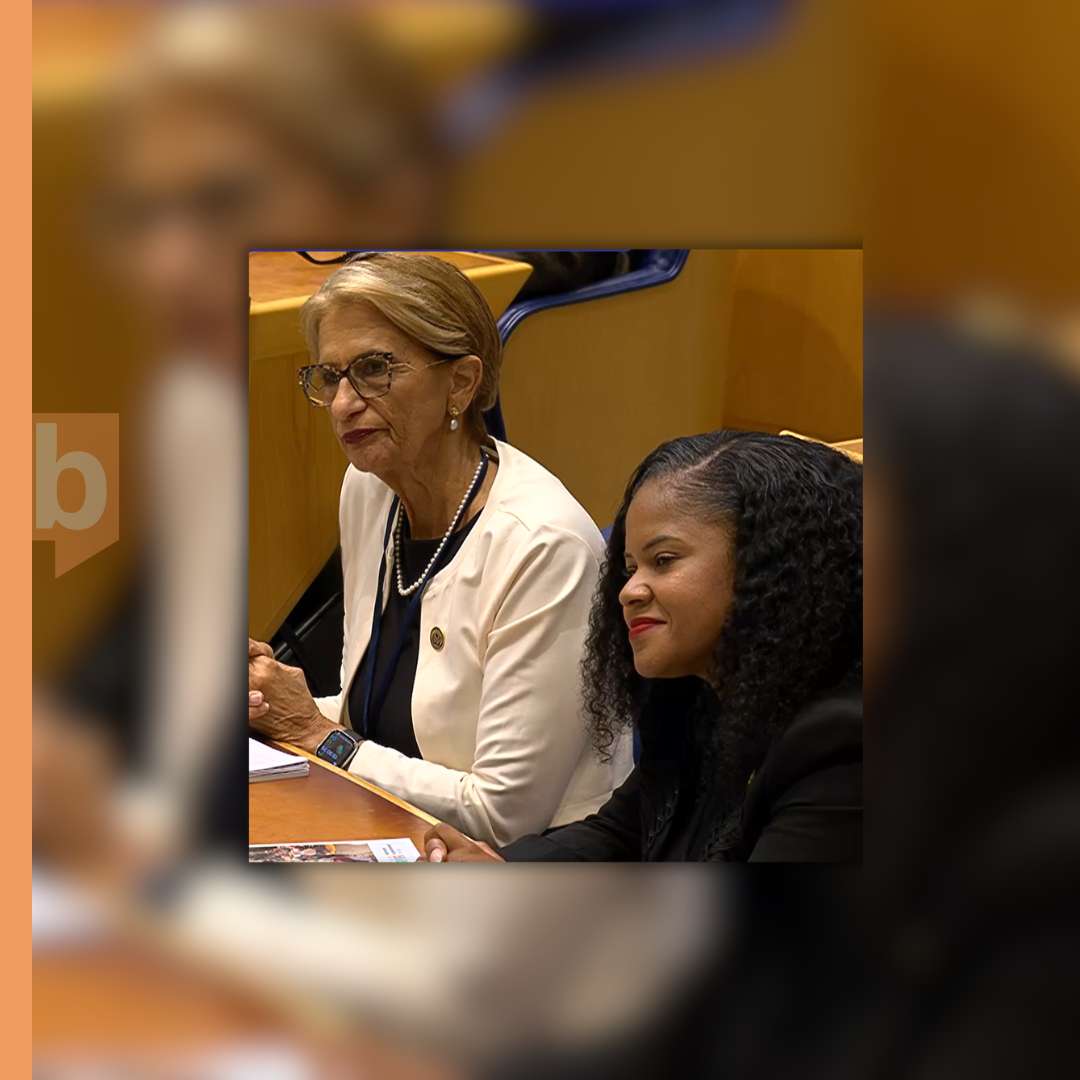
THE HAGUE--The Interparliamentary Kingdom Consultation, IPKO, has agreed to use reform proposals submitted by Chairlady of the Parliament of St. Maarten and delegation leader MP Sarah Wescot-Williams as the guiding format for future meetings, marking a shift toward a more structured, results-focused and accountable approach to parliamentary cooperation within the Kingdom.
The agreement was reached during the IPKO held in The Hague from June 5 to 8, 2026. The four delegations, representing Aruba, Curaçao, St. Maarten and the Netherlands, agreed that the proposals contained in Wescot-Williams’ report, “IPKO: Working Together on Visible Results That Matter,” will guide the organization of future IPKO meetings.
The new approach places greater emphasis on main themes, interactive working methods, follow-up of decisions, progress reporting and evaluation of results. During the preparatory Presidium meeting, the delegations agreed to test the revised format during this IPKO. The chosen main theme was “Cooperation within the Kingdom and within IPKO.”
Speaking at the closing, Wescot-Williams said the meeting had been successful and thanked the Netherlands as host country, the chairlady of the June 2026 IPKO, Anouschka Biekman, and the delegations of Aruba, Curaçao and the Netherlands for the manner in which the discussions were conducted.
She said the meeting showed the value of a new IPKO approach focused on decision-making, results and continuity.
“As I mentioned, we have started with another approach towards IPKO, one that looks at decision-making, results-oriented, and more participation from all of the people of the Kingdom,” Wescot-Williams said.
She stressed that the purpose of reviewing the IPKO process is to prevent important issues and agreements from being lost between meetings. Wescot-Williams said the work of IPKO does not end with the closing of the meeting in The Hague, but must now continue through the Parliaments and governments of the Kingdom.
“We have agreed to follow up. We have agreed to every time before we even start new discussions, look back at the decisions that were taken and hold each other accountable for the follow-up to those discussions,” she said.
The delegations agreed that each delegation will develop at least one main theme within the next six months, using the format accepted by IPKO. These papers will be collected by the clerks and distributed among the Kingdom Relations committees of the four Parliaments. Presidium members will then be mandated to reach agreement on future main themes and how they should be developed.
The implementation of the new format will be evaluated within one year after the next IPKO, which is scheduled to take place in St. Maarten from January 13 to 15, 2027. That meeting is expected to test whether the revised approach can produce clearer follow-up and more visible results.
As part of the new format, State Secretary for Kingdom Relations and Digitalization Eric van der Burg attended a session with IPKO members on cooperation within the Kingdom. Dutch delegation leader Peter Nicolaï described the State Secretary’s presence as unique and as a first step toward deeper engagement.
“Whether he had a conversation, an exchange of thoughts or whatever one wants to call it, he was there,” Nicolaï said in substance. “That was unique. That was a first step, and next time perhaps we can have a real conversation.”
Wescot-Williams also said one of the significant takeaways from the meeting was the manner in which IPKO addressed the issue of the slavery past. She said the three Caribbean countries, through their Dutch counterparts, were able to present a resolution regarding their stance on how the Kingdom, through a representative, handled the recent United Nations vote on slavery.
She said the issue was delicate, but had to be addressed and was discussed with openness and respect for each delegation’s position.
The delegations also discussed the protection of personal data and the potential impact on data-sharing between the countries of the Kingdom. At the previous IPKO in Aruba, delegations agreed to assess whether each country complies with the basic level of personal data protection necessary for the free sharing of data, especially in areas such as security.
The delegations noted that all countries in the Kingdom have legislation in place for personal data protection, but that the legal frameworks differ significantly. This creates different levels of protection and presents challenges at both the country and Kingdom levels.
IPKO agreed to send a joint letter to the Kingdom Government asking whether data exchange between the countries may no longer be fully possible, especially in the area of security. The letter will also ask whether planned legislation at the Kingdom and country levels will be in place on time to avoid restrictions on the sharing of important data, how that deadline will be guaranteed, which data may no longer be fully shared, and what the consequences would be.
MP Sjamira Roseburg said data protection was one of the topics carried over from the previous agreements list and further developed during this IPKO. She said this showed that progress is being made and that follow-up between meetings is important.
Roseburg also said the new IPKO format allowed delegations to communicate more directly and meaningfully, including in smaller groups where members could look each other in the eye and better understand one another.
“If you are not aware of what is going on, you will think it is just a yearly meeting or twice a year we meet each other,” Roseburg said. “That is why it is important to stay in contact with the community, but also stay in contact with each other.”
A major part of the meeting also focused on how the countries within the Kingdom view and relate to one another. During the main theme discussions, parliamentarians addressed issues such as mutual trust, perceptions, prejudices, the colonial past, cultural differences, differences in capacity and the power imbalance created by scale differences between the countries.
The discussions were held in groups under the guidance of professional facilitators. According to the feedback from the groups, delegations experienced the discussions as positive and enriching. The insights from those discussions will be taken to the next IPKO, with the aim of deepening dialogue and strengthening mutual understanding and respect within the Kingdom.
Roseburg said delegations agreed to return to their respective committees to continue discussions on difficult and sensitive topics, including slavery, but not limited to slavery. She said the objective is to ensure that when IPKO meets again in St. Maarten, the conversation can continue at a level where delegations better understand each other.
Wescot-Williams also pointed to the issue of the democratic deficit in the Kingdom. She said the matter has been discussed for many years and that the current IPKO wants to see concrete steps. IPKO received an update from the expert group studying the democratic deficit, which includes representatives from St. Maarten, Aruba, Curaçao and the Netherlands. IPKO will await the group’s final report before determining the next steps.
Dutch delegation leader Peter Nicolaï said the expert group’s report, expected around October, will likely provide much to discuss. He said the report may go beyond formal matters such as legislation and the dispute regulation and touch on deeper issues that have returned to IPKO for years.
Wescot-Williams said the democratic deficit and the Kingdom Dispute Regulation are part of a broader question about how the Kingdom wants to continue.
“The red line in this whole discussion is how do we want the cooperation in the Kingdom to continue, yes or no?” she said. “Because if the answer to that is not clear, matters like the dispute regulation, democratic deficit, et cetera, do not really matter unless our vision for the Kingdom going forward is clear.”
During the closing conference, Wescot-Williams was asked about critical issues raised regarding St. Maarten. She pointed to comments from Maria van der Sluijs-Plantz regarding St. Maarten’s governance structure since 10-10-10, including the fact that St. Maarten took over structures that apply in other parts of the Kingdom, including the Netherlands.
Wescot-Williams said she agreed that St. Maarten should review its organization and governance structure. However, she cautioned against treating such a review as something that can be rushed or treated as a panic measure.
“This is not something that we can jump up and say by the first of January 2027 we are going to totally revamp our governance system,” she said. “But I do believe it is something that we should talk about again.”
She stressed that public involvement is essential in that discussion. According to Wescot-Williams, the people of St. Maarten must understand what is being discussed so they can participate in the debate on the country’s governance model going forward.
She also identified climate change as another critical issue for St. Maarten, saying the country is already experiencing its effects and cannot continue to postpone action.
The IPKO program also included a working visit to “The Neighborhood as an Ecosystem” in Haarlem, an initiative focused on elderly care, community networks, self-reliance and neighborhood-based support. Delegations also took part in an interactive session on climate adaptation with representatives of the National Citizens’ Assembly on Climate.
Nicolaï reflected positively on the meeting, saying the three days gave the delegations a stronger sense of being part of one family within the Kingdom. He said the delegations had sat together at one “family table” and that IPKO itself can function as a form of Kingdom Parliament by bringing elected representatives together regularly to speak openly.
The St. Maarten delegation consisted of Chairlady Sarah Wescot-Williams, Members of Parliament Egbert Doran, Viren Kotai, Sjamira Roseburg, Omar Ottley and Lyndon Lewis, with G.J. Richardson serving as clerk.
The agreements list was signed in The Hague on June 8, 2026, by the delegation leaders of Aruba, Curaçao, St. Maarten and the Netherlands.
The next IPKO is scheduled to be hosted by St. Maarten from January 13 to 15, 2027, where delegations are expected to report back on the follow-up to the conclusions reached in The Hague.
Join Our Community Today
Subscribe to our mailing list to be the first to receive
breaking news, updates, and more.
