.jpg)


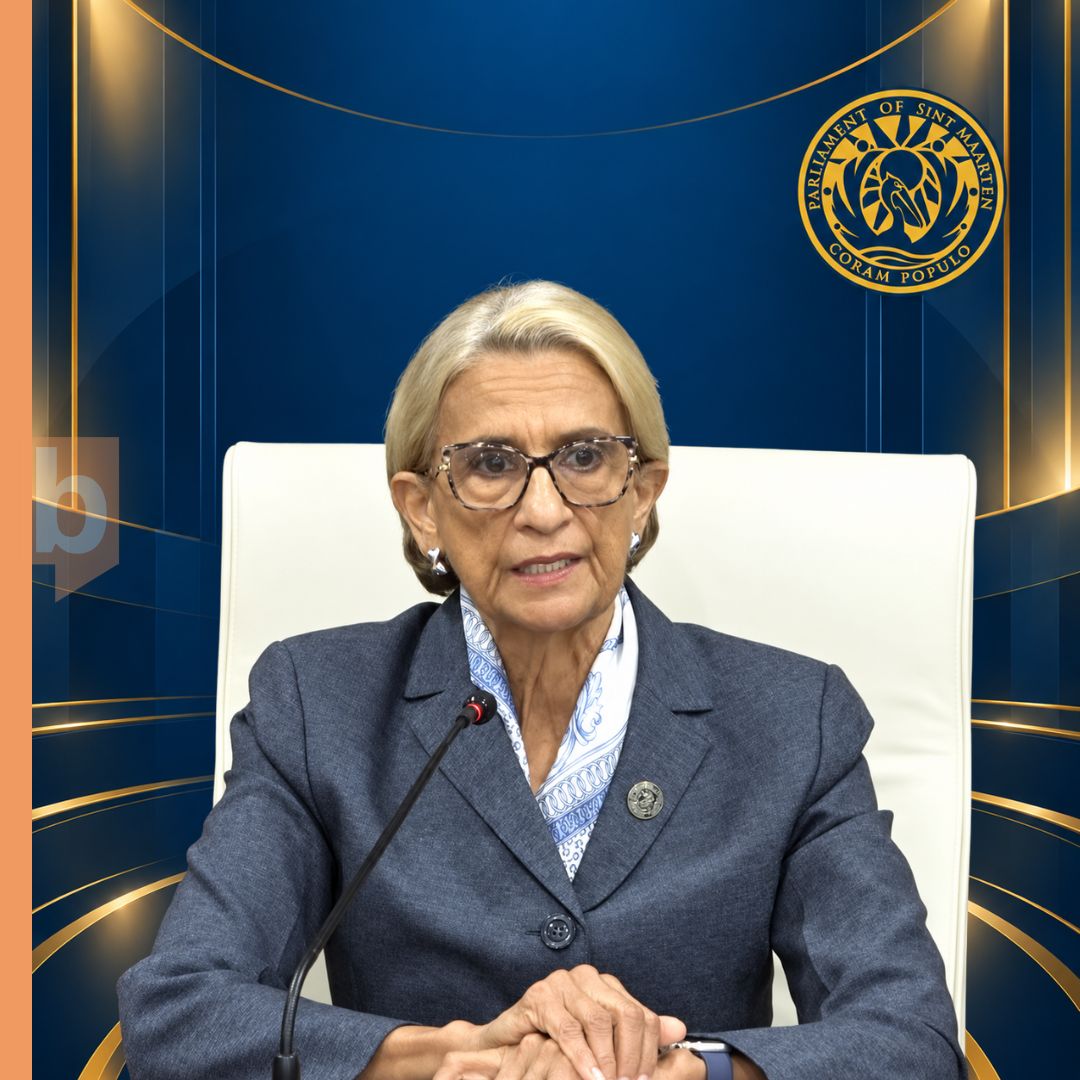
GREAT BAY--President of Parliament MP Sarah Wescot-Williams closed the 2025-2026 Parliamentary Year by outlining a broad agenda for the institution in the year ahead, built around a paperless Parliament, stronger protocols with government, improved staffing and capacity, digitalization and artificial intelligence, regional cooperation, transparency, district participation, stronger financial oversight and greater parliamentary independence.
She also identified several legislative and policy initiatives she intends to continue pursuing as a Member of Parliament, including urgent health coverage for sole proprietors and micro businesses, energy relief, tax reform and an amendment to the civil servants law that she hopes can eventually develop into a wider Care Act, allowing people greater opportunity to care for family members and others who depend on them.
The new Parliamentary Year 2026-2027, which opens Tuesday, will carry the theme “Building Digital Trust: Responsible AI for a Stronger Democracy and Empowered Communities.”
Wescot-Williams said the theme builds on Parliament’s work during the past year to better understand artificial intelligence, digital transformation, cybersecurity, privacy and the future of democratic institutions.
Pillars for the year ahead
Looking toward the new parliamentary year, Wescot-Williams said Parliament needs a clearer strategic direction and identified several areas that should guide its work.
Among them is the development of a paperless Parliament, with operations reflecting modern technology and reducing dependence on traditional processes.
She also said Parliament must finalize effective working protocols with the Council of Ministers. While St. Maarten has a dualistic system in which Parliament and government have separate responsibilities, she said the legislature still depends heavily on cooperation with ministers if it is to obtain information and achieve results.
“This working relationship is not a courtesy, it is a necessity,” she said.
She also identified efficiency, an open Parliament, staffing and capacity building as priorities, including development of a function book to clearly define staff roles, responsibilities and compensation.
Digitalization will remain central, including what Wescot-Williams described as the thoughtful and responsible use of artificial intelligence within Parliament itself.
Regionalism is another pillar, with Parliament seeking stronger relationships with counterparts in the Caribbean and beyond, regardless of constitutional differences.
Wescot-Williams also placed transparency, district participation and stronger oversight of government expenditure among the areas requiring attention.
She specifically highlighted the Committee for Country Expenditures, saying scrutiny of government spending is one of Parliament’s clearest mechanisms for holding the executive accountable.
Independence of Parliament remains central
Wescot-Williams said the dominant theme of her work as President during the past year was strengthening Parliament’s independence and encouraging MPs to develop their own agenda rather than simply reacting to government.
She said she encouraged members to debate issues across party lines and pointed to the Women’s Caucus, proposals surrounding GEBE, work on health, small and medium enterprises, waste and the environment, the Petitions Committee and the artificial intelligence work group as examples of cooperation across faction lines.
She said Parliament’s independence should continue to shape its work.
“Whatever we can research independently and act upon, we should,” she said.
Wescot-Williams also said she wants the Committee of Petitions to become more representative of the public and more responsive to issues brought forward by residents.
Care Act among legislative priorities
Stepping outside her role as President, Wescot-Williams outlined several matters she intends to continue pursuing as an individual MP.
Among them is an amendment to the civil servants law that would provide greater support to people who must care for family members.
She said she hopes the proposal can eventually develop into a national Care Act or agreement, creating a framework that recognizes circumstances in which a person’s care is indispensable to a relative or another dependent.
She also identified urgent healthcare coverage for sole proprietors and micro businesses, healthcare generally, energy, cleanliness and the environment among her priorities.
Another proposal under consideration involves an energy project for civil servants, possibly through APS, to explore investment loans for solar energy.
Wescot-Williams said scrutiny of the national budget and tax reform will also remain priorities.
Her draft referendum ordinance and draft motion of no confidence ordinance are also continuing through the legislative process, she said.
Parliament’s regional reach expanded
Wescot-Williams said Parliament made progress during the year in strengthening its regional and international relationships.
She described Parliament’s access to ParlAmericas as a significant achievement and said those connections have also helped place St. Maarten at the table of the Commonwealth Parliamentary Association’s Caribbean, Americas and Atlantic Region.
She said small island developing states often confront many of the same challenges regardless of constitutional structure and argued that Parliament should continue pursuing cooperation wherever it benefits the people of St. Maarten.
She also pointed to government’s commitment to establish a district fund following a motion she submitted.
Wescot-Williams said the initiative reflects her belief that parts of governance should be decentralized and communities given structured opportunities to take greater responsibility for their neighborhoods.
She said she intends to challenge districts to organize themselves so they can make use of the proposed funding for community projects once the framework is finalized.
Building Digital Trust
Wescot-Williams said Parliament’s work on artificial intelligence and digital transformation during the 2025-2026 year created the foundation for the new theme.
Parliament established a Digital Transformation and Artificial Intelligence Work Group in February 2026 to guide modernization and promote responsible, transparent and ethical use of AI.
The group includes MPs, parliamentary staff and, where necessary, civil society representatives and technical experts.
Its work includes assessing Parliament’s digital environment, identifying priorities for innovation and helping develop frameworks for the responsible use of emerging technology.
Wescot-Williams said regional exchanges have reinforced the view that responsible AI requires more than introducing new technology. It requires readiness assessments, legislation, privacy protections, ethical governance and strong cybersecurity.
“Digital transformation is not simply about adopting new technologies,” she said. “It is about ensuring that technology can protect rights and contribute meaningfully to the development of our entire community.”
New Parliamentary Year theme
The theme for 2026-2027 will therefore be:
“Building Digital Trust: Responsible AI for a Stronger Democracy and Empowered Communities.”
Wescot-Williams said the theme will be highlighted during Tuesday’s opening of Parliament and followed by further discussions throughout the year.
The goal, she said, is to examine how artificial intelligence can improve access to information, strengthen parliamentary processes, support democracy and increase efficiency while ensuring that privacy, security and public trust remain protected.
She said Parliament will also continue seeking alignment with government on the development of a national AI strategy and wider digital transformation.
President of Parliament Award
During the opening reception for the new parliamentary year, Wescot-Williams will also present the 14th annual President of Parliament Award to a young person recognized for making a positive contribution to the community.
She said Parliament received a record number of nominations this year and that the top five nominees will be invited to the reception.
Individuals and organizations contributing to responsible AI, democracy and empowered communities will also be recognized in keeping with the new parliamentary theme.
Wescot-Williams said Parliament’s 2025-2026 annual report is expected to be released publicly on Friday, September 11, barring unforeseen circumstances.
She closed by thanking MPs, the Secretary General and parliamentary staff for their work throughout the year, saying many had gone beyond their regular responsibilities to keep Parliament functioning.
Wescot-Williams said she enters the new parliamentary year determined to continue strengthening Parliament’s independence, cross-party cooperation and ability to deliver results for the people of St. Maarten.
Join Our Community Today
Subscribe to our mailing list to be the first to receive
breaking news, updates, and more.