

St. Martin after almost 400 years of colonialism: How much more must our people endure?
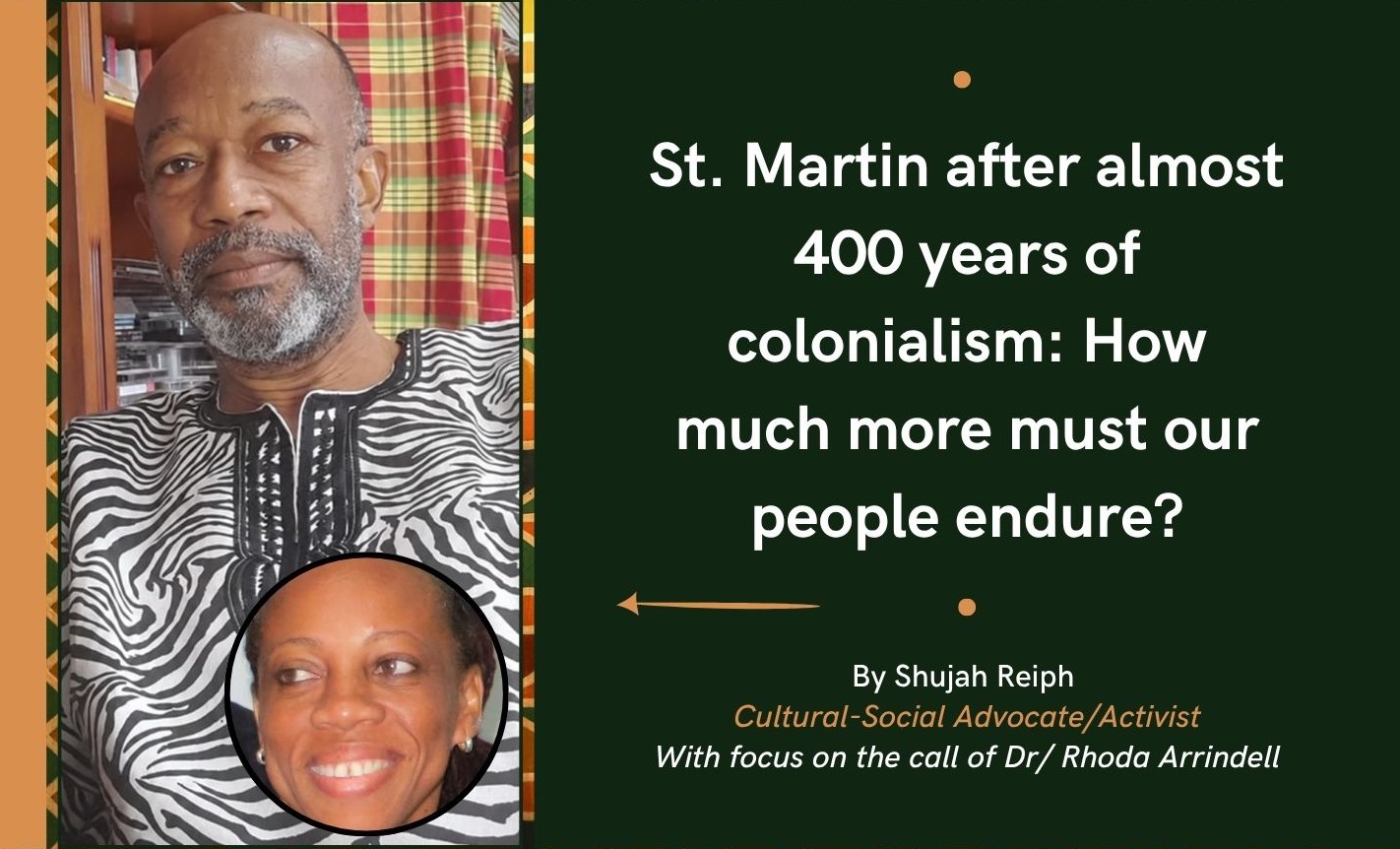
Following Dr. Rhoda Arrindell's discourse on radio Tuesday night’s online program with Fernando Clark, in which she highlighted several important issues surrounding Slavery, colonialism, reparations, and reparatory justice, one fundamental question comes to mind: How much more can a people endure before they begin to question the direction in which their society is heading? This is a question that every Saint Martiner should be willing to expect.
St. Martin has experienced French and Dutch colonial rule since the seventeenth century. For generations, our ancestors lived under a colonial system in which Slavery played a significant role in shaping the island's social, economic, and political development. Although Slavery was eventually abolished, its consequences did not disappear with emancipation. The effects of centuries of enslavement and continued colonial rule remain important subjects for historical investigation, public discussion, and social reflection.
After almost four centuries of colonial history, should we not be asking ourselves whether it is time to change that trajectory? This is not simply a question about the past. It is a question about who we are as a people, what we have inherited from our ancestors, and what kind of future we want to build for the generations that will follow us.
Dr. Rhoda Arrindell's Call for Greater Consciousness
Dr. Rhoda Arrindell, who recently returned from the Third Regional Conference on Reparations in Barbados, has brought mammoth attention to the importance of raising consciousness within our society and among our government institutions. Her radio address serves as a reminder that the conversation about Slavery and colonialism must extend beyond historical commemorations. It must become part of our everyday public conversation, our educational system, our cultural development, and our discussions about the future of St. Martin.
We cannot adequately address the challenges of the present without understanding the historical circumstances that helped shape our society. For too long, discussions about Slavery have often been confined to the suffering of our ancestors, the plantation system, and eventual abolition. These subjects are essential, but our examination must go further. We must also investigate the economic structures created under colonialism, the distribution of wealth, the consequences of racial discrimination, and the long-term effects of a system that denied generations of Africans their freedom and humanity.
The abolition of Slavery was a major historical achievement, but emancipation did not automatically restore the wealth taken from enslaved people, compensate their descendants, or eliminate the inequalities inherited from the evils of Slavery. Freedom from enslavement was a historic victory, but the pursuit of justice did not end with emancipation. This is why the question of reparations deserves serious consideration throughout St. Martin.

Almost Four Centuries: Is It Not Time to Change Our Trajectory?
The history of St. Martin is deeply connected to the wider history of European colonial expansion in the Caribbean. France and the Netherlands established their respective colonial administrations on the island during the seventeenth century, and the division of the island continue to reign supreme between the French and Dutch colonial rule shaping an unwarranted political reality today.
Our island may be divided administratively, but our people share a common heritage, cultural connections, and a history that predates the modern political arrangements under which we live. The experiences of our ancestors should encourage us to reflect on the relationship between colonialism, political authority, economic development, and self-determination. What does it mean for a society to remain shaped by colonial arrangements for centuries? What lessons can we learn from the history of Slavery and the systems that sustained it? How can we ensure that our children understand the sacrifices of their ancestors? And what steps can we take to give future generations a stronger understanding of their history, their identity, and their ability to participate in shaping the future of St. Martin?
These questions are not intended to deny the complexities of our present political circumstances. Rather, they invite us to examine those circumstances critically and consider the possibilities available to our people. After almost 400 years, we must be willing to discuss whether the inherited trajectory of our island adequately reflects the aspirations of its people. That conversation should include reparatory justice, historical recognition, cultural preservation, economic development, and the question of how St. Martin can exercise greater influence over its own future as a free democratic independent republic.
Reparations Must Become a National Conversation
Reparations should not be treated as a concept reserved for academics, historians, or a small number of activists. It is a subject that concerns the entire community. Our young people should understand what happened to their ancestors. Our educators should have access to historical resources that allow them to teach the history of Slavery accurately. Our cultural organizations should help preserve the traditions and memories that connect us to previous generations. Our governments should be prepared to participate in informed discussions about historical responsibility and reparatory justice.
The question of reparations must therefore become part of a broader process of public education and community engagement. We must help our people understand that reparatory justice is not limited to financial compensation. It can also involve acknowledgement of historical wrongdoing, formal apologies, educational development, cultural restoration, public health initiatives, economic development, and measures designed to address the enduring consequences of Slavery and colonialism.
The challenge before us is to determine how these principles relate to the particular history and circumstances of St. Martin. We need research, public dialogue, and a collective effort to identify the priorities that our people consider most important. Dr. Arrindell's emphasis on raising consciousness within society and government is therefore particularly relevant. Before we can effectively prepare for negotiations, with the colonizers we must first develop a society that understands why those negotiations matter. Consciousness must lead to preparation, and preparation must lead to meaningful action.
The CARICOM Ten-Point Plan: A Foundation for Our Preparations
One important resource available to the Caribbean reparations movement is the Ten-Point Plan for Reparatory Justice developed by the CARICOM Reparations Commission, in which One SXM is an associate member. The plan provides a regional framework for addressing the enduring consequences of Indigenous genocide and African enslavement in the Caribbean. Its ten areas of focus are:
1. A full and formal apology for the historical wrongs committed through Slavery and colonial exploitation.
2. An Indigenous Peoples Development Program to address historical dispossession and continuing disadvantages.
3. Repatriation and resettlement, including support for those seeking to reconnect with Africa.
4. Cultural institutions that strengthen African cultural heritage and connections with ancestral traditions.
5. Public health initiatives addressing health inequalities associated with the consequences of slavery.
6. Illiteracy eradication and educational development to expand opportunities for Caribbean people.
7. Compensation for gender-based violence and assault on the family to repair systemic sexual exploitation and reproductive chattelization of women and girls and to restore the family.
8. Psychological rehabilitation to address the psychological consequences of Slavery and racial discrimination.
9. The right to sovereignty and Caribbean economic development to address structural disadvantages inherited from the colonial period.
10. Debt cancellation, monetary compensation, and decolonization to address the financial burdens and obstacles to Caribbean development.
- For St. Martin, these ten points should provide a basis for public discussion, historical research, and the development of specific proposals. However, we must do more than simply reproduce the plan. We must examine each point in relation to our island's history, our present needs, and the aspirations of our people. Which measures would be most relevant to St. Martin? These points require careful examination, but they should not become reasons for delaying the conversation or preparation for dialogue with France and the Netherlands.
We Should Act Now
If we are serious about reparatory justice, we must prepare ourselves for informed discussions with the French and Dutch colonial governments. The history of Slavery on both sides of St. Martin must be investigated thoroughly. We must examine colonial records, plantation registers, emancipation documents, church records, and government correspondence to establish a reliable historical foundation for our discussions. Our researchers and historians have an important role to play in documenting these experiences.
Our educational institutions must help ensure that the findings reach our younger generations. Our community organizations must encourage public participation. And our elected representatives should consider how reparatory justice can become part of a sustained program of public policy and dialogue with the relevant French, Dutch, and Caribbean institutions. We must also recognize that the legal and political questions surrounding reparations can be complex. Historical responsibility, moral responsibility, and legal liability are related but separate matters. Each must be examined carefully as proposals are developed.
Dr. Arrindell mention a 15-point plan that One SXM has drafted for St. Martin. These points need to be studied. If we want our voices to be taken seriously, we must prepare our arguments thoughtfully, clarifying all the reasons why we have to become a democratic independent republic.
The 2027 Reparations Festival: An Opportunity We Must Not Waste
One SXM’s proposed reparations festival in St. Martin in 2027 presents an important opportunity to bring these issues into the heart of our society. But the success of such a festival will depend on what we do before it takes place. We cannot wait until 2027 to begin educating our people, researching our history, and discussing our objectives. Preparations should begin immediately, with the involvement of people from both sides of the island. The Tuesday Night Online program with Fernando and Chris is a good beginner to fuel a public discussion leading up to the 2027 reparations Festival.
This reparations festival seeks to bring together historians, educators, cultural practitioners, community organizations, young people, researchers, artists, and government representatives. Public forums could be organized to explain the history of Slavery on St. Martin and the principles of reparatory justice. Researchers should be encouraged to present archival findings and identify areas requiring further investigation. Schools and youth organizations could participate in educational activities that connect our history to questions of identity, citizenship, and the future St. Martin nationality. Workshops should examine the CARICOM Ten-Point Plan and explore which initiatives would be most relevant to our circumstances.
The festival should also provide a platform for regional and international exchanges, allowing Saint Martiners to learn from other Caribbean territories pursuing reparatory justice. Above all, it should create space for the people of St. Martin to express their views, discuss priorities, and contribute to the development of proposals that may inform future dialogue with France and the Netherlands. The 2027 reparations festival must be more than a cultural event. It should be a platform for education, reflection, unity, and the preparation of a long-term program for reparatory justice. Its impact should be measured not only by attendance or publicity, but also by the knowledge it generates, the partnerships it builds, and the work it helps set in motion.
Government Must Be Prepared to Act
While community participation is essential, government institutions also have a responsibility to engage with these issues. Although we recognize the differences between the French and Dutch colonial structures, it is only by us preparing a plan of action in unison outlining the historical, educational, and cultural truth about the legacy of Slavery and colonialism on our sweet St. Martin. Our local institutions should consider supporting research into the history of enslavement on the island, preserving historical records, strengthening education about colonialism, and facilitating public consultations on reparatory justice. They should also explore opportunities for cooperation with Caribbean reparations organizations and relevant regional institutions. Such work would help establish a more informed foundation for future discussions.
Government participation should not mean that the conversation becomes the exclusive responsibility of elected officials. The process must remain open to the people whose history is being examined and whose future is at stake. Transparency, public consultation, and accountability will be essential. The people of St. Martin should understand what is being proposed, why particular priorities are being pursued, and how progress will be assessed. Reparatory justice must be approached as a collective undertaking that connects historical understanding with practical measures for the future.
Unity Must Be at the Centre of Our Efforts
One of the greatest strengths available to St. Martin is our shared heritage. The successful protest march on the frontier of September 16, 2020 is a clear example of how we deal with our problems when we feel our heritage and cultural lifestyle is been threated. The struggle to understand Slavery, preserve our cultural identity, and address the consequences of colonialism should be a harmonization of strength from both sizes of the island. The proposed 2027 festival offers an opportunity to bring people together around a subject that deserves the attention of the entire island.
We must encourage north-south cooperation to go the distance in this struggle; as the African proverb says, “If you want to go far go together.” We must also encourage participation from all sections of society, including young people who will inherit the responsibility of preserving our history and shaping our future. Reparatory justice should not become the property of any single political party, organization, or individual. It should be an opportunity for the wider community to learn, reflect, and participate. The greater our collective understanding, the better equipped we will be to develop informed proposals, pursue meaningful dialogue, and achieve substantial results.
The Time for Preparation Is Now
Dr. Rhoda Arrindell's radio discourse has brought several important issues to the forefront of public discussion. Her participation in the Third Regional Conference on Reparations in Barbados also reminds us that St. Martin is part of a wider Caribbean conversation about historical responsibility and the pursuit of reparatory justice. We should welcome the opportunity to strengthen our knowledge, deepen our understanding, and consider how our island can contribute to that movement.
But awareness alone is not enough. We must translate awareness into research, research into proposals, and proposals into a sustained process of public engagement. We must prepare for the 2027 reparations festival by bringing our people together, strengthening our historical knowledge, examining the CARICOM Ten-Point Plan, and identifying the priorities that should guide our discussions. We must also consider how the appropriate institutions on both sides of the island can prepare for dialogue with the French and Dutch colonial governments. This work requires patience, cooperation, and a clear sense of purpose. It will not be completed overnight. Nevertheless, beginning now will put us in a stronger position to make the most of the opportunities ahead.
Conclusion: What Will We Do with the History We Have Inherited?
After almost four centuries of colonial history, the people of St. Martin have every reason to reflect on their past and discuss their future. Our ancestors endured Slavery, fought to preserve their humanity, and contributed to the cultural and social foundations of the society we inhabit today. Their history deserves more than occasional remembrance. It deserves serious research, meaningful education, and an honest examination of the consequences of Slavery and colonialism. Let us therefore take the opportunity presented by Dr. Arrindell's discourse to broaden the conversation, involve our communities, and encourage our governments to participate. Let us approach the future with a willingness to examine difficult questions and a determination to ensure that our history is not forgotten.
After almost 400 years, it is time for St. Martin to have a serious conversation about its historical trajectory and the role reparatory justice can play in shaping a united democratic St. Martin republic. Let the 2027 reparations festival be the beginning of a renewed collective effort to understand our history, pursue reparatory justice, and help shape a future worthy of the generations who came before us and those yet to come. Our history must inform our future. Our consciousness must guide our actions. And our people must have a voice in determining the direction of St. Martin.