

The King is dead: long live the King! A Tribute to the Mighty Sparrow (1935 - 2026)
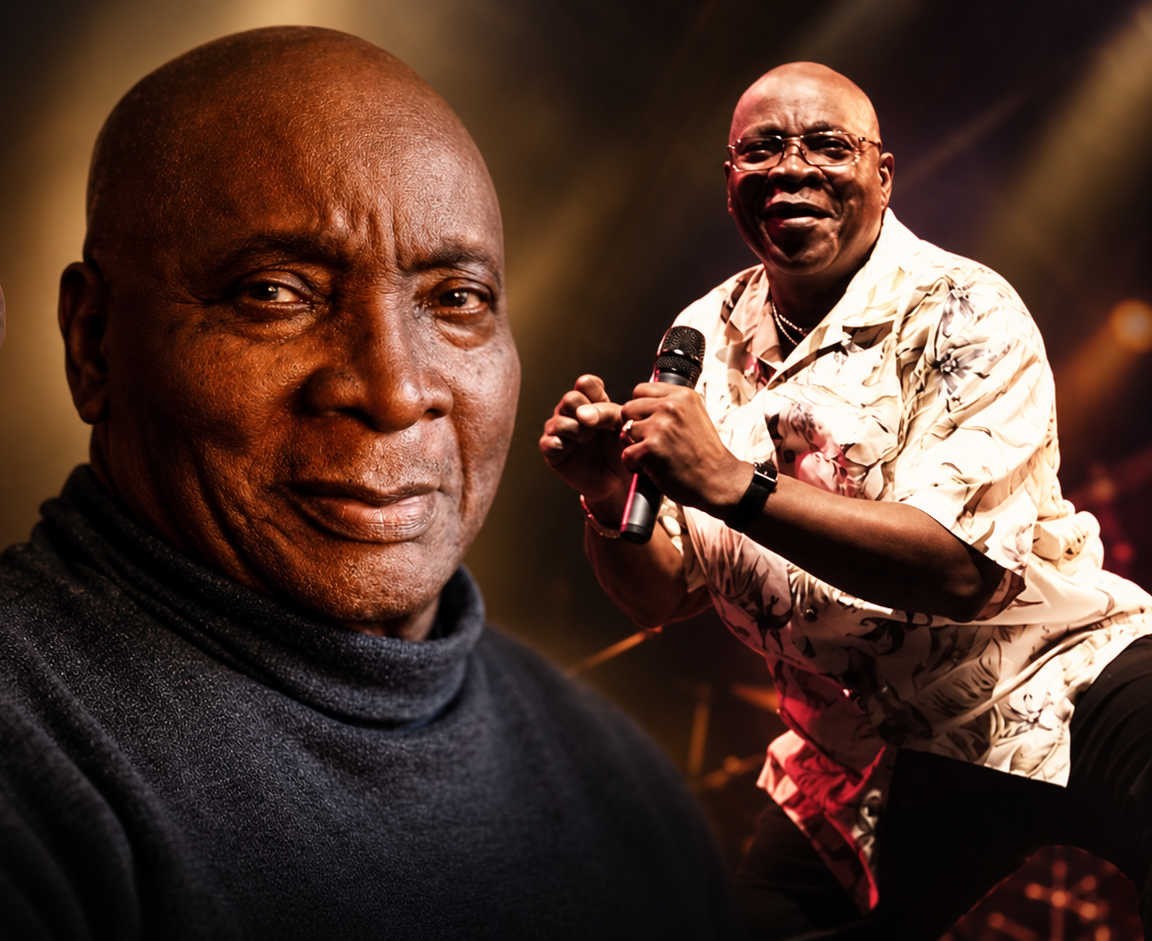
.jpg)
I was 10 years old when the Mighty Sparrow, Slinger Francisco, released his evergreen song “Mae Mae.” It was my father’s favorite whenever he came home in a romantic or seductive mood. He would lay the 78 rpm record carefully on the gramophone, His Master’s Voice, as though he were placing a newborn baby in a cot, then pull my mother into the parlor to dance with her.
I would peep from behind the curtain that separated the bedroom from the living room and try to hush my sister, who would be giggling uncontrollably. I did not know who Mae Mae was. It sounded like a pet name he had for my mother. I did not know who the singer was either. That was my first encounter with the Birdie, as Sparrow is also called.
That was the same year Nigeria became independent. “Mae Mae” was Sparrow’s comeback hit after he had boycotted the 1959 Trinidad Carnival over low prize money. I would have a second encounter with Sparrow, again in Nigeria, during his memorable performance at FESTAC 77. He was on the same bill as Miriam Makeba, and the two of them brought down the roof at the National Theatre in Lagos.
Fast forward a few years to St. Martin, and my “relationship” with Sparrow went from childhood fascination to adult admiration. Whether at the Carnival Village belting out “Willy Dead,” at Mullet Bay before Hurricane Luis asking Fernando Clark if he “ever eat a white meat” while rolling his eyes and singing “Congo Man,” or under the tent at Port de Plaisance turning “Salt Fish” into a sexy ballad from a wheelchair, Sparrow had a faithful fan base in St. Martin, and I count myself among his most loyal followers.
So when Fernando Clark, surely one of the Caribbean’s leading experts on Sparrow, messaged me to break the sad news, I felt a personal loss. It was as if I had just lost an uncle who seemed far away, but still close enough for a smile to light up my face whenever my mind wandered to him.
Professionally, I had the honor and privilege of interviewing Sparrow a few times on PJD-2 Radio with Fernando. I had also been contracted by House of Nehesi Publishers to write his biography. Unfortunately, the project did not continue after the first interview due to circumstances beyond our control.
Born in Grand Roy, Grenada, in 1935 and raised in Port of Spain, Trinidad, Sparrow’s rise in the mid-1950s, catalyzed by his landmark 1956 hit “Jean and Dinah,” revolutionized calypso. He elevated the genre from local folk commentary to a sophisticated, globally recognized musical form.
With his unmatched lyrical wit, soaring brass arrangements, dynamic rhythm and theatrical vocal delivery, he gave voice to the struggles, humor, political shifts and triumphs of West Indian life during a period of anti-colonial transformation and national independence.
A Global Cultural Ambassador
Sparrow’s career spanned some seven decades. He was, without doubt, a musical genius who took calypso from the Caribbean to international stages across North America, Europe, Africa and Asia. Long before “world music” became a mainstream commercial category, Sparrow was filling venues from London to New York and serving as an ambassador for West Indian pride.
His vast catalogue bridged genres without losing its rooted authenticity. Whether pioneering early crossover sounds, incorporating elements of Latin jazz and soul, or embracing the evolution of soca, Sparrow demonstrated that Caribbean rhythms belonged on the world’s grandest stages alongside any other musical genre.
Champion of the Entire Region
What truly set Sparrow apart was his commitment to the entire Caribbean and its diaspora. He was not merely a Trinidadian or Grenadian icon, he belonged to the entire region. Regardless of how small or remote an island was, from Montserrat to Carriacou, Anguilla, St. Eustatius or St. Maarten, Sparrow brought his high-energy show directly to the people.
He treated every crowd, whether thousands in a stadium or a few hundred in a small island hall, with the same level of energy, respect and fire.
Linguistic Versatility
His linguistic versatility further cemented his regional and global appeal. Demonstrating a remarkable ear for language, Sparrow sang and recorded in multiple tongues. English and Creole formed the foundation of his storytelling, satire and social commentary, while French and Kwéyòl connected him deeply with audiences in Dominica, St. Lucia, Grenada and the French-speaking Caribbean.
He also sang in Dutch and Papiamento, endearing himself to fans across Aruba, Curaçao and other Dutch Caribbean territories. Similarly, he sang in Spanish to reach audiences in Latin America and the Spanish-speaking Caribbean. The Mighty Sparrow surely gave the Caribbean its soundtrack, plenty of laughter, and a mirror through which to look humorously at itself.
Chief Historian
Throughout his career, the Mighty Sparrow was widely regarded as the “chief historian” of the Caribbean. Beyond his double-entendre humor and upbeat road march tunes, his sharp social consciousness helped define his artistic legacy.
He was a consummate storyteller whose extensive discography touched on contemporary and controversial subjects with a dexterity that resonated strongly with popular sentiment.
The Sparrow School
The Mighty Sparrow’s influence on subsequent generations of Caribbean artists, most notably Machel Montano, the reigning “King of Soca,” is foundational. Sparrow did not simply sing the soundtrack of the Caribbean, he laid the blueprint for how a Caribbean artist could build a lifelong, globally viable career without compromising cultural identity.
Before Sparrow, calypsonians often stood relatively still behind a microphone to deliver their social commentary. Sparrow transformed the stage into a theatrical arena, combining choreographed footwork, dramatic facial expressions, sex appeal and direct audience engagement.
Machel Montano, arguably the most outstanding alumnus of the “Sparrow School,” adopted and modernized that same high-energy showmanship. Montano’s legendary live performances, defined by explosive athleticism, crowd control and stamina, are a direct evolution of the performance standard Sparrow established in the 1950s, 1960s and beyond.
Sparrow never allowed his music to be confined to a single era. He integrated Latin rhythms, soul, funk and early electronic soca into his work, while collaborating across generational lines. This willingness to evolve inspired Montano and his peers, including Bunji Garlin, Fay-Ann Lyons and Kes, to push soca into new territory by fusing it with EDM, Afrobeat, hip-hop and dancehall.
Montano followed Sparrow’s collaborative spirit directly, even sharing stages and recording alongside the Birdie on tracks such as “Congo Man,” as well as performing live with him and Calypso Rose.
Sparrow showed younger artists that Caribbean music could sell out international arenas such as Madison Square Garden and tour globally across North America, Europe, Africa and Asia long before the internet. He taught the next generation that they did not need to abandon their accents, local dialects or cultural themes to win over international audiences.
Artists such as Machel Montano built their global strategy on that lesson, taking soca to major festivals around the world while keeping Caribbean culture at the core.
In recent years, as modern soca became increasingly fast-paced and party-focused, Montano frequently returned to the foundational roots laid by Sparrow. Montano’s landmark 2024 Calypso Monarch win with “Soul of Calypso,” and his subsequent academic work in Carnival studies, mirrored Sparrow’s insistence that no matter how much the rhythm changes, storytelling, musical literacy and respect for tradition remain at the heart of Caribbean music.
Machel Montano publicly acknowledged Sparrow’s enduring legacy when he said: “We stand on Sparrow’s shoulders. He paved the way for all Caribbean artistes to reach the world stage.”
Rumors of Death
From 1974, when he sang “Sparrow Dead,” to the time he took his final breath, the “Calypso King of the World” was rumored to have died several times before he was actually called home.
Now the newspaper boys around the world will be shouting, “Extra, Extra!” There will be more “Vickies” and “big mouth Lilians” spreading the news, but this time it will not be rumor-mongering.
The ancestors will welcome him home with open arms as we, the “Sparrowites,” mourn the loss of a legend who will remain in our hearts forever.
The King is dead; long live the King.