

Beyond Visitor Growth: A broader modernization vision for St. Maarten

St. Maarten’s tourism debate has too often been reduced to one question: how many visitors are arriving?
Eustaquio Richardson’s latest tourism white paper argues that this is no longer enough. More visitors, by itself, does not guarantee stronger wages, lower living costs, better public finances, improved infrastructure or a higher quality of life for residents. In fact, without proper planning, more tourism can deepen some of the same pressures the country is already struggling to manage: congestion, high operating costs, overstretched roads, environmental strain, labor shortages and seasonality.
The paper, titled Beyond Visitor Growth: A National Tourism Vision & Strategic Development Paper for St. Maarten, does not reject tourism growth. It challenges the country to define growth differently. The central message is that St. Maarten must move from a volume-driven tourism model toward a higher-value tourism model, one that places more attention on quality, spending, resident benefit, sustainability, infrastructure, affordability and long-term competitiveness.
Read together with Richardson’s other white papers on renewable energy and tourism quality standards, the tourism paper forms part of a broader national modernization vision. These papers are not separate policy ideas sitting in different corners of public debate. They are connected. They point toward the same larger conclusion: St. Maarten cannot secure its future by relying only on visitor arrivals, cruise numbers, hotel occupancy or short-term economic activity. The country needs a more integrated development model.
That model would treat tourism quality, renewable energy, affordability, infrastructure, environmental protection and national planning as linked pieces of the same agenda.
The tourism paper begins from a reality that is widely understood but not always fully confronted. Tourism remains St. Maarten’s main economic engine. It supports jobs, entrepreneurs, hospitality, transportation, retail activity, excursions, government revenue and wider economic circulation. It will likely remain the country’s most important economic pillar for years to come.
But Richardson’s paper makes clear that tourism alone is not the goal. Tourism should be a tool. It should be used to strengthen national prosperity, workforce opportunity, infrastructure, affordability, sustainability and quality of life.
For decades, small island tourism economies have often measured success by arrival numbers. More cruise passengers, more stayover visitors, more flights and more hotel rooms were treated as clear signs of progress. But St. Maarten’s current challenges show that the next stage must be more sophisticated. A country can receive many visitors and still have residents struggling with high grocery prices, expensive housing, costly utilities and limited purchasing power. Businesses can be busy and still face rising operating costs, labor shortages, import dependency and unstable off-season activity.
This is why the paper’s call for “higher value over higher volume” is important. It shifts attention from counting visitors to measuring what tourism actually contributes. Are visitors spending more locally? Are small businesses benefiting? Are workers gaining better opportunities? Are public finances improving? Is the visitor experience strong enough to support repeat travel? Is the country protecting the beaches, reefs, culture and local character that make the destination valuable in the first place?
These questions connect directly to Richardson’s tourism quality standards work. A higher-value destination cannot be built on weak service, inconsistent standards or poor visitor experience. Tourism quality is not cosmetic. It is economic infrastructure. Service standards, workforce certification, hospitality training, visitor feedback systems and reliable destination management all influence how much value St. Maarten can extract from tourism.
In that sense, a tourism standards framework is not just about smiling at guests or improving front-desk interactions. It is about competitiveness. If St. Maarten wants to attract visitors who spend more, return more often and engage more deeply with the local economy, the destination experience must match that ambition. Quality must be visible in transportation, cleanliness, safety, service, public spaces, cultural offerings, digital information, beach management, airport-port coordination and the overall ease of moving through the country.
The same logic applies to renewable energy.
At first glance, renewable energy may appear to sit outside a tourism strategy. Richardson’s broader body of work suggests the opposite. Energy is central to tourism competitiveness because energy costs affect almost everything: hotel operations, restaurants, supermarkets, transportation, water production, household budgets, government costs and business profitability.
High utility costs reduce affordability for residents and raise operating costs for businesses. In a tourism economy, those costs eventually affect pricing, wages, investment decisions and competitiveness. If St. Maarten can reduce energy vulnerability, improve reliability and transition toward cleaner and more resilient systems, the benefits would extend beyond environmental goals. They would support affordability, strengthen business performance, improve resilience after storms or external shocks and make the country more competitive over the long term.
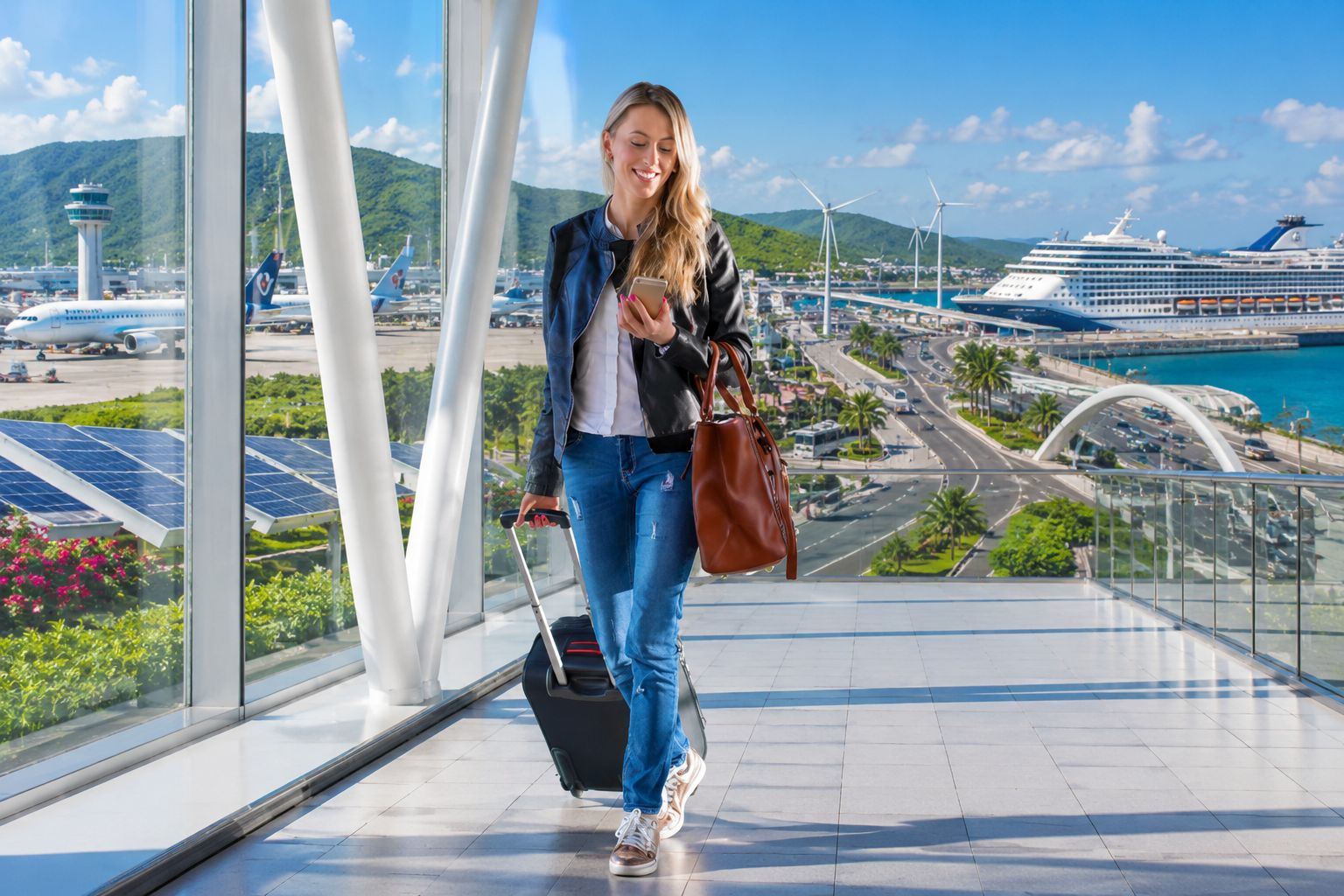
The tourism paper recognizes renewable energy as part of the broader future growth sectors and includes renewable energy integration for the tourism sector in its action matrix. That placement is significant. It shows that energy transition is not being treated as an isolated technical issue. It is presented as part of national tourism modernization and long-term economic planning.
For hotels, restaurants and tourism operators, renewable energy can reduce exposure to volatile fuel costs and high utility bills. For government, it can support national resilience and reduce structural pressure. For residents, it can contribute to affordability if implemented properly. For the destination, it can strengthen St. Maarten’s image as a serious, modern and sustainable tourism economy.
The same integrated approach appears in the paper’s treatment of infrastructure. Tourism cannot function efficiently if airport, port, road, traffic, drainage, public space and coastal systems are under constant strain. During high season, congestion, airport pressure, cruise flow, overcrowding and labor shortages can weaken both the visitor experience and resident quality of life. During low season, reduced hotel occupancy, lower restaurant activity and workforce instability expose the country’s dependence on seasonal demand.
Richardson’s paper calls for smarter traffic management, better airport-port coordination, transportation modernization, cruise-flow management, tourism dispersion, water transportation and digital tourism systems. These are not minor operational adjustments. They are the foundations of a more efficient tourism economy.
Homeporting is one example. Expanded homeporting could generate hotel nights, airport growth, provisioning activity, restaurant spending, transportation demand and broader tourism circulation. But without dedicated transfer systems, better passenger-flow coordination and long-term transportation planning, homeporting can also add to congestion and frustration. The opportunity and the risk are linked. The difference is planning.
Philipsburg is another example. The paper presents Philipsburg not merely as a cruise arrival point, but as a potential waterfront tourism district. That vision includes beautification, walkability, public-space modernization, culture, heritage, experiential tourism, nightlife and mobility integration. This is a shift from seeing Philipsburg as a place tourists pass through toward seeing it as a place where tourism value can be created, extended and better distributed.
That also connects to the paper’s emphasis on culture, heritage and nature. St. Maarten’s beaches, reefs, marine environment, cuisine, music and local character are not optional extras. They are core economic assets. If they are weakened, tourism competitiveness is weakened. Environmental protection is therefore not only an environmental obligation. It is also a tourism strategy, a public-health strategy, a resilience strategy and an economic strategy.
This is where sustainability becomes more than a slogan. A sustainable tourism model must protect the assets that tourism depends on. Beach preservation, reef protection, coastal resilience, flood mitigation, drainage, waste management, beautification and carrying-capacity management all influence the future of the tourism economy. A destination that fails to protect its environment eventually damages its own product.
The paper also makes an important connection between tourism and diversification. It does not argue that St. Maarten should move away from tourism. Instead, it argues that a stronger tourism economy should help create the conditions for broader economic development. Better infrastructure, stronger public finances, workforce skills, investment confidence and economic stability can support other sectors over time, including healthcare, renewable energy, technology, marine industries, logistics, creative industries, wellness and professional services.
This is a practical approach to diversification. For St. Maarten, diversification cannot mean pretending tourism is no longer central. It means using tourism more intelligently so that it supports other parts of national development.
Medical tourism is one of the more notable opportunities identified. With the St. Maarten Medical Center under construction and representing a major national investment, the paper suggests that healthcare should be considered within the broader economic-development and tourism strategy. Regional demand from nearby islands could support specialized diagnostics, outpatient services, elective procedures, rehabilitation, wellness healthcare, specialist partnerships and healthcare conferences. Unlike traditional tourism, healthcare demand is less dependent on tourism seasons, which could help reduce seasonal instability.
This idea reflects the broader theme of the paper: St. Maarten must extract more value from the assets it already has or is developing. The airport, port, medical center, waterfront, hospitality sector, marine sector, cultural life and regional location should not be managed in isolation. They should be coordinated as part of a national strategy.
That coordination is one of the paper’s strongest points. Richardson identifies roles for TEATT, the St. Maarten Tourism Bureau, VROMI, ECYS, VSA, Justice, Finance and private-sector organizations. The message is clear: tourism cannot be managed by one ministry or one bureau alone. It touches roads, safety, labor, healthcare, culture, the environment, public finance, investment, transportation and education.
The St. Maarten Tourism Bureau, in particular, is described as needing to evolve beyond traditional destination marketing into destination management and tourism intelligence. That means better data, dashboards, visitor sentiment monitoring, key performance indicators and smart tourism systems. This is essential if St. Maarten wants to move from reactive decision-making to evidence-based planning.
The paper’s roadmap lays out a staged approach. For 2026 to 2027, the focus would be foundation and coordination: tourism intelligence systems, workforce-training pilots, airport-port coordination, standards development, summer campaigns, cleanliness initiatives and stakeholder coordination. From 2028 to 2030, the focus would shift to expansion and modernization, including smart systems, transportation upgrades, homeporting, medical tourism, waterfront improvements, marine-economy integration and tourism-value optimization. From 2030 to 2035, the goal would be high-value tourism and broader diversification, with premium positioning, sustainability integration, healthcare expansion, renewable energy and resilience infrastructure.
This timeline matters because modernization cannot happen through speeches or isolated projects. It requires sequencing, responsibility and continuity.
The cost of inaction is also clear. Without reform, St. Maarten risks worsening congestion, declining visitor satisfaction, environmental strain, infrastructure overload, stagnant wages, higher seasonality pressure and reduced competitiveness. Perhaps most importantly, the country risks weakening resident support for tourism growth if residents continue to feel that tourism success does not translate into daily improvement.
That may be the most important political and social point in the entire discussion. Tourism depends on resident tolerance and participation. If people experience tourism mainly as traffic, high prices, crowded spaces, environmental damage and low wages, then tourism growth becomes harder to defend. A higher-value model must therefore show residents that tourism can improve life, not just increase activity.
This is where Richardson’s tourism, renewable-energy and tourism-standards papers come together. Tourism quality improves the visitor experience and strengthens the destination brand. Renewable energy supports affordability, resilience and competitiveness. Sustainability protects natural assets and reduces long-term risk. Infrastructure modernization improves efficiency and quality of life. Smarter planning helps the country move from short-term reaction to long-term strategy.
Together, these ideas form a national modernization agenda.
The strength of that agenda is that it does not ask St. Maarten to choose between tourism and residents, or between economic growth and environmental protection, or between affordability and competitiveness. It argues that these goals must be pursued together because they now depend on each other.
Higher-value tourism requires better service, better infrastructure, cleaner and more reliable energy, stronger public spaces, environmental protection, skilled workers, modern data systems, safer movement, cultural preservation and more local participation. Those same improvements also benefit residents.
That is the deeper point. The future of St. Maarten’s tourism economy should not be measured only by who comes to the island, but by what kind of country tourism helps build.
If tourism growth does not produce a stronger society, then it is incomplete. If energy reform does not improve affordability and resilience, then it is incomplete. If service standards do not raise national competitiveness and worker opportunity, then they are incomplete. If infrastructure investments do not improve both visitor experience and resident quality of life, then they are incomplete.
Richardson’s papers, taken together, offer a framework for moving beyond fragmented policy. They suggest that St. Maarten’s next development phase should be built around integration: tourism, energy, standards, sustainability, infrastructure, workforce development and affordability moving in the same direction.
That is the real meaning of going beyond visitor growth. It is not anti-growth. It is smarter growth. It is growth with purpose, growth with standards, growth with resilience and growth that residents can feel.
For St. Maarten, that may be the central challenge of the next decade: not simply attracting more people to the island, but ensuring that the tourism economy helps create a more competitive, sustainable and livable country for the people who call it home.