

Bonaire maps out 2050: The plan to stop growth from overwhelming the island
.jpg)
Bonaire has spent much of the past three decades growing. Its population grew, tourism expanded, construction followed, migration accelerated and the economy became larger. Vishon Boneiru 2050 asks a more difficult question: has all of that growth actually made Bonaire stronger, and how much more can the island absorb before growth begins destroying the things that made it attractive in the first place?
The 58-page vision does not argue that Bonaire should stop developing. Instead, it proposes a major change in what development should mean. More tourists, more hotel rooms and more residents are no longer treated automatically as signs of success. By 2050, the objective would be higher living standards, stronger culture, restored nature, better infrastructure and an economy producing more value from less pressure on the island.
An island that grew faster than its foundations
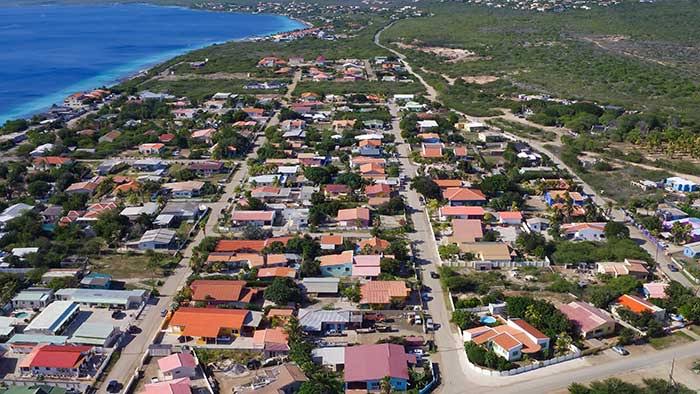
The demographic numbers explain much of the urgency. Bonaire had roughly 10,000 residents in 1991. By 2025 it had approximately 27,000, almost tripling in little more than three decades. Housing, roads, utilities and other infrastructure did not grow at the same pace. The report says the result is an island whose population has effectively outgrown several of its basic systems.
Without a change in migration patterns, the difference by 2050 could be dramatic. The commission calculates that an average positive migration balance of 250 people annually would take Bonaire to about 33,000 residents. Continuing at roughly 1,000 annually, similar to recent years, could produce a population of approximately 54,000. The proposed answer is not closed borders, because Bonaire needs workers, particularly as its population ages. It is controlled migration based largely on labour-market needs.
That distinction matters. Vishon Boneiru 2050 is effectively arguing that population growth should become a policy choice rather than something that simply happens to the island. Workers would still be recruited for healthcare, education, hospitality and technical occupations, but the preference would shift towards people likely to establish a longer relationship with Bonaire rather than a continuously rotating population.
Tourism without constantly adding tourists
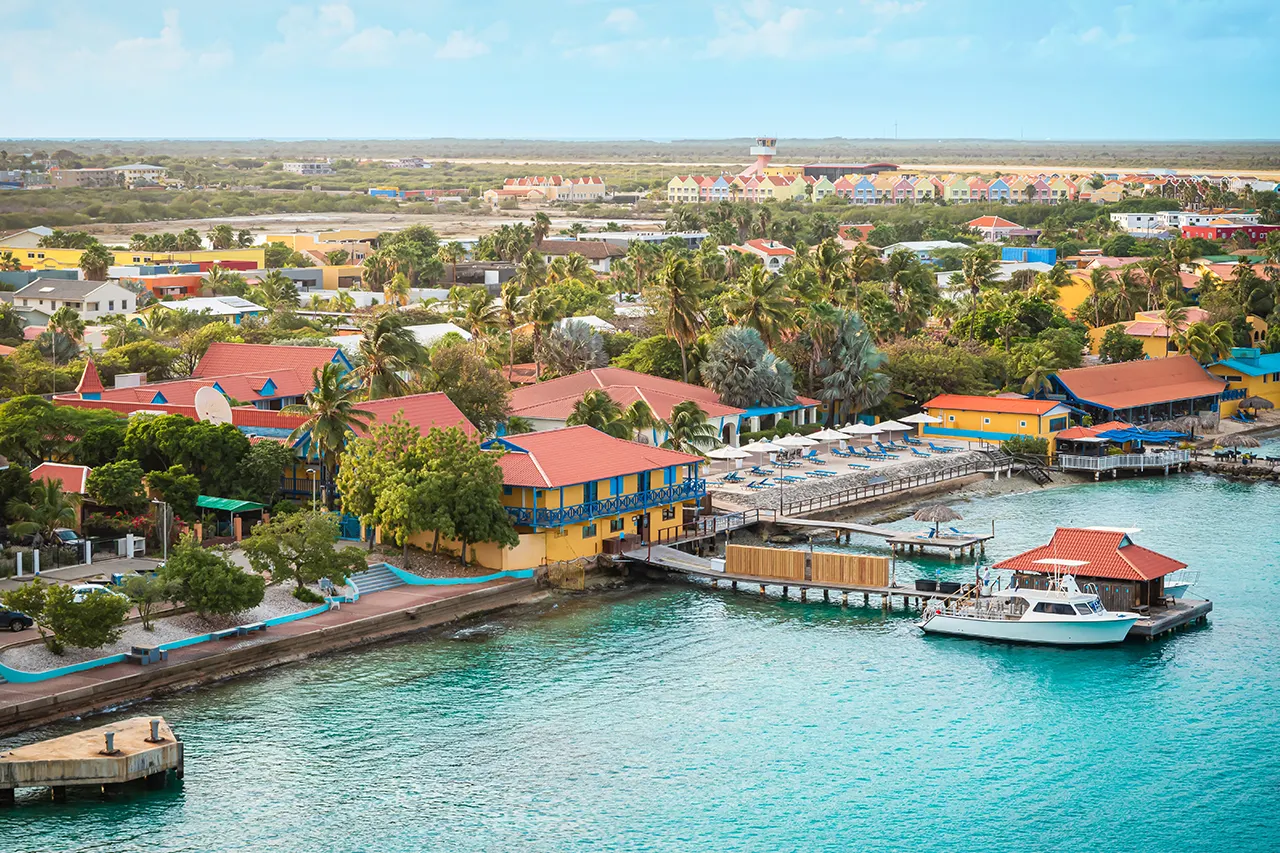
The proposed change in tourism may be the clearest break with the development model of recent decades. Tourism accounts directly and indirectly for roughly half of Bonaire's economy. Stayover arrivals increased from 128,000 in 2012 to 182,000 in 2024, while cruise arrivals more than doubled from 158,000 to 359,000. By comparison, Bonaire received only 51,000 stayover visitors and 28,000 cruise passengers in 1992.
The commission sees a problem in chasing those numbers indefinitely. Cruise tourism contributes only about 3 percent of GDP while creating days when thousands of additional people place pressure on roads, beaches and marine areas. Meanwhile, hotel capacity expanded faster than previously envisioned, yet average room revenue remains below regional competitors. The report's conclusion is that Bonaire is attracting significant tourism volume without extracting as much economic value from every visitor as it could.
Vishon Boneiru 2050 therefore proposes something unusual in a region where tourism success is often celebrated through record arrival numbers. Hotel-room capacity would essentially stop expanding, vacation rentals would be restricted, cruise calls would be capped and preference would go to smaller vessels with passengers who spend more. Hotel occupancy would move towards 70 percent and revenue per available room would at least match competing destinations.
The theory is straightforward: scarcity combined with a better product allows Bonaire to charge more rather than accommodate more. Nature, tranquillity and space become economic assets that must be protected precisely because tourism depends on them. That also explains why the vision proposes regulating visitor numbers and diving activity in vulnerable areas.
Culture becomes part of economic policy
Perhaps the most revealing statistics in the document concern who now lives on Bonaire. In 1992, roughly two-thirds of residents were born on the island. By 2025, that figure had fallen to approximately one-quarter. Papiamentu was the most spoken language for 86 percent of residents in 1992, compared with 62 percent in 2021.
The commission does not frame migration itself as the enemy. It notes that many immigrants learn Papiamentu, participate in society and remain on Bonaire. Its concern is fragmentation, particularly where groups live alongside one another without developing a common attachment to the island.
The response proposed for 2050 includes protection of monuments and kunuku heritage, architecture influenced by local building traditions, stronger cultural institutions, formal language policy and more Papiamentu in education and government. Newcomers would also be introduced to Bonairian language and culture through integration courses.
That makes culture more than a heritage issue. In the logic of Vishon Boneiru 2050, it is part of economic survival. If Bonaire wants visitors to pay more for something distinctive, then Bonaire must remain distinctive.
Prosperity has to reach households
The vision also challenges the assumption that economic growth automatically improves household welfare. Bonaire's economy grew between 2012 and 2023, but its population grew even faster, leaving real GDP per person slightly lower. Imports rose to approximately half of GDP, increasing exposure to international prices and supply disruptions.
By 2050, the commission wants poverty to have almost disappeared, social benefits to provide purchasing power comparable with European Netherlands and the private sector to offer better-paying jobs. It also wants utilities no more expensive than in European Netherlands, reliable public and regional transportation, nearly free childcare and stronger consumer protection.
Economic autonomy forms another part of that agenda. Food imports would be reduced by a quarter, renewable energy would supply the island through a fully smart grid, local agriculture would expand where environmentally appropriate and Bonaire would pursue technology, research and other sectors capable of producing higher-value employment.
The hardest part is not imagining 2050
The report ultimately identifies implementation as Bonaire's greatest risk. Government reserves rose from about US$3 million in 2018 to US$84 million in 2024, partly because allocated money was not spent. At the same time, the island faces major unfunded infrastructure needs. The document estimates an annual infrastructure funding gap of US$11 million to US$24 million in 2026, rising to roughly US$53 million to US$54 million by 2050.
That contradiction explains why the commission insists Vishon Boneiru 2050 cannot become another collection of ambitions. It proposes a joint Bonaire-Netherlands governing structure, a long-term infrastructure fund insulated from political cycles and a supervisory council with authority to track implementation across government departments. It also calls for residents, businesses and civil society to be involved from the bottom up rather than having policy imposed from either Kralendijk or The Hague.
That may be the most important part of the entire vision. Bonaire already knows many of its problems. It knew several of them in 1992. Vishon Boneiru 2050 is essentially an attempt to prevent another generation from reaching 2050 and discovering that the island produced another excellent plan, while continuing along the same path.
Its central proposition is simple but consequential: Bonaire does not need to become bigger to become better. The next 25 years would instead be about deciding what the island can carry, protecting what gives it value and making sure that economic development ultimately improves the lives of the people who call Bonaire home.