

CARICOM’s new Reparations Manifesto explained: What the 10-point plan is asking for
.jpg)
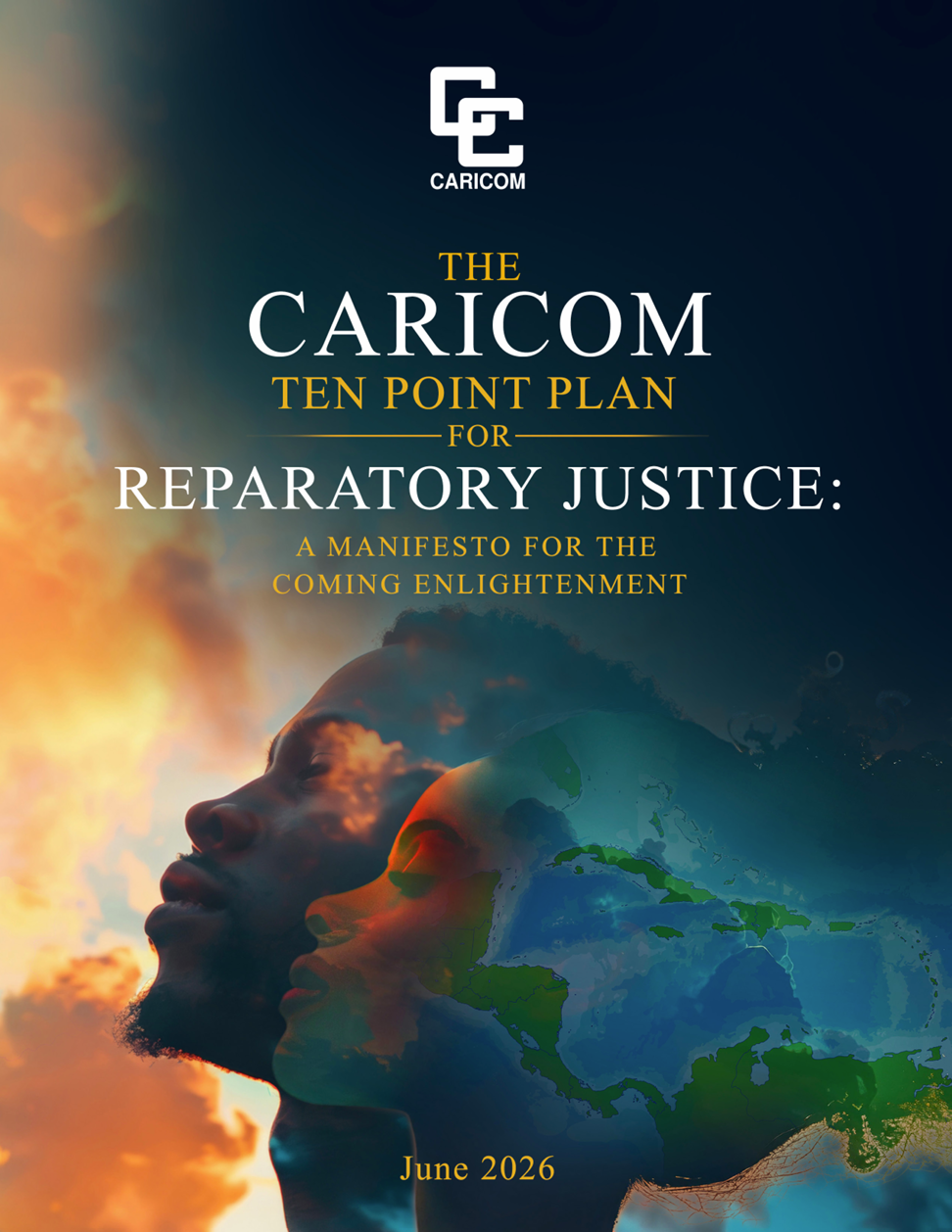
CARICOM’s revised Ten Point Plan for Reparatory Justice presents reparations as much more than a demand for a one-time cash payment.
The June 2026 manifesto argues that centuries of Indigenous genocide, African enslavement, colonial exploitation and deceptive Asian indentureship left the Caribbean with lasting social, economic, cultural and psychological damage. It calls on former colonial and enslaving nations, along with monarchies, churches, financial institutions, corporations and families that benefited, to participate in repairing that damage.
The document describes itself as a broad framework rather than a completed negotiating settlement. It does not set out exactly how much each country or institution must pay or how every program would operate. Instead, it outlines what CARICOM believes meaningful repair should include and connects reparations directly to the Caribbean’s present-day development needs.
Here is what each of the ten points means in practical terms.
1. A full and formal apology
CARICOM wants former enslaving and colonial nations to issue clear, official apologies that accept responsibility for what happened.
The manifesto says those apologies should identify the victims and perpetrators, acknowledge the harm caused and include a commitment to repair it. CARICOM argues that expressions of regret are not enough when they avoid responsibility or fail to offer a path toward justice and reconciliation.
In simple terms, this point asks former colonial powers to say plainly what they did, accept responsibility and enter serious discussions about how the damage will be addressed.
CARICOM also sees the apology as the beginning of a process rather than its conclusion. An apology without action would not satisfy the plan. The expectation is that an admission of responsibility would open negotiations on healthcare, education, economic development, cultural restoration and other forms of repair. It would also help establish a more honest relationship between the Caribbean and the countries whose wealth and institutions benefited from colonialism.
2. A development program for Indigenous Peoples
The second point focuses on the Caribbean’s surviving Indigenous communities, including the Kalinago, Taino and Garifuna.
CARICOM says colonisation led to mass death, displacement, land loss and the destruction of languages and traditions. The proposed response includes better access to education and healthcare, economic development, protection of ancestral lands, cultural centres, museums and support for Indigenous languages, festivals and traditional knowledge.
The goal is not only to preserve Indigenous culture, but to give these communities the resources and authority needed to determine their own futures.
In practical terms, this could mean targeted scholarships, stronger community health services, land-development support and investment in Indigenous-owned businesses. It could also mean including Indigenous history and languages more fully in school curricula. CARICOM’s position is that these communities should not be treated simply as reminders of the past, but as living peoples whose rights, cultures and development must be protected.
3. Repatriation and resettlement
CARICOM says descendants of Africans who were forcibly removed from the continent should have the right to reconnect with Africa and, where desired, to return and resettle.
This does not mean that Caribbean people are being encouraged or required to leave the region. The manifesto presents repatriation as a choice and a right for those who genuinely want it.
It also says the financial burden of resettlement should not fall on the descendants of the people who were abducted and enslaved. Former enslaving states and institutions that profited from the trade should help finance the process.
Repatriation could take several forms. For some people, it may mean permanent relocation to an African country. For others, it could mean easier travel, extended cultural visits, educational exchanges, citizenship arrangements or opportunities to invest and establish businesses in Africa. The wider objective is to rebuild connections that were deliberately broken by the transatlantic trafficking of Africans.
4. The return of cultural heritage and reconnection with Africa
The fourth point addresses the loss of language, religion, identity, artefacts and cultural knowledge.
CARICOM wants objects taken during colonisation returned to their places of origin. It also proposes stronger cultural institutions, museums, school exchanges, cultural tours, DNA-based reconnection programs and greater support for Caribbean artists, researchers and creative industries.
The manifesto argues that artefacts held in European institutions should not remain available mainly to European researchers and visitors. Their return would allow Caribbean and African people to study and present their own history on their own terms.
This point also recognises culture as an economic asset. Investment in music, fashion, culinary arts, literature, film, performance, traditional medicine and other creative sectors could create jobs while preserving identity. CARICOM is therefore not speaking only about returning old objects. It is calling for resources that would allow Caribbean people to document, teach, produce and earn from their own cultural heritage.
5. Help addressing the Caribbean’s public-health crisis
CARICOM connects the region’s high rates of diabetes, hypertension, cancer and other non-communicable diseases to the conditions created by enslavement, poverty, poor nutrition, trauma and colonial underdevelopment.
The manifesto calls for former colonial powers to help finance medical research, stronger healthcare systems and medicines developed with African-descended populations in mind.
It argues that Caribbean governments cannot be expected to carry the full financial burden of repairing health systems inherited from colonial rule, particularly while facing limited resources and high rates of chronic illness.
This point could translate into funding for hospitals, specialist treatment centres, preventive-care programs and regional medical research. It could also support better cancer screening, diabetes treatment, mental-health care and training for Caribbean healthcare professionals. The aim would be to reduce preventable deaths while building health systems that are less dependent on expensive overseas treatment.
6. Better education, training and skills
The sixth point calls for major investment in Caribbean education.
CARICOM argues that colonial education systems were designed to serve colonial interests while suppressing African and Indigenous history, knowledge and identity. The region has spent heavily trying to reform those systems, but significant gaps remain in literacy, scientific training, technology and workforce preparation.
The proposed repair includes investment in schools, digital infrastructure, artificial intelligence, vocational training, educational technology and community development.
This could include new schools and training centres, better-equipped classrooms, scholarships and partnerships with universities and technical institutions. It could also help Caribbean countries train more engineers, teachers, nurses, scientists, software developers and skilled tradespeople. CARICOM’s argument is that education should prepare young people for modern industries without disconnecting them from their own history and culture.
7. Compensation for violence against women and the destruction of families
The revised manifesto places much greater attention on the experience of women and girls.
CARICOM says enslaved and Indigenous women suffered sexual violence, forced childbearing, unpaid labour, racial discrimination and the destruction of their families. Enslaved women were treated not only as workers but also as people whose children could become the property of enslavers.
The plan calls for these gender-specific crimes to be formally recognised and included in reparations discussions.
The practical response could include direct compensation, stronger support for women’s health, assistance for vulnerable families and investment in programs addressing gender-based violence. It could also involve historical research that more fully documents what women endured and how the destruction of family structures continues to affect Caribbean communities. CARICOM is making the point that the experiences of women cannot remain a secondary part of the reparations case.
8. Psychological rehabilitation
CARICOM argues that the mental and emotional effects of enslavement and colonialism did not end with emancipation.
The manifesto identifies intergenerational trauma, racial self-hatred, low self-esteem, cultural disconnection, violence and mistrust of institutions as possible continuing effects. It also notes that Caribbean mental-health systems remain underfunded and that stigma often discourages people from seeking assistance.
The plan calls for reparations to support mental-health services, cultural healing, community programs and initiatives that help people reconnect with their history and identity.
In everyday terms, this could mean more psychologists, counsellors and social workers in schools and communities, as well as public campaigns that reduce the stigma surrounding mental health. It could also include programs that address violence, family instability, addiction and trauma. The manifesto’s position is that repairing roads, schools and hospitals will not be enough if the emotional damage carried across generations is ignored.
9. Technology, innovation and entrepreneurship
The ninth point argues that the Caribbean was deliberately prevented from developing its own industries, scientific institutions and manufacturing capacity under colonial rule.
CARICOM says this left the region dependent on expensive imported technology and unable to compete on equal terms in the global economy.
The manifesto therefore calls for investment in research institutions, digital infrastructure, innovation centres and high-technology industries. It also seeks access to scientific knowledge, patents, investment capital and support for Caribbean entrepreneurs.
For the average citizen, this could mean stronger internet infrastructure, more technology training, funding for startups and opportunities for young people to build businesses without leaving the region. It could also support renewable energy, agricultural technology, artificial intelligence, medical research and climate-resilient construction. The aim is to help the Caribbean become a producer of technology and knowledge rather than remaining mainly a consumer of products created elsewhere.
10. Debt cancellation, monetary compensation and decolonisation
The final point brings together the financial and political demands.
CARICOM calls for direct monetary compensation for stolen labour, loss of life and liberty, physical and psychological harm, sexual violence and the continuing effects of colonialism.
It also proposes the cancellation of bilateral debts owed by CARICOM countries to European governments. The manifesto argues that Caribbean nations entered independence with poverty, weak infrastructure and limited development support, forcing them to borrow heavily to build basic public systems.
The plan further links reparations to decolonisation. It supports the right of Caribbean territories that remain under European or American control to pursue self-determination, greater autonomy or independence.
Under this point, reparations payments would have to be governed by clear agreements, public oversight and transparent systems for managing the money. CARICOM also places special emphasis on Haiti, including the return of the independence payment imposed by France after Haiti defeated slavery and colonial rule. The broader argument is that Caribbean countries should not continue using much of their limited revenue to repay debts while the countries that extracted wealth from the region avoid responsibility for the conditions they helped create.
More than a demand for money
The revised plan does include monetary compensation, but its central message is considerably broader.
CARICOM is asking for investment in healthcare, education, technology, Indigenous development, cultural restoration, mental health and economic independence. It is also asking for formal apologies, debt relief and recognition of the right of remaining territories to determine their constitutional future.
The manifesto’s argument is that the modern Caribbean was shaped by systems designed to extract wealth, restrict development and deny rights. Reparatory justice, it says, should therefore help build the institutions, knowledge and opportunities that were deliberately denied.
It is also important to understand that the manifesto is not a final settlement already accepted by former colonial powers. It is CARICOM’s framework for future negotiations. Questions about the total value of compensation, how payments would be made, which institutions would contribute and how programs would be administered would still have to be negotiated.
Whether former colonial powers accept that argument remains uncertain. However, the revised plan makes CARICOM’s position clearer: reparations are not simply about revisiting history, but about addressing the way that history continues to influence Caribbean life today.