

From Simpson Bay to Monaco: Two marinas, one global network, and a major opportunity
.jpg)
Two of St. Maarten’s best-known yachting facilities are on course to become part of one of the largest marina and leisure infrastructure networks in the world. Simpson Bay Marina and Yacht Club Isle de Sol are operated through IGY Marinas, which sits within MarineMax. MarineMax has now agreed to be acquired by Safe Harbor Marinas, a Blackstone Infrastructure portfolio company, in a transaction valued at approximately US$1.5 billion.
The transaction has been agreed, but it has not yet formally closed. MarineMax says completion is expected by the end of 2026, subject to shareholder approval, regulatory approvals and other customary conditions. If completed, MarineMax will become a privately held company under Safe Harbor. For St. Maarten, that would place two major pieces of its yachting infrastructure inside a business ecosystem with financial and geographic reach far beyond the Caribbean.
The scale is difficult to ignore
Blackstone is not simply another marina operator. It is the world’s largest alternative asset manager, reporting more than US$1.3 trillion in assets under management as of June 30, 2026, with approximately 270 portfolio companies and investments spread across real estate, infrastructure, private equity, credit and other sectors. Blackstone Infrastructure completed its US$5.65 billion acquisition of Safe Harbor Marinas in April 2025.
Safe Harbor has continued expanding since then. Following its acquisition of Monaco Marine, including facilities in the South of France and Monaco, Safe Harbor said its network had reached 149 marinas and shipyards. Its footprint now extends beyond the United States into major international boating markets, while Blackstone describes Safe Harbor as the world’s largest marina owner and operator, with more than 140 locations across the United States and internationally.
MarineMax brings another substantial platform into that structure. The company has more than 120 locations worldwide, including more than 70 boat dealerships and 65 marina and storage facilities. Its businesses also include superyacht brokerage companies Fraser Yachts and Northrop & Johnson, boat manufacturers Cruisers Yachts and Intrepid Powerboats, and IGY Marinas, the international marina group to which the St. Maarten facilities belong.
IGY itself already has considerable international reach. It currently describes its network as 24 marinas in 14 countries, stretching across the United States, Caribbean, Latin America, Europe and the Middle East. Its portfolio includes facilities in St. Thomas, St. Lucia, Turks and Caicos, Miami, New York, Mexico, Costa Rica, Panama, Colombia, Ibiza, Cannes, Málaga, Italy, London and Saudi Arabia, along with Simpson Bay Marina and Yacht Club Isle de Sol in St. Maarten.
St. Maarten becomes one point in a much larger network
The significance for St. Maarten is not simply that a large investment company will ultimately stand behind two local marinas. The more important opportunity comes from being connected to a network capable of moving customers, yachts, services, marketing and investment across some of the world’s most important yachting destinations. IGY is big. This is bigger.
A yacht owner who uses facilities in Monaco, Miami, St. Thomas, Cannes or elsewhere in the combined network could increasingly encounter St. Maarten as another destination within the same corporate ecosystem. That creates possibilities for coordinated marketing, customer referrals, loyalty programs, yacht routing and relationships with captains, owners and management companies that operate internationally.
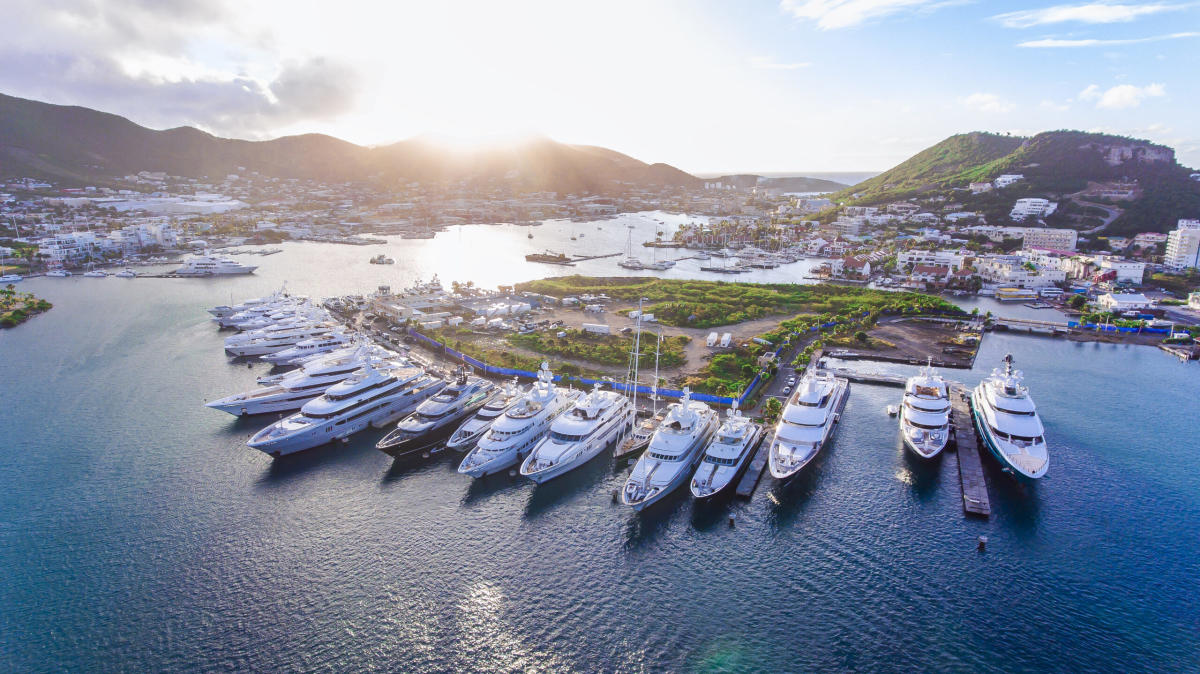
St. Maarten already has a strong position in Caribbean yachting, particularly because of the Simpson Bay Lagoon and the island’s established marine-service sector. Yacht Club Isle de Sol is designed specifically for large yachts, with 40 megayacht berths capable of accommodating vessels up to 320 feet. Simpson Bay Marina sits just inside the Simpson Bay Bridge and serves both visiting and returning yachts in one of the region’s busiest marine areas.
The opportunity is therefore not about introducing St. Maarten to yachting. The island is already firmly established. The opportunity is to strengthen its position within a much larger commercial network whose customers are exactly the type of high-value visitors the country wants to attract.
article continues below...
Capital could matter just as much as marketing
Blackstone’s involvement also raises the possibility of greater access to investment capital. When Blackstone acquired Safe Harbor, it specifically said it intended to invest in existing marinas and expand the platform. Blackstone Infrastructure describes its approach as long-term investment in large-scale infrastructure assets, including transportation, energy, digital infrastructure and other sectors.
That does not mean major investments in St. Maarten are guaranteed. No such projects have been announced. But being part of a financially powerful infrastructure platform can change the scale at which improvements are considered, whether involving docks, utilities, technology, security, environmental systems, customer facilities or resilience against hurricanes and other disruptions.
There could also be benefits in purchasing power, technology and operating expertise. A network handling hundreds of marina and service locations can negotiate differently with suppliers, standardize systems across properties, gather more customer data and spread the cost of technology and marketing over a much larger operation.
The wider economy and jobs
The value of a superyacht visit extends far beyond the berth. Large yachts purchase fuel, provisions, maintenance, spare parts and technical services. Crew members eat in restaurants, rent vehicles, use gyms and shops and spend money throughout the destination. Captains employ local agents, contractors and specialists, while visiting owners and guests contribute to hotels, restaurants and other parts of the tourism economy.
That is why St. Maarten should view this transaction as more than a change somewhere above the marina ownership structure. If the combined company actively positions St. Maarten within its global network, the effects can extend into the wider marine sector, creating opportunities for local technicians, chandlers, provisioners, contractors, hospitality businesses and young people seeking maritime careers.
It should also encourage government and the private sector to think strategically about what St. Maarten needs to remain competitive. Global ownership does not remove local problems. Bridge access, lagoon management, immigration procedures, infrastructure, workforce availability and the ease of doing business still influence whether yachts choose St. Maarten and how long they remain.
The acquisition will not automatically transform the local marine industry. But it potentially places St. Maarten at the table of a global marina organization backed by one of the largest investment firms on earth.
For an island that has spent decades building its reputation as a Caribbean yachting center, that kind of connection is worth understanding. The real opportunity will be ensuring that St. Maarten does not merely appear as two dots on a very large marina map, but becomes one of the destinations the new network actively invests in, promotes and uses as a gateway to the Caribbean.