

From Wartime Airstrip to Global Icon, Flightradar24 look at St. Maarten’s ever evolving aviation story
.jpg)
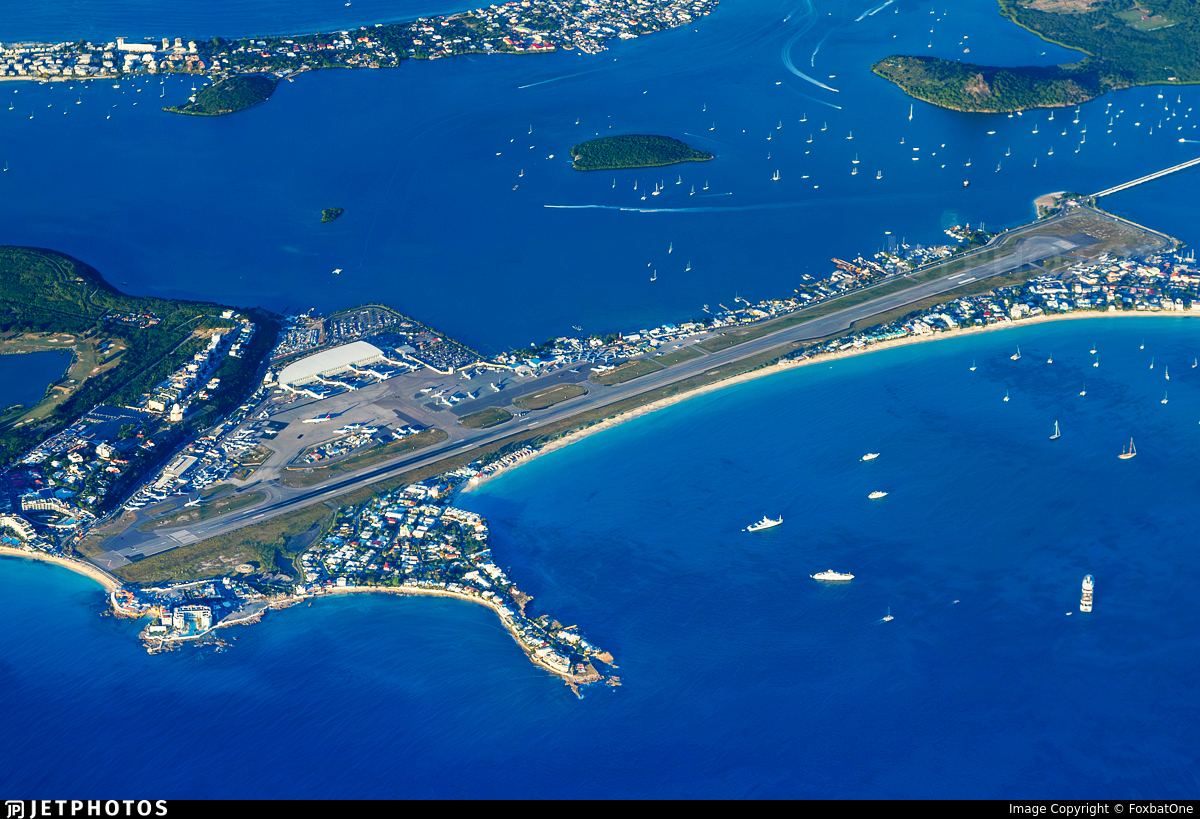
In a recent piece for Flightradar24, aviation journalist Sebastián Polito treats St. Maarten less like a dot on a route map and more like a living aviation museum, one where geography, tourism, fleet choices, and sheer spectacle all collide at runway’s edge.
What makes the article work is its pacing. It does not try to “cover everything” in equal measure, it keeps returning to a simple idea: the island’s aviation story is built from contrasts, tiny hop flights next to long-haul widebodies, regional lifelines next to bucket-list planespotting. That framing lets the story move naturally from carriers and aircraft to moments that changed the airport’s role in the region, then back again to what the network looks like now.
Continues below...
A local airline as the backbone of the narrative
A strong early move is centering the local carrier Winair, as a foundation for understanding why air travel here feels different. The article traces the airline’s beginnings in the early 1960s, and links its early operations to short-runway realities, especially service to Saba, where the aviation challenge is part of the point.
From there, the piece uses aircraft types as storytelling tools. The twin-prop workhorses, including the Twin Otter, become shorthand for essential connectivity, and the 15-minute hop between St. Maarten and Saba becomes an example of how “small” flying can still be mission-critical. The article then widens the lens to Winair’s longer regional reach with Aruba, Barbados, Curaçao, Bonaire, Dominica, and Saint Lucia, delivered via ATR aircraft.

The widebody era
The article pivots into the period that most outsiders associate with the island: regular widebody operations, especially the Boeing 747 era. The story pins this to the 1990s onward, when Air France, KLM Royal Dutch Airlines, and Corsair made the “Queen of the Skies” a familiar sight, whether nonstop or via triangle routings.
It notes KLM’s last scheduled 747 flight into St. Maarten on October 28, 2016, even identifying the aircraft registration, then complicates the “end of an era” by pointing out how disaster logistics can briefly revive what commercial schedules retire. This is where the narrative becomes less about nostalgia and more about function, a reminder that aviation here is also about resilience.
Hurricane Irma as an aviation turning point
The article’s section on Hurricane Irma is presented as a practical inflection point. It describes a special KLM 747 flight carrying cargo and supplies 20 days after the storm, connecting that to damage at the airport, and it gives the reopening date of October 10, 2017 with temporary facilities as rebuilding continued.
That sequence does two things at once. It reinforces the airport’s strategic value in crisis response, and it underlines why aviation stories on small islands cannot stay purely romantic for long. The same runway that delivers a perfect photograph can also deliver continuity of life.

A data-heavy snapshot of today’s connectivity
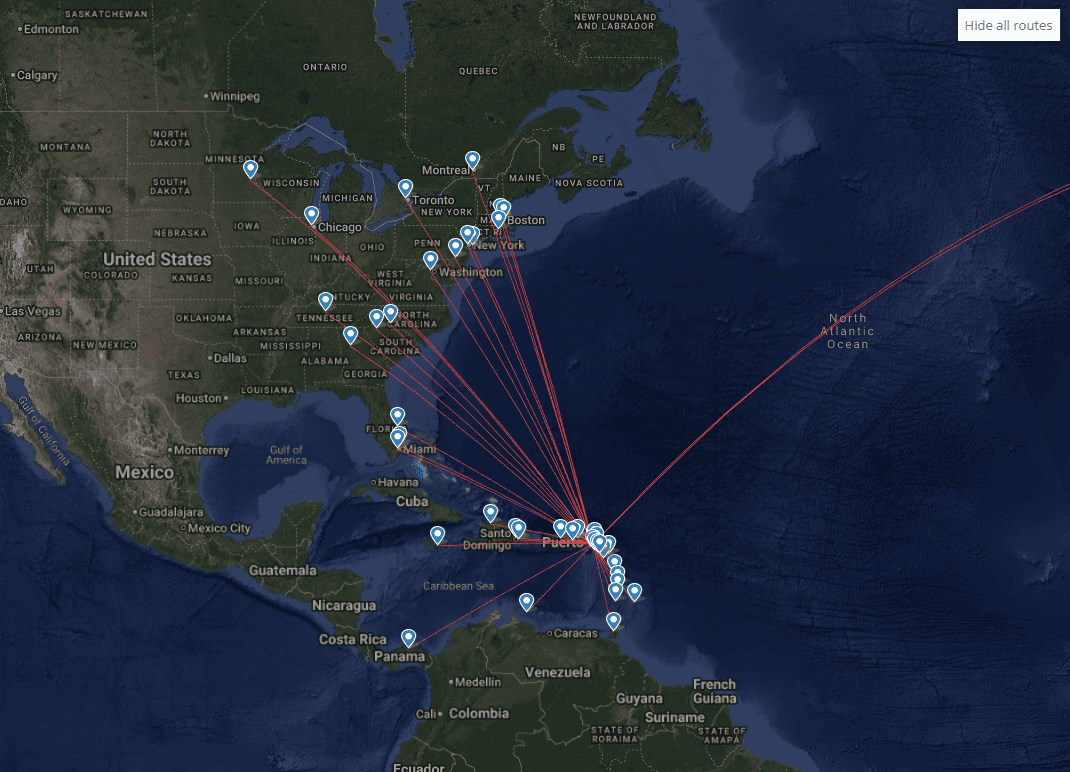
Where the piece becomes almost report-like is in its “routes” snapshot. Instead of staying at the level of anecdotes, it drops into a dense list of destinations, frequencies, aircraft types, and distances, giving readers a quick way to see the airport as a working hub.
Even with the limited space of a single article, the route list conveys several themes:
• St. Maarten remains linked to major European gateways, including Amsterdam and Paris, while maintaining a thick mesh of regional links.
• North American service is depicted as robust and varied, with multiple U.S. cities and Canadian links shown in the listing.
• The island’s role as a connector is reinforced by references to hub connections such as Panama City and Santo Domingo that can extend onward reach into other parts of the region.
• In other words, the “planespotter paradise” framing is supported by something more measurable: an argument that the airport’s appeal is tied to the breadth of its network, not only the drama of its approaches.
Two airports, one island, different roles
Another subtle strength is that the article does not treat the island as a single aviation experience. It steps across the border to describe Grand-Case Espérance Airport on the French side, characterizing it as smaller, served by small aircraft, and focused on limited scheduled routes such as Pointe-à-Pitre and Saint Barthélemy. It also notes the close physical relationship between the two airports, roughly 10 kilometers apart.
That comparison is important because it highlights a practical division of labor: one airport as an international gateway and regional hub, the other as a compact connector, closer to a local airfield with scheduled service.
continues below
What the article is really saying, beyond the planes
The underlying message is about how aviation shapes an island’s identity and leverage. The story uses aircraft and routes as the visible layer, but underneath it is pointing at bigger forces:
• Geography as destiny: short distances between islands create a world where 15 minutes can be a lifeline, not a novelty.
• Tourism as amplifier: widebody service, iconic aircraft eras, and recognizable carriers turn a functional airport into a global reference point.
• Resilience as relevance: Irma’s aftermath shows why airports in small territories are not optional infrastructure, they are essential capacity.
• Networks as power: the route snapshot frames St. Maarten as a node, not an endpoint, with connectivity that stretches far beyond beach-side imagery.
Sebastián Polito success with this piece is that he treats aviation in St. Maarten as a layered ecosystem: a regional transit web, a long-haul tourism gateway, a crisis-response platform, and a global stage for plane watching, all sharing the same runway. By tying those layers to specific fleet choices, dated milestones, and a concrete route snapshot, the piece becomes more than a highlight reel.
And that is why the original “planespotter paradise” label sticks. It is not only about where to stand for the best photo, it is about how an island’s past, present, and future can be read through departures and arrivals, as captured in Flightradar24’s account by Sebastián Polito.