

Hoteliers fear St. Maarten traffic could become the story tourists remember
.jpg)
St. Maarten’s hoteliers are looking toward the coming high season with an unusual combination of optimism and unease. Bookings are strong, demand appears healthy and several properties are seeing signs that the 2026-2027 season could match or even outperform the last one. Their concern is what happens when all of those visitors arrive.
Hoteliers who spoke with 𝘛𝘩𝘦 𝘗𝘦𝘰𝘱𝘭𝘦𝘴' 𝘛𝘳𝘪𝘣𝘶𝘯𝘦 on condition of anonymity, allowing them to speak freely about conditions affecting the destination, said traffic congestion is increasingly becoming part of the conversation with repeat visitors before they even book.
Some returning guests, they said, are no longer asking only about room availability, restaurants, beaches or activities. They are asking about the traffic. Has it improved? Is there a better time to travel across the island? Is anything being done? Should they stay somewhere that allows them to avoid driving?
For an industry built heavily on repeat business and recommendations, hoteliers see those questions as a warning. They believe St. Maarten can survive one difficult season of congestion. It can probably survive two.
Their concern is what happens when traffic becomes embedded in the destination’s reputation, repeated in reviews, travel forums, conversations among friends and eventually in the decision-making process of people choosing between Caribbean islands. Their fear is simple: traffic could become one of the first things people associate with St. Maarten.
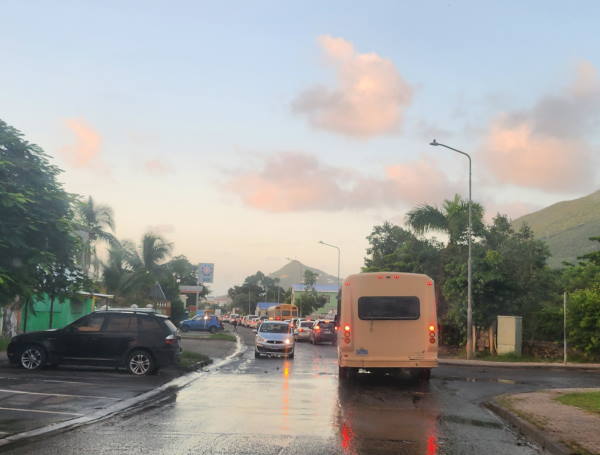
The complaints are already travelling
Visitors have been talking publicly about St. Maarten’s congestion. In a June 2026 Tripadvisor discussion, one recent visitor described driving on the island as highly stressful and said the volume of traffic seemed excessive for an island of its size. Another contributor specifically identified the airport-Simpson Bay-Philipsburg corridor as the Dutch side’s main traffic problem.
A January 2026 trip report described traffic as bad across the island, with vehicles sometimes sitting stationary because of delivery trucks, garbage collection or disabled vehicles. Another Tripadvisor discussion from the previous season included a visitor who reported taking almost two hours to travel from the airport toward Orient and questioned whether it was worth venturing to other beaches if so much vacation time would be spent in traffic. A February 2026 review of Philipsburg similarly complained about terrible traffic and rough roads.
These are individual experiences, not measurements of visitor satisfaction. There are also tourists who report manageable traffic or trips largely unaffected by congestion. But for hoteliers, that difference offers limited comfort. Online reputation is built from individual experiences multiplied thousands of times.
The island’s own tourism website acknowledges that high-season afternoon traffic can become busy between Philipsburg, Marigot and Maho, particularly when resident commuting overlaps with cruise visitors returning from excursions.
Two high seasons of warning signs
St. Maarten has already spent the past two high seasons experimenting with measures to keep vehicles moving.
In December 2024, the Simpson Bay Lagoon Authority shifted Simpson Bay and Causeway bridge-opening times in a pilot project specifically intended to reduce congestion around Maho, Simpson Bay and Cole Bay during the busy tourism season.
By the 2025-2026 season, authorities were again introducing special measures. Police announced traffic and safety changes for Philipsburg, Simpson Bay and Maho, including restrictions, parking enforcement and other adjustments intended to improve circulation.
The situation became serious enough in January that Dutch St. Maarten Taxi Association President Maya Friday publicly warned that congestion was hurting the tourism sector. She said some passengers had sought refunds after becoming trapped in traffic and that others were reluctant to leave their cruise ships.
That is vital to hoteliers because taxis, hotels, restaurants, attractions and retailers ultimately sell parts of the same experience. Traffic is therefore not merely a transportation problem. It increasingly becomes an economic one.

Government has acknowledged the problem
Government officials have repeatedly acknowledged the seriousness of congestion.
In January, Tourism Minister Grisha Heyliger-Marten described the problem as requiring an inter-ministerial solution involving TEATT, VROMI and Justice. She said taxi drivers were being directly affected and acknowledged that St. Maarten was confronting capacity constraints. Justice Minister Nathalie Tackling, during the same discussion, said too many vehicles were attempting to move across infrastructure unable to support the volume and called for both immediate measures and professional assessment.
VROMI Minister Patrice Gumbs has also moved toward longer-term planning. In January, VROMI and UNOPS signed a Letter of Intent for technical cooperation on a national mobility programme intended to assess traffic flows, congestion points, road-safety risks and possible short- and long-term interventions.
Prime Minister Dr. Luc Mercelina said in March that government was considering new road connections, traffic looping, reorganised public transportation and other measures to improve circulation. In May, Mercelina and President Louis Mussington discussed cross-border mobility, infrastructure coordination and traffic congestion, with Gumbs participating for St. Maarten.
VROMI subsequently announced work connected to reopening the ring road as part of wider mobility efforts, while government issued a Request for Information in July seeking concepts for traffic and mobility management.
Heyliger-Marten separately instructed Port St. Maarten in June to develop a congestion and passenger-flow plan for Point Blanche and Philipsburg on cruise days. That plan was supposed to include traffic-flow redesign, operational deployment, short-term infrastructure changes and forecasting, with an August 21 submission deadline.
Yet, as the next high season approaches, the hoteliers who spoke with 𝘛𝘩𝘦 𝘗𝘦𝘰𝘱𝘭𝘦𝘴' 𝘛𝘳𝘪𝘣𝘶𝘯𝘦 say they have not seen an island-wide operational movement strategy telling the tourism sector what will be different when visitor volumes climb again. Studies, proposals and long-term projects may eventually change mobility on St. Maarten, they said, but hotels, taxi drivers, workers and visitors need to know what happens this December.
Success is adding pressure
Tourism itself is performing strongly. Port St. Maarten recorded almost 1.6 million cruise passengers in 2025, up 16.3 percent from 2024, and continued growth has been projected. Stayover demand, according to the hoteliers interviewed, is also pointing toward another strong season.
That is good news, but every additional visitor interacts with infrastructure already used daily by residents, workers, school buses, delivery vehicles, taxis, rental cars, tour buses and commercial traffic.
Hoteliers also say neighbouring destinations have recognised an opportunity, increasingly selling ease, quiet and less crowded movement as part of their appeal. Comparative Caribbean travel content, for example, routinely presents Anguilla as slower-paced with quieter roads than St. Maarten.
For the hotel sector, that is enough to warrant attention.