

Local agriculturist: Native Nations visit proves St. Maarten chose the right Cannabis partner

For a local agriculturist, the trip to South Dakota helped clarify why Native Nations was selected to help guide St. Maarten’s cannabis development.
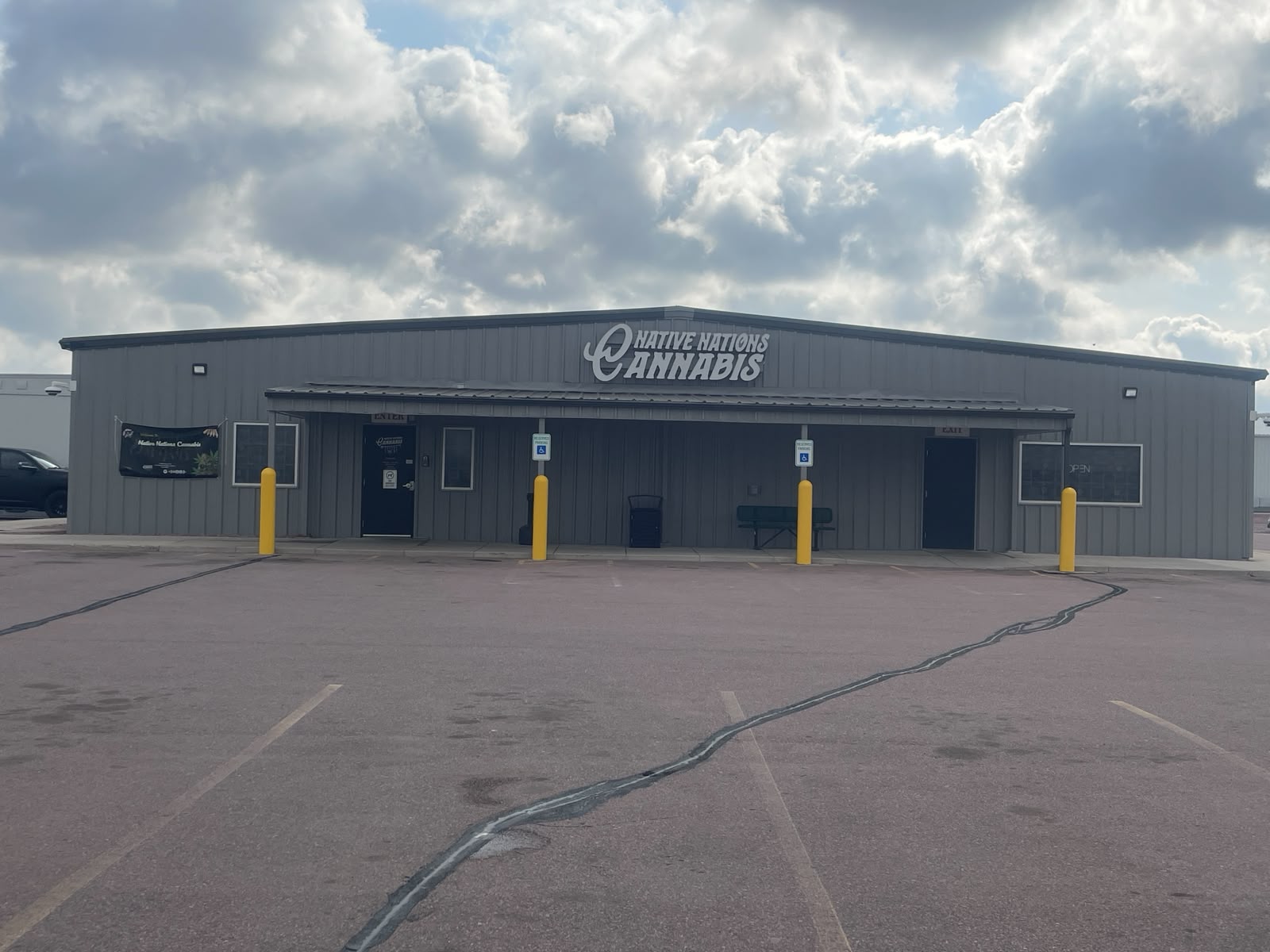
The local agriculturist, who has 18 years of experience, recently visited the Native Nations Cannabis facility on the Flandreau Santee Sioux Reservation in South Dakota. Native Nations has already been selected by the Government of St. Maarten to help lead the evolution of cannabis on the island, and he said what he saw firsthand left him with the impression that the company is the right choice for the task.
What stood out to him most was not simply that cannabis was being produced. It was the level of structure, compliance and organization around the operation.
He described the facility as a full professional setup, with the process followed from cultivation through harvest and beyond. He said the facility produces everything relating to cannabis, with the plant serving as the foundation for the products being developed.
“They have a full professional setup,” he said, explaining that everything appeared to be accounted for.
For the local agriculturist, the biggest lesson was compliance. He said Native Nations operates on its own sovereign tribal land, but what stood out was that its standards appeared to be as strict and detailed as the kind of system one would expect under a federal-level regulatory framework. He said the operation left him with the impression that Native Nations understood not only cannabis production, but the responsibility that comes with handling a regulated product.
“The compliance is what amazed me,” he said.
That point matters in St. Maarten, where the cannabis discussion has often moved between potential and hesitation. Supporters see an opportunity for medical use, agriculture, entrepreneurship, regulation, tax revenue and harm reduction. Critics and skeptics raise concerns about public health, enforcement, youth access, international obligations, banking and whether government has the institutional capacity to properly manage another sensitive sector.
His trip gave him a practical frame for the discussion. Cannabis, he said, should not be treated as something informal or reckless. If it is done, he believes it has to be done right, with full tracking, clear standards, proper oversight and consumer protection at the center.
For that reason, he said, seeing Native Nations’ operation firsthand gave him confidence in the government’s decision to select the company to help lead St. Maarten’s cannabis development.
According to publicly available background information, Native Nations Cannabis is operated by FSST Pharms, LLC, a company owned by the Flandreau Santee Sioux Tribe of South Dakota. The company was created by tribal resolution in 2015 and is governed by a Board of Directors. Public profiles of the operation describe it as having cultivation space, a commercial kitchen, an extraction laboratory and a dispensary, with products tested by a third-party laboratory. The facility is also described as vertically integrated, meaning products are grown and manufactured on site.
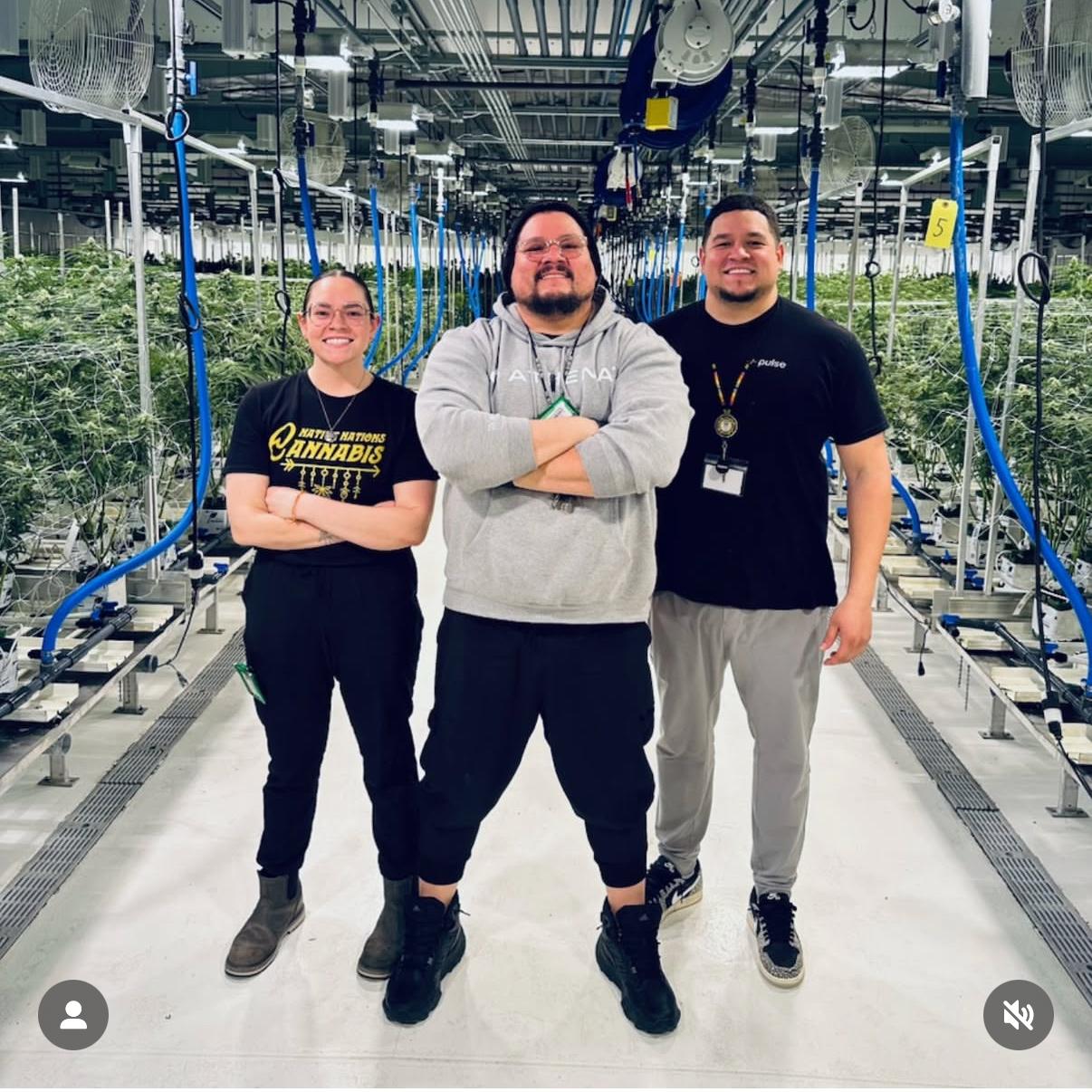
That type of setup is precisely what the local agriculturist said he wanted St. Maarteners to understand.
This was not, in his view, simply a place where cannabis was grown and sold. It was a complete system. The facility, he said, showed how cannabis can be treated as a serious agricultural, regulatory and consumer industry when the proper framework exists.
“They have the answer for everything,” he said, explaining that even waste management appeared to be accounted for.
That detail stayed with him. In agriculture, waste and byproduct management matter. In cannabis, where the product is controlled and monitored, they matter even more. He said the fact that Native Nations could account for the plant material and the disposal process showed a level of seriousness that St. Maarten should study closely.
His confidence in Native Nations also comes from his own background. He is not new to agriculture. He has been an agriculturist for 18 years. He started by learning from his grandmother, then gradually branched out into his own work and opened a microgreens company. His approach to agriculture is rooted in family knowledge, practical experience and a desire to see younger generations, including his own daughter, have a future in food production and plant-based enterprise.
That personal history shapes how he views cannabis. For him, this is not just a political issue or a business trend. It is connected to agriculture, discipline, production, standards and future opportunity.
He said St. Maarten can learn from the Native Nations model because it demonstrates how a sensitive sector can be organized in a way that protects consumers while also creating space for local participation. He believes the country should not continue to fall behind the wider region as other jurisdictions move ahead with some form of cannabis regulation.
In his view, St. Maarten has already lost time.
He said he would like to see government move quickly, but not carelessly. The point, he said, is not simply to “get it off the ground,” but to build it properly from the start. A weak framework could create public doubt and enforcement problems. A strong framework, he believes, could help the country regulate what already exists informally while opening the door to medical, agricultural and economic possibilities.
He also said he was encouraged by the consumer-focused approach he observed at Native Nations. Everything, he said, seemed to be done with the consumer in mind. The way products were made, handled, tested and presented gave him the impression that the facility understood the importance of trust.
That trust is central to any legal cannabis market. Consumers need to know what they are using. Government needs to know what is being produced. Regulators need to know where the product came from, how it was handled and whether it meets required standards. Businesses need clear rules. Communities need safeguards.
He said Native Nations appeared to understand all of that.
For St. Maarten, that may be the difference between a cannabis policy that remains trapped in controversy and one that matures into a managed, transparent sector. The country’s challenge is not only whether cannabis should be legalized or regulated, but whether the partner selected to help structure the system has the discipline and experience to do it right.
After his visit, he believes Native Nations does.
He said the company knows what it is doing, and that St. Maarten would be working with professionals as the country moves forward with them. He also believes local growers and producers should not be shut out of the process. In fact, part of what interests him is the possibility of St. Maarten eventually producing its own regulated products.
That is where his agricultural instincts come through most clearly. He sees cannabis not only as a finished product, but as a crop, a supply chain and a possible new area for local knowledge. For him, the issue is not whether St. Maarten should simply import a model, but whether the country can learn from a serious model and adapt it in a way that benefits locals.
He also spoke about medical and social possibilities. He believes cannabis can play a role for some people seeking alternatives for certain conditions or struggling with heavier substances. Those views remain part of a larger public health debate and would require careful medical, legal and regulatory oversight. But he said the potential should not be dismissed, especially if the country is serious about building a framework that separates regulated cannabis from unsafe or uncontrolled use.
His position is that cannabis should be approached with maturity, not fear.
For years, St. Maarten’s cannabis discussion has moved in starts and stops. At times, the issue has been framed around economic opportunity. At other times, it has been framed around medical access, public order, decriminalization or international compliance. His contribution adds another perspective: the view of a local agriculturist who has seen the government’s selected partner firsthand and came away impressed by the operational discipline.
That perspective matters because cannabis policy cannot be built only from political speeches or legal drafts. It also has to be understood from the ground up: how the plant is cultivated, how it is handled, how products are made, how quality is maintained, how waste is controlled, how consumers are protected and how local producers might fit into the picture.
He said Native Nations showed him that this can be done professionally.
For him, the trip changed the tone of the discussion. It removed the idea that cannabis regulation has to be chaotic or experimental. What he saw, he said, was an operation where the rules were known, the systems were followed and the consumer remained central.
That is why he believes St. Maarten’s government selected the right company.
The question now is whether St. Maarten is ready to treat cannabis not as a slogan, but as a regulated sector requiring expertise, discipline and accountability. He believes the country has an opportunity, especially if it follows through with a structure that matches the level of professionalism he observed in South Dakota.
After 18 years in agriculture, after learning from his grandmother and building his own microgreens business, he said he knows the value of doing things properly from the soil up.
In South Dakota, he believes he saw that same principle applied to cannabis.
And for St. Maarten, he believes that lesson should not be ignored.
Source note: Background information on Native Nations Cannabis was reviewed from public profiles and industry listings describing FSST Pharms, LLC, doing business as Native Nations Cannabis, as a company owned by the Flandreau Santee Sioux Tribe, with operations on the Flandreau Santee Sioux Reservation in South Dakota.