

Mps Roseburg, Wescot-Williams say stop cleaning up after illegal dumpers, start going after them
.jpg)
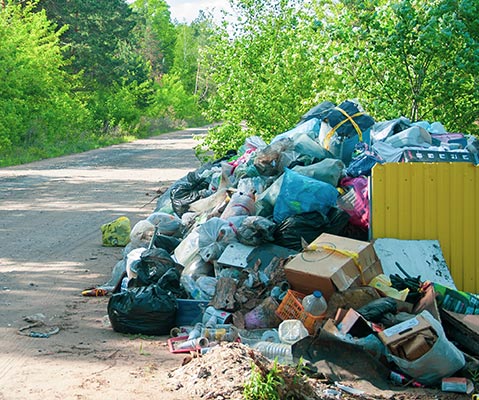
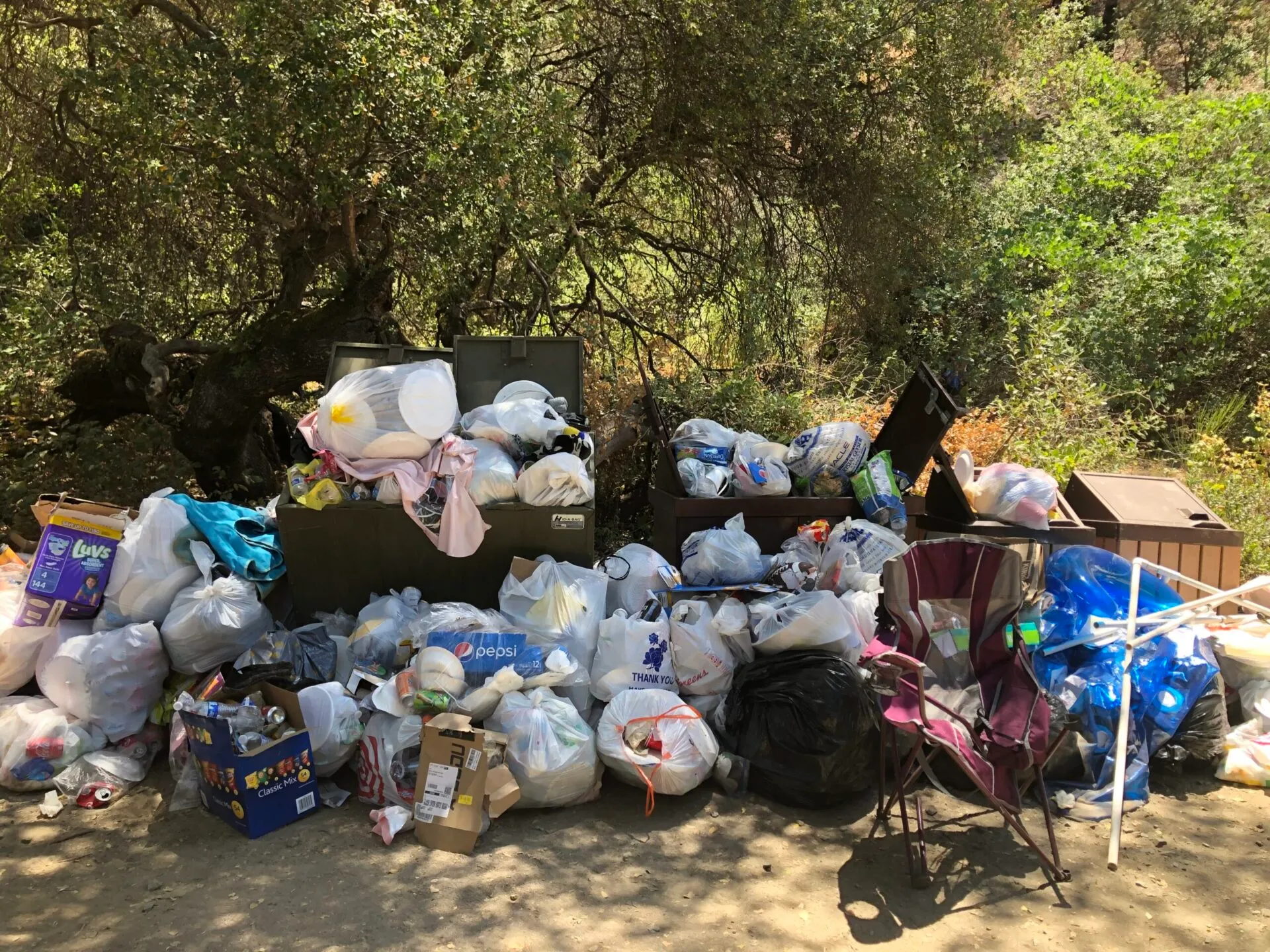
St. Maarten has cleaned up illegal dumping sites before. It has warned residents before. Ministers have spoken publicly about the problem before. Yet old furniture, construction debris, household garbage and commercial waste still find their way onto roadsides, into mangrove areas and onto vacant lots, often in places that everyone already knows are being used as illegal dumping grounds.
That cycle is exactly what Members of Parliament Sjamira Roseburg and Sarah Wescot-Williams are now trying to break. Their recent motion on littering and illegal dumping argue that St. Maarten has spent too much time removing garbage and not enough time making people afraid to dump it there in the first place.
The motion starts from a familiar reality. It describes litter and illegal dumping as a long-standing and structural problem, pointing to overflowing landfills, waste along public roads and garbage accumulating in mangrove areas. It also notes that government recently announced an "island wide clean-up," but says Parliament and the public were not given a clear explanation of how long that operation would last, what exactly it would cover, who would carry it out or how much it would cost.
That criticism was pointed because a clean-up can make an area look better without solving anything underneath. Government can spend money removing the mess, if the people dumping the garbage never expect to be caught, the clean-up becomes maintenance rather than a solution.
Roseburg and Wescot-Williams are essentially saying that St. Maarten does not need to keep acting surprised by a problem it has known about for years. The country already has a law prohibiting littering. Article 31 of the Waste Ordinance has been in place since 2010, according to the motion, and the maximum criminal fine is NAf 1,000. The difficulty is that enforcement runs through the criminal justice system, which the MPs argue is too slow and too cumbersome for a large number of relatively simple dumping violations. In practice, they say, enforcement is virtually absent.
That is the real weakness the motion is trying to expose. The issue is not simply that people are breaking the law. It is that many of them appear to have little reason to believe anything will happen if they do.
Government has repeatedly called on residents to stop dumping illegally and to use proper disposal channels. The motion points out that the Minister of VROMI has made such appeals several times in 2026 and has spoken about tougher measures against illegal dumping and commercial waste abuse. What the MPs say is missing is any published evidence showing that those warnings have translated into actual fines, citations or prosecutions under the existing law.
The first part
The first part of the motion gives government 60 days to take steps that do not require any change to the law. One of the main requests is for a standing enforcement unit, either within VROMI or through the City Inspector, with a clear responsibility to monitor illegal dumping continuously. The MPs do not want occasional patrols after complaints or another temporary exercise. They want fixed inspections and patrols at known hotspots as part of normal government operations.
They also want government to stop assuming everyone understands the rules. The motion calls for clear public information explaining what is allowed, what is prohibited and what the consequences are. It specifically proposes bilingual signs in Dutch and English at known dumping locations, with the fine amount displayed and a telephone number or QR code people can use to report violations. It also calls for a public reporting hotline where residents can submit complaints, preferably supported by photographs or video.
Government inspectors cannot stand at every roadside or dumping hotspot at all hours. Residents, however, are everywhere. People see trucks arrive. They see construction waste being unloaded. They see household garbage being left in places where it does not belong. The motion is trying to turn that reality into part of the enforcement system rather than allowing those observations to end with frustration and a Facebook post.
The MPs are also asking government to intensify enforcement under the law that already exists, working with police and the Prosecutor's Office. More importantly, they want a measurable target for inspections and a factual report to Parliament showing how many fines, citations and prosecutions have actually been issued under Article 31 and what happened in those cases.
If the numbers are extremely low, government will have to explain why. If there have been almost no penalties despite years of visible illegal dumping, then the country will have confirmation that the law has existed largely without teeth. If fines have been issued, Parliament and the public will at least have a starting point for deciding whether enforcement is effective.
The second part
The second part of the motion goes further and would require changes to the Waste Ordinance.
Roseburg and Wescot-Williams want government to introduce an administrative fine, allowing authorities to punish dumping violations directly without sending every case through the Prosecutor's Office. That could make the system faster and more practical because relatively straightforward dumping offences would no longer have to compete for attention inside the criminal justice system.
Then comes the part that will probably generate the most discussion. The motion proposes that citizens whose reports lead to a final, uncontested fine could receive a percentage of that fine as a reward, with an example of up to 10 percent. It also calls for a legal basis to publicly identify repeat offenders or those involved in large-scale or commercial dumping, the so-called "name and shame" approach.
Some people will see the reward system as practical. If illegal dumping is difficult to catch and residents are already witnessing it, why not give them a reason to report what they see? Others will be uncomfortable with the idea of financially rewarding people for reporting neighbours or businesses.
The "name and shame" proposal
Publicly identifying repeat or commercial offenders could be a strong deterrent, especially for businesses that depend on public trust. A fine can be absorbed as a cost. Reputational damage can be harder to ignore.
At the same time, any such system would need strong safeguards. Government would have to be certain the violation was properly established before publishing anyone's name. There would have to be a clear legal process, a right to challenge the finding and protections against false or malicious reports.
The motion itself acknowledges that these tougher measures cannot simply be introduced overnight. Administrative fines, financial rewards and public disclosure all require a proper legal basis. It states that Roseburg has already prepared draft legislation to amend the Waste Ordinance and include administrative fines, mandatory signage, a reporting hotline, a reward mechanism and a higher criminal fine.
What the MPs do not want is for government to hide behind the legislative process while doing nothing. Their argument is that several things can already happen now. Signs can be installed. A hotline can be created. Known dumping areas can be patrolled. Existing laws can be enforced more aggressively. Government can explain exactly what its island-wide clean-up involves. Parliament can also be told whether the current law has actually been used against anyone.
The motion creates two tracks, one immediate and one legislative. Government is asked to act within 60 days on the measures it already has the authority to implement and to report to Parliament within 90 days on progress under both tracks.
The bigger issue is whether St. Maarten is willing to move away from treating illegal dumping as a nuisance that government repeatedly cleans up and toward treating it as behaviour that carries real consequences.
For years, the public conversation has focused heavily on the condition of the country. People complain about garbage. Government announces clean-ups. Officials urge residents to do better. Then attention shifts until the next pile becomes impossible to ignore.
Roseburg and Wescot-Williams are trying to change that pattern. Their motion is essentially saying that if St. Maarten wants cleaner roads, cleaner neighbourhoods and cleaner public spaces, government cannot keep acting only after the garbage appears. At some point, somebody has to go after the people putting it there.
At some point, according to Wescot-Willimas, the "wotlessness" has to stop.