

OECD warns that poverty and inequality demand a new “people” approach

A country can experience economic growth, attract investment, welcome increasing numbers of visitors and report improvements in national income while significant sections of its population continue struggling to afford basic necessities. New businesses may open, construction may increase and government revenues may improve, yet families can remain under financial pressure, workers may see little improvement in their standard of living and opportunities for advancement may remain concentrated among particular groups.
This contradiction is at the heart of a major 2026 publication by the Organisation for Economic Co-operation and Development (OECD), which argues that reducing poverty requires more than expanding national wealth. Governments and development institutions must also examine how resources, opportunities and economic benefits are distributed, and whether the people experiencing the greatest disadvantages are actually seeing improvements in their lives.
The 227-page report, OECD Guidance on Reducing Poverty and Inequalities through Development Co-operation, presents a framework for rethinking how development assistance is designed, financed and evaluated. Although primarily directed at international development partners, its wider message is relevant to governments everywhere: economic progress cannot be judged solely by what a country produces or earns. It must also be measured by the opportunities available to its people and their ability to maintain a reasonable standard of living.

The World Has Progressed, But Not Equally
The OECD acknowledges that the world has made substantial progress in reducing extreme poverty. In 1990, close to 40 percent of the global population lived in extreme poverty, compared with approximately 10 percent today. Much of that improvement resulted from economic expansion, greater access to basic services and development gains across Asia. However, the report warns that the pace of progress has slowed considerably, while conflict, climate change, economic instability and rising inequalities threaten to reverse earlier achievements.
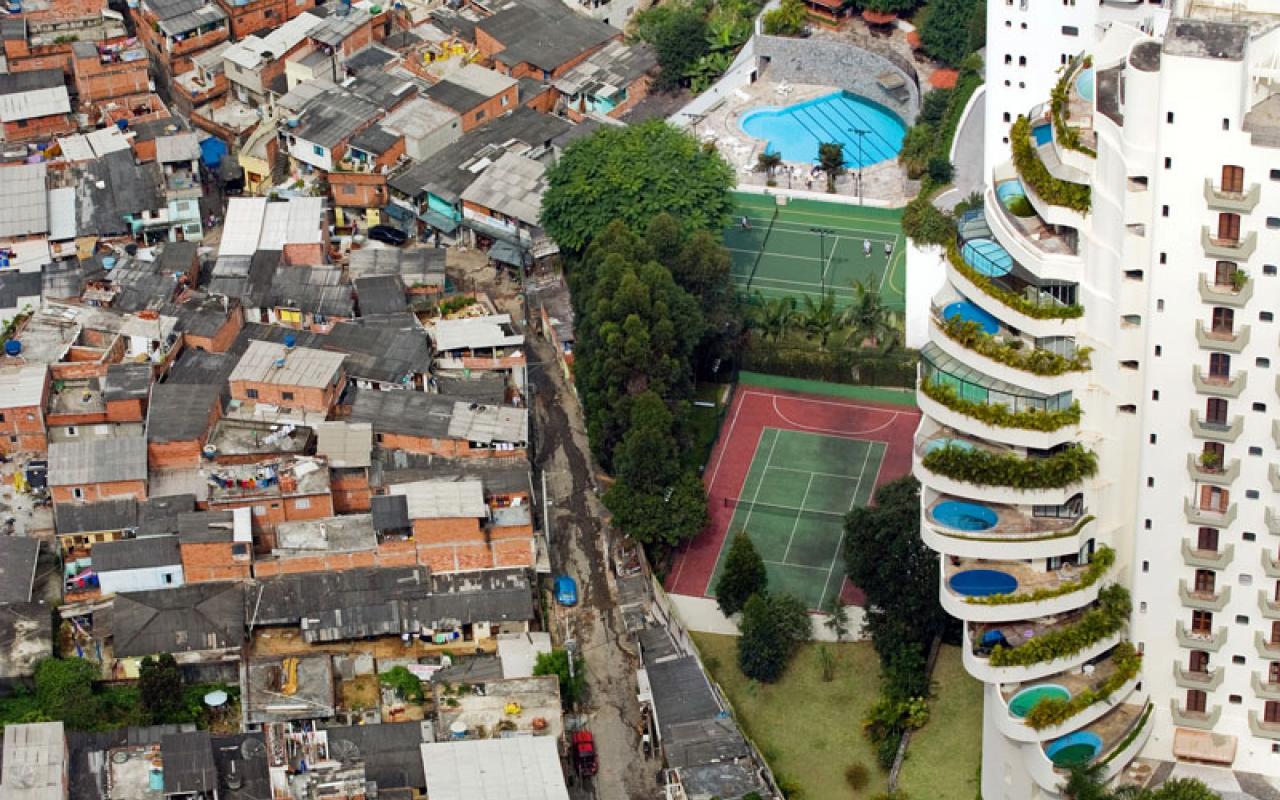
The report identifies a central weakness in traditional development thinking: economic growth does not automatically guarantee that everyone benefits. A growing economy may generate wealth without creating sufficient decent-paying jobs, expanding essential services or reducing barriers facing disadvantaged communities. When the benefits of development are concentrated among those already possessing resources and opportunities, national prosperity can increase without producing comparable improvements across society.
For small island economies such as St. Maarten, this raises questions about the meaning of development. Tourism performance, investment levels and government income are important indicators of economic activity, but they cannot independently establish whether residents are becoming more financially secure. A fuller assessment would also examine household purchasing power, housing affordability, employment conditions, educational opportunity and access to healthcare.
Poverty Is More Than an Income Problem
One of the OECD's strongest arguments is that poverty cannot be understood exclusively through household income. People may be employed and earn above an internationally established poverty threshold while remaining unable to afford suitable housing, reliable transportation, quality healthcare or other necessities. Poverty can also involve limited educational opportunities, inadequate public services, exclusion from decision-making and insufficient protection against unexpected financial difficulties.
The report describes poverty as multidimensional because deprivation can affect several aspects of life simultaneously. Someone living in inadequate housing may also experience poor health, limited access to transportation and reduced employment opportunities. These disadvantages can reinforce one another, making it increasingly difficult to escape financial hardship. Effective poverty reduction therefore requires policies that address connected problems rather than treating each difficulty as an isolated issue.
The OECD also emphasizes the difference between people experiencing long-term poverty and those who become financially vulnerable following a crisis. Job loss, illness, natural disasters or sudden increases in living costs can push previously stable households into hardship. This is particularly relevant to island societies exposed to hurricanes, external economic shocks and dependence on a limited number of industries. Building resilience is therefore as important as helping people recover after they have already experienced financial distress.
Why Inequality Matters
The report argues that poverty and inequality are closely connected, although they are not identical. Poverty concerns whether people have sufficient resources and opportunities to meet acceptable living standards, while inequality concerns the gaps separating individuals, households and communities. A society can reduce extreme poverty while substantial differences in wealth, educational access and economic opportunity remain.
These inequalities can also become self-reinforcing. Families with financial resources can often provide better educational opportunities, secure housing and economic support for their children, while households facing persistent hardship may struggle to provide comparable advantages. Over time, unequal starting positions can influence employment prospects, income levels and the ability of successive generations to accumulate wealth.
For governments, this means that providing temporary assistance to struggling households, while sometimes necessary, cannot substitute for addressing the conditions that repeatedly produce hardship. Policies concerning education, employment, taxation, housing and social protection can determine whether economic mobility becomes more accessible or whether disadvantage continues across generations.

The Importance of Fair Taxation
A major section of the OECD report examines how governments raise revenue and how taxation can either reduce or reinforce inequality. The organisation advocates stronger, fairer tax systems that generate sufficient public resources while considering people's ability to contribute. It also emphasizes that the benefits of public spending should reach those experiencing the greatest needs.
The underlying argument is that taxation should be evaluated not only by how much money governments collect, but also by how the burden is distributed and how the resulting revenue is used. A tax system that places disproportionate pressure on households with limited income can undermine poverty reduction, particularly if essential public services remain inadequate. Conversely, revenues directed toward education, healthcare, infrastructure and social protection can expand opportunity and strengthen economic resilience.
For smaller economies, the challenge is balancing fairness with fiscal sustainability and competitiveness. The OECD does not prescribe a single tax formula for every jurisdiction. Instead, it encourages governments and development partners to assess the likely effects of fiscal decisions on different income groups and design policies suited to local economic conditions.
Investment Must Benefit More People
The OECD also challenges the assumption that attracting private investment automatically produces inclusive development. Investment can generate employment, improve infrastructure and stimulate economic activity, but its wider social benefits depend heavily on how projects are structured and whom they serve.
The report encourages development institutions to support investments that create quality employment, expand affordable access to essential services and provide opportunities for underserved communities. It warns that private financing can reinforce existing inequalities when investment decisions concentrate primarily on commercial returns without sufficient attention to social outcomes.
For tourism-dependent economies, this provides a useful framework for examining development proposals. The value of an investment should not be assessed exclusively through its construction costs, projected revenues or expected visitor numbers. Governments can also consider the quality of jobs created, opportunities for local entrepreneurs, workforce development, environmental effects and the extent to which economic benefits remain within the community.
Give Communities a Real Voice
Another central recommendation concerns the relationship between development institutions, governments and the communities they serve. The OECD argues that effective development requires more equitable partnerships, with greater responsibility and decision-making authority shared among participating organisations and affected populations.
The report is especially critical of consultation processes that invite community participation without providing meaningful influence over decisions. People experiencing poverty often understand barriers that may not be immediately visible to policymakers, including transportation difficulties, administrative obstacles, discrimination and the practical challenges of accessing public assistance.
For governments, meaningful participation requires more than organizing public meetings after major policy decisions have already been formulated. It involves creating opportunities for residents, civil society organisations and community representatives to help identify priorities, shape interventions and evaluate whether programs are delivering their intended benefits.
Measure What Changes in People's Lives
Perhaps the most practical recommendation concerns accountability. The OECD calls for stronger data collection, monitoring and evaluation systems capable of demonstrating whether public investments and development programs actually reduce poverty and inequality.
This requires moving beyond measurements of money spent, projects completed or services established. Governments must also determine who benefited, whether access improved, whether existing disparities narrowed and whether positive results can be sustained over time.
For St. Maarten, the broader lesson is that reliable social and economic information is essential to effective policymaking. Without sufficiently detailed data on household conditions, living costs, employment and access to services, governments may struggle to identify which communities require assistance or whether existing interventions are working.
The report's underlying message is ultimately about the purpose of development itself. Economic growth remains important because it creates resources and opportunities, but growth alone cannot establish whether a society is becoming more equitable, resilient or prosperous for its population.
A successful economy should produce more than encouraging financial indicators. It should create conditions in which people can improve their circumstances, withstand unexpected setbacks and participate meaningfully in the opportunities generated around them.
For governments and development partners, the OECD's challenge is therefore straightforward: stop measuring success only by how much an economy grows and begin paying equal attention to how many people's lives improve.