

Regional unity: What Caribbean countries pay and what they get back

For more than five decades, the Caribbean Community (CARICOM) has promoted the idea that small Caribbean nations are stronger together than apart. Its supporters argue that regional integration provides economic opportunities, political influence and access to resources that individual countries would struggle to secure independently. Critics, however, question whether the organization has delivered enough tangible benefits to justify its costs, particularly for countries facing financial pressures.
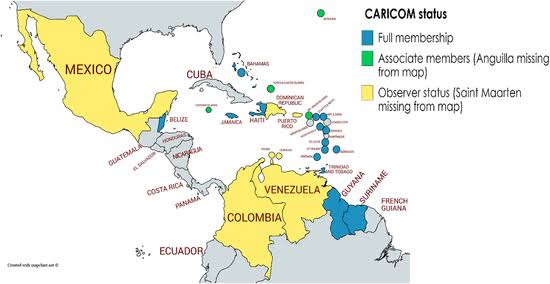
Established in 1973, CARICOM now comprises 15 full members and eight associate members. Its objectives include economic integration, foreign policy coordination, human development and regional security. Yet more than 50 years after its formation, an important question remains: Are Caribbean taxpayers receiving sufficient value for the money their governments contribute?

What Does Membership Actually Cost?
CARICOM is not free, and membership fees are not uniform. Governments make assessed contributions to finance the Secretariat in Guyana, with contributions varying substantially between countries. Additional costs can include participation in regional institutions, travel, administrative obligations and implementation of regional agreements.
CARICOM's 2024 annual report recorded approximately EC$73.3 million, equivalent to US$27 million, in assessed member contributions. For 2025, the approved member-funded Secretariat budget was reportedly EC$75.9 million, alongside EC$37.7 million budgeted from international development partners. These figures concern the Secretariat and should not be confused with the combined budgets of every CARICOM-related institution.
Published assessments from 2022 illustrate the differences between members. Trinidad and Tobago's annual assessment was approximately US$4.8 million, Jamaica's US$3.85 million, The Bahamas' US$2.51 million and Barbados' US$1.46 million. At the lower end, Dominica's assessment was approximately US$152,000 and Montserrat's US$17,300. These are historical figures, not current quotations for membership.
Associate membership also carries a price. Bermuda's annual obligation reached US$271,292 in 2024, compared with US$193,252 in 2023, according to records obtained by The Royal Gazette. Bermuda reportedly paid more than US$3.7 million in fees between 2002 and July 2025. Those payments exclude additional expenses associated with participating in CARICOM activities.
What Do Countries Receive in Return?
The strongest argument for membership is that its benefits cannot always be measured against annual contributions. Regional cooperation allows small countries to pool expertise, coordinate disaster responses, strengthen public health systems and negotiate collectively on international issues.
Organizations such as the Caribbean Public Health Agency (CARPHA), the Caribbean Disaster Emergency Management Agency (CDEMA) and CARICOM's regional security mechanisms offer practical examples of cooperation. Rather than every government developing expensive systems independently, participating countries can benefit from shared institutions, expertise and coordinated responses.
Economic integration provides another potential advantage. The CARICOM Single Market and Economy (CSME) seeks to facilitate trade, investment, business establishment and movement of eligible skilled workers. In October 2025, Barbados, Belize, Dominica and St. Vincent and the Grenadines went further, introducing full free movement among themselves, allowing their nationals to live and work in the participating countries without work permits.
Financial assistance also matters. The CARICOM Development Fund reports investing more than US$169 million in development projects across ten member states during its first two funding cycles, covering 2008 through 2023. Its financing has supported infrastructure, agriculture, energy and business development, although access and eligibility vary.
Diplomatically, collective representation can amplify Caribbean concerns regarding climate change, international financing, trade and reparations. A small country's position may carry considerably greater influence when advanced through a regional grouping.
Why Is CARICOM So Frequently Criticized?
Perhaps the most persistent criticism is CARICOM's difficulty translating agreements into action. Regional leaders regularly announce commitments, but implementation depends heavily on individual governments, national legislation and administrative capacity.
Trade illustrates the problem. An OECD assessment found that intra-CARICOM trade represented only 6.7% of members' total trade during 2015 to 2018. High shipping costs, inconsistent regulations, limited production capacity and non-tariff barriers continue to restrict regional commerce. A 2026 IMF assessment also highlighted the unusually high freight costs confronting Caribbean economies.
Critics additionally argue that integration benefits countries unevenly. Larger manufacturing and export economies, particularly Trinidad and Tobago, have historically enjoyed stronger positions in regional trade, while smaller economies struggle to compete. The CARICOM Development Fund was created partly to address such imbalances, but disparities remain.
CARICOM's agricultural ambitions offer another example of the implementation challenge. Its initiative to reduce the region's food import bill by 25% by 2025 was extended to 2030. Although agricultural investments and policy measures have advanced, the revised deadline raises questions about whether regional ambitions consistently match delivery capacity.
There are also questions about accountability. Governments pay contributions and participate in repeated meetings, but citizens rarely receive a clear country-by-country accounting of measurable economic returns. Supporters rightly point to benefits that are difficult to quantify, yet this should not prevent independent evaluation of effectiveness, expenditure and results.

What About St. Maarten?
For St. Maarten, the debate is particularly relevant. The government's 2024–2028 governing program identifies securing CARICOM associate membership as an objective, following Curaçao's entry in 2024. Associate membership would offer participation in selected regional cooperation initiatives, but it would not automatically provide full CSME market access or voting rights equivalent to full membership.
A Central Bank of Curaçao and St. Maarten study found that CARICOM accounted for an average of just 3.2% of St. Maarten's overall trade between 2010 and 2023. The bank nevertheless identified potential benefits in shared expertise, regional cooperation and stronger economic connections. It also cautioned that the country's constitutional position within the Kingdom of the Netherlands could complicate certain arrangements.
Importantly, St. Maarten already participates in CARPHA, demonstrating that useful regional cooperation does not always require full CARICOM membership.
So, Is Membership Worth It?
The evidence suggests that CARICOM membership can be worthwhile, particularly for small countries that benefit from shared resources, political cooperation and regional institutions. However, the financial return is not identical for every member, and paying annual contributions does not guarantee greater trade, investment or economic growth.
The greater challenge is demonstrating results. Governments should be able to explain what their countries pay, which additional obligations membership creates, what services they receive and how ordinary citizens benefit.
CARICOM's relevance is difficult to dispute in a region facing shared threats and limited resources. But after more than half a century, regional solidarity alone should not be the measure of success. The real question is no longer whether Caribbean countries need CARICOM, but whether CARICOM is delivering enough of what Caribbean countries need.