

Slavery & Cinema: The Caribbean's buried history is finding a new voice on screen

For centuries, the Caribbean's history was largely recorded through the perspective of colonial authorities, plantation owners and European institutions. The experiences of enslaved Africans, their spiritual traditions, resistance, suffering and contributions to the region's identity were often documented by the very systems that oppressed them. Today, a growing movement among Jamaican filmmakers is challenging that historical imbalance, using cinema to explore stories that were suppressed, misunderstood or considered too uncomfortable to confront.
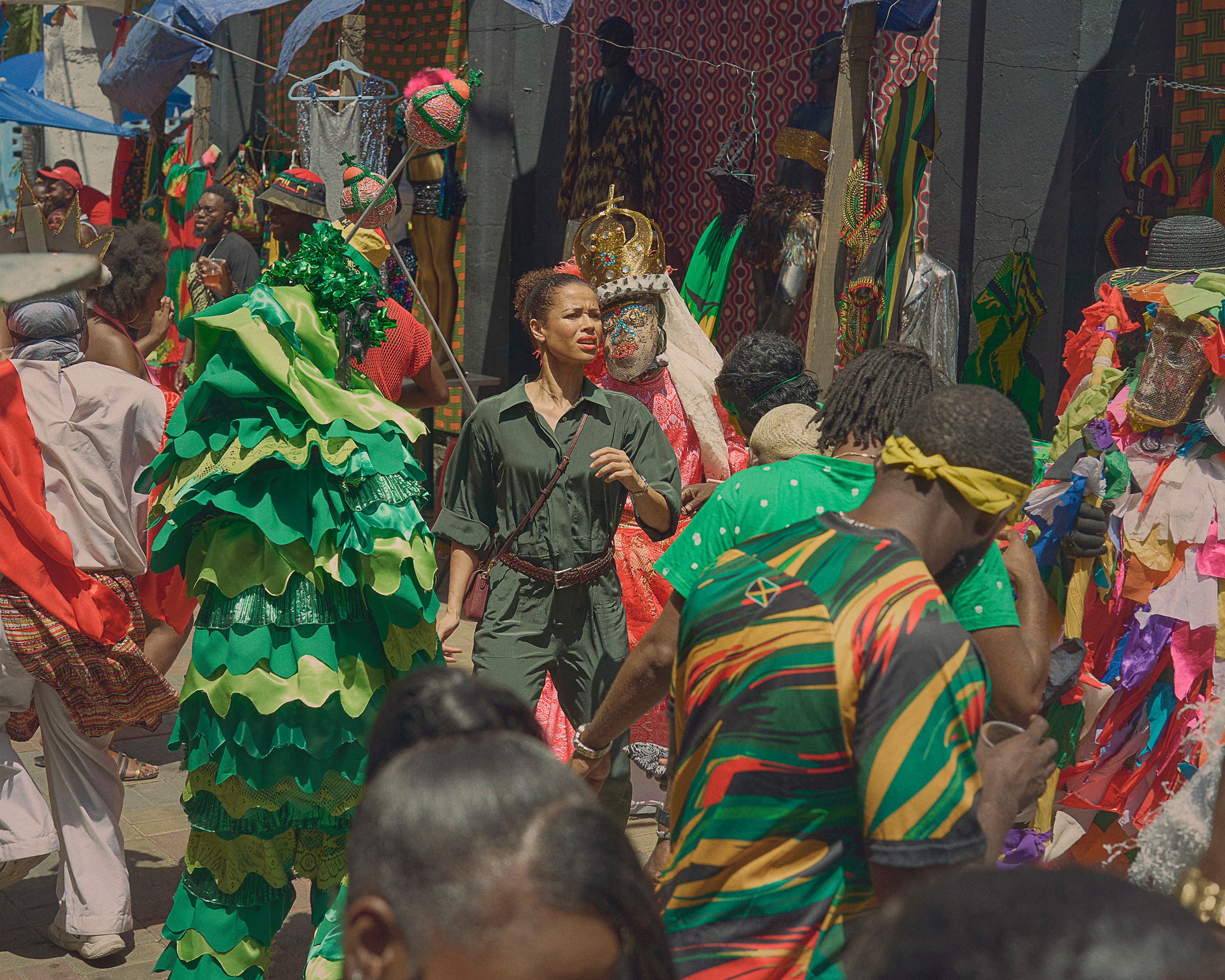
At the center of this movement is Possession, a supernatural television series directed by Jamaican filmmaker Storm Saulter and starring British actress Gugu Mbatha-Raw. The five-part production follows a biracial British lawyer who travels to Jamaica to investigate a disputed inheritance involving a former plantation. What begins as a legal assignment develops into an encounter with the plantation's violent colonial history, as supernatural forces expose the consequences of events that occurred centuries earlier.
The premise is fictional, but its underlying questions are firmly rooted in Caribbean history. Who inherited the wealth generated by enslaved Africans? What became of the people whose labor created that wealth? How much of the region's present social and economic circumstances can be traced to decisions made during colonial rule? And perhaps most importantly, what happens when societies are encouraged to move forward without fully confronting the circumstances that shaped them?
In reporting published by The Guardian on October 16, Caribbean correspondent Natricia Duncan examined how Jamaican creatives are increasingly using film to revisit enslavement, inherited trauma and historical memory. Saulter's work represents a growing willingness to explore these subjects through entertainment rather than relying exclusively on academic research, political arguments or commemorative events. The objective is not merely to recreate historical suffering, but to examine how the consequences of that history continue to influence identity, beliefs and relationships.
A Different Way of Telling Caribbean History
Caribbean cinema has long provided an alternative to the images of tropical paradise that dominate international portrayals of the region. Jamaica's landmark 1972 film The Harder They Come, starring Jimmy Cliff, introduced international audiences to aspects of Jamaican society rarely reflected in tourism advertising. Decades later, Saulter's Better Mus' Come explored political violence and social tensions surrounding Jamaica's turbulent 1970s. Both demonstrated how filmmakers could challenge conventional narratives by presenting the realities of communities whose experiences were frequently overlooked.
The emerging interest in colonial history takes that tradition into more difficult territory. For many Caribbean societies, enslavement is simultaneously foundational to national history and uncomfortable to discuss openly. Its influence can be observed in patterns of landownership, economic inequality, social hierarchy and attitudes toward African cultural practices. Yet these connections are not always explored with the depth they deserve, particularly among younger generations whose understanding of slavery may be limited to classroom lessons about emancipation.
Film offers a different kind of engagement. An audience watching a story unfold through recognizable landscapes, family relationships, spiritual beliefs and personal conflict can encounter historical questions in ways that are emotionally immediate. A supernatural thriller may attract viewers who would never voluntarily attend a lecture about colonialism. Once engaged, those viewers may find themselves questioning the historical circumstances behind the fictional events.
That approach, however, carries responsibilities. Historical fiction must avoid reducing enslaved Africans to passive victims or using their suffering merely to create entertainment. Similarly, African-derived spiritual traditions require careful representation. Practices such as Obeah were criminalized and demonized under colonial rule, often because European authorities feared the influence of African cultural and religious systems. Presenting those traditions solely as frightening or sinister risks reproducing the very stereotypes contemporary filmmakers are attempting to challenge.
The Past Is Also Being Challenged in Court
The significance of Jamaica's cultural awakening becomes even clearer when considered alongside developments taking place beyond the film industry. On October 15, Jamaican Culture Minister Olivia Grange announced that the country's petition concerning slavery and reparations had been provisionally scheduled for consideration by the United Kingdom's Privy Council during the week of March 8, 2027.
The petition seeks legal guidance on the enslavement of Africans in Jamaica, its legality and whether Britain bears obligations to provide reparatory remedies. It is a striking development because it places questions that were long treated primarily as historical and moral matters before a formal legal institution.
One of the enduring contradictions surrounding emancipation is that Britain's 1833 abolition legislation provided £20 million in compensation to slave owners for the loss of their claimed property. The formerly enslaved received no equivalent compensation for their years of forced labor. University College London's research into British slave ownership has documented how the proceeds of slavery and the compensation system were connected to British families, businesses and institutions.
Against that historical background, the significance of Jamaican filmmakers reclaiming these narratives extends beyond cultural pride. The same history being examined through television and cinema is now part of an active international debate about responsibility, justice and the lasting economic consequences of colonial exploitation.
The Caribbean Community's reparations framework recognizes this broader relationship. Its ten-point plan includes cultural institutions, African knowledge initiatives and psychological rehabilitation alongside proposals addressing economic and developmental inequalities. The underlying argument is that repairing the consequences of slavery requires more than financial compensation. It also requires societies to recover historical knowledge and challenge ideas about identity and human worth inherited from colonial rule.
Who Gets to Tell the Story?
The movement also raises questions about ownership within the entertainment industry itself. Caribbean locations have frequently served as attractive settings for international productions, while creative decisions, financing and commercial returns remain concentrated elsewhere. Jamaica's film commissioner, Jackie Jackson, has emphasized the importance of local productions and international partnerships that give Jamaican creatives meaningful opportunities to tell their own stories.
Productions such as Possession demonstrate the possibilities of such collaboration. The series was created and written by Karla Crome and directed by Saulter, bringing international production resources together with Jamaican creative direction and cultural knowledge. But authentic representation requires more than filming on Caribbean soil. It depends on whose perspectives shape the narrative, which communities participate in production and whether the industry creates sustainable opportunities for local talent.
These questions extend across the Caribbean, including St. Maarten, where colonial history, African cultural inheritance and the evolution of national identity deserve greater attention through film, literature, theater and education. The region possesses an enormous collection of stories that remain largely untold, not because they lack significance, but because the resources and institutions needed to bring them to wider audiences have often been limited.
There is also a danger in expecting cultural storytelling to accomplish what governments and institutions have struggled to achieve. A successful film cannot correct historical economic inequalities, settle reparations claims or substitute for meaningful education. But it can influence public understanding, challenge accepted narratives and encourage conversations that might otherwise remain confined to academic circles.