

Succession land, family property and ownership rights take center stage on Darryl York’s The Rundown

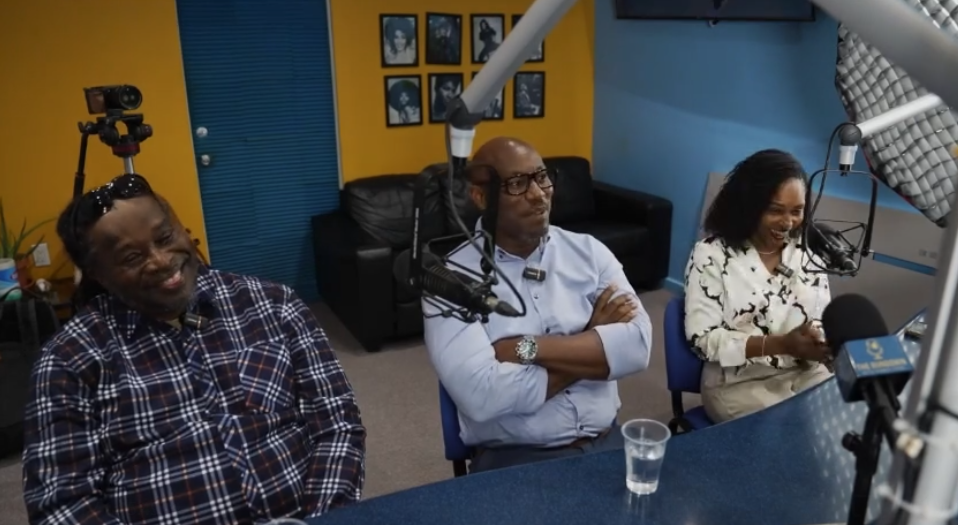
Member of Parliament Darryl York recently hosted Kadaster Director Benjamin Ortega, attorney Valya Pantophlet and Kadaster representative Franklin Chittick on his radio program The Rundown with Darryl York for an extensive public discussion on succession land, land registration and the many legal and practical challenges affecting families across St. Maarten.
The discussion provided residents with a clearer understanding of how inherited property, undocumented occupancy, unclear ownership, family disputes and outdated registration issues can prevent people from developing land, obtaining building permits, selling property, dividing family land, or passing secure assets on to the next generation.
Article continues below...
Succession land remains one of the most complicated and emotional property issues on the island. In many cases, land has been passed down from one generation to another without formal registration being updated. A property may still be listed in the name of a deceased parent, grandparent, great-grandparent, or another relative, while the current generation continues to live on or maintain the property without having the legal documentation needed to prove ownership.
The program sought to explain, in practical terms, where families can begin, which institutions are involved, what documents may be needed, and why these matters often become complex when several heirs, missing relatives, or conflicting family interests are involved.
Ortega explained that the Kadaster’s mandate is to serve as the registry for mortgages, deeds and other information related to land. This includes ownership information, parcel information and documents that help establish the legal status of property. He also explained that the Kadaster conducts surveys and assists with identifying boundaries between properties.
Chittick added that the Kadaster is often misunderstood by the public. He explained that while many people associate the institution only with land registration, its work also includes surveying, boundary identification and other technical services related to property. He noted that the Kadaster also handles registration for aircraft and vessels, although those services are less commonly discussed locally.
Attorney Pantophlet explained that succession land generally refers to property that has passed through family lines without the ownership situation being clearly resolved. She said a typical example is land still registered in the name of a great-grandparent, while several generations of descendants may now have a possible claim or interest in the property.
She noted that succession land can become difficult to divide or regulate because the law often requires the involvement or consent of heirs. When those heirs cannot be found, live abroad, disagree with each other, or are unaware of their legal position, the process becomes more complicated.
Pantophlet also pointed out that although legal provisions exist to address succession land, many people do not know how to use them or may feel overwhelmed by the process. She explained that some cases can be handled with proper information and documentation, while more complex cases may require legal guidance, especially when there are disputes, unclear family trees, or competing claims.
A major concern discussed during the program was the situation faced by families who have occupied property for many years, sometimes decades, but cannot obtain a building permit because the property is not legally registered in their name. The panel noted that this issue became more visible after Hurricane Irma, when many families needed to rebuild or repair homes but discovered that the land was still registered to a deceased relative or was otherwise not properly documented.
The guests explained that in order to move forward, ownership or entitlement must first be established. This may require deeds, old purchase agreements, birth certificates, death certificates, civil registry information, family trees, proof of occupation, or other documents that can show the connection between the current family members and the original owner or property.
Article continues below...

Ortega stressed that the Kadaster cannot issue ownership documents simply because someone occupies land or has lived there for a long time. The institution must have a legal basis to act. If a registered owner exists, or if multiple heirs may be involved, the Kadaster must determine who has rights, whether the proper consent exists, and whether the documents submitted support the request.
The discussion also addressed situations where there is no clear registered owner, or where a family claims to have occupied land for generations without formal title. Pantophlet explained that in such cases, legal action may sometimes be necessary to establish an ownership claim, depending on the facts and available evidence.
The panelists emphasized that not every case is the same. Some families may have documents that make the process more straightforward. Others may face complicated situations involving missing heirs, incomplete records, family disputes, or property that has never been properly regulated.
One of the most difficult issues discussed was disagreement among heirs. The panel explained that many succession land cases stall because some family members want to divide or develop the land, while others do not agree, cannot be contacted, or have different plans. In some cases, only one or two relatives may prevent an entire family from moving forward.
Pantophlet said that when families cannot reach agreement, the Court may become the only avenue to force a decision. She explained that the Court can play an important role in complex land matters by helping resolve disputes and determining how property should be handled when heirs are unable to agree.
The discussion also made clear that the number of heirs alone does not always determine how land is divided. Ortega and Pantophlet explained that a person’s entitlement depends on their place in the family line. For example, if an original owner had several children, each child’s branch of the family may have a share, and the descendants of each branch may then inherit within that portion. This means that not every heir automatically receives an equal share of the entire property.
The panel also addressed an issue that is often overlooked: equal division does not always mean equal value. A parcel of land may be divided into sections, but one section may be more valuable or more useful than another because of road access, slope, elevation, buildable area, or its location on the property.
Chittick and Ortega explained that this is especially important in hillside areas, where planning rules, lot size requirements, access roads and building limitations can affect whether a piece of land can actually be developed. A portion of land closer to the road may have a different value and different development potential than a portion higher up on a hillside.
They noted that families can run into serious problems when land is divided without considering the requirements that may later apply at the permitting stage. A family may believe it has successfully divided property, only to later find out that one or more lots are too small, too steep, lack access, or cannot meet building requirements.
For that reason, the guests stressed the importance of proper advice before families spend money on drawings, architectural plans, surveys, legal filings, or building permit applications. The wrong step taken too early can create additional costs and new complications.
The discussion also touched on whether St. Maarten’s existing legal and policy framework is fully suited to the island’s modern land realities. Pantophlet said the current laws do not always speak clearly to the specific circumstances many St. Maarten families face today. This can leave room for interpretation and different outcomes in similar cases.
Ortega said the Kadaster must continue to evolve and cannot operate as it did decades ago. He said that while the Kadaster’s legal mandate is clearly defined, the institution also has a responsibility to maintain an accurate registry, provide guidance where possible and work with other stakeholders to prevent old problems from being repeated.
He said the Kadaster must remain impartial, but also has a role in helping to ensure that land records and related processes reflect reality as accurately as possible. This includes working with families, attorneys, notaries, the Court and government where needed.
Article continues below...

Chittick said the institution must also consider the real-life impact of its work on residents. He explained that people often approach land matters because they are trying to build equity for themselves and their families. When a person invests time and money into a process only to later learn that the land cannot be developed, it can be financially and emotionally devastating.
The guests encouraged families dealing with succession land to begin by gathering information. This includes identifying who the original owner was, whether a deed exists, who the heirs may be, whether birth and death certificates are available, and whether the property has been surveyed or registered.
Pantophlet said that many people delay the process because they fear it will be too expensive or too complicated. However, she said the first step does not always have to be costly. A consultation can help families understand whether their matter is simple or complex, what documents are needed, and what options may be available.
She also warned that postponing the issue can make matters worse. Each generation that passes without regulation can create more heirs, more branches of the family, more uncertainty and more difficulty in reaching consensus.
The panelists agreed that information remains one of the biggest hurdles. Many residents do not know whether they should start with the Kadaster, a notary, an attorney, or government. While the answer depends on the specific situation, the guests said families should at least begin asking questions and collecting documents rather than assuming nothing can be done.
MP York said the purpose of the discussion was to bring clarity to an issue that affects many families but is often avoided because of its complexity and emotional nature. He said succession land is not only a private family matter, but also an issue tied to housing, development, generational wealth and national progress.
The discussion underscored that unresolved land matters can prevent families from building homes, improving property, accessing financing, selling land, settling estates, or creating secure inheritance for their children. It can also lead to abandoned buildings, family conflict and uncertainty over valuable land that could otherwise be productively used.
The program served as a public education moment, encouraging residents to seek information, understand the process and take steps toward regulating property before matters become even more complicated.
Editor's note: Attorney Valya Pantophlet, of law office law office DeJong Legal, specializes in succession land issues. She can be contacted by emailing: valya@dejonglegal.com